
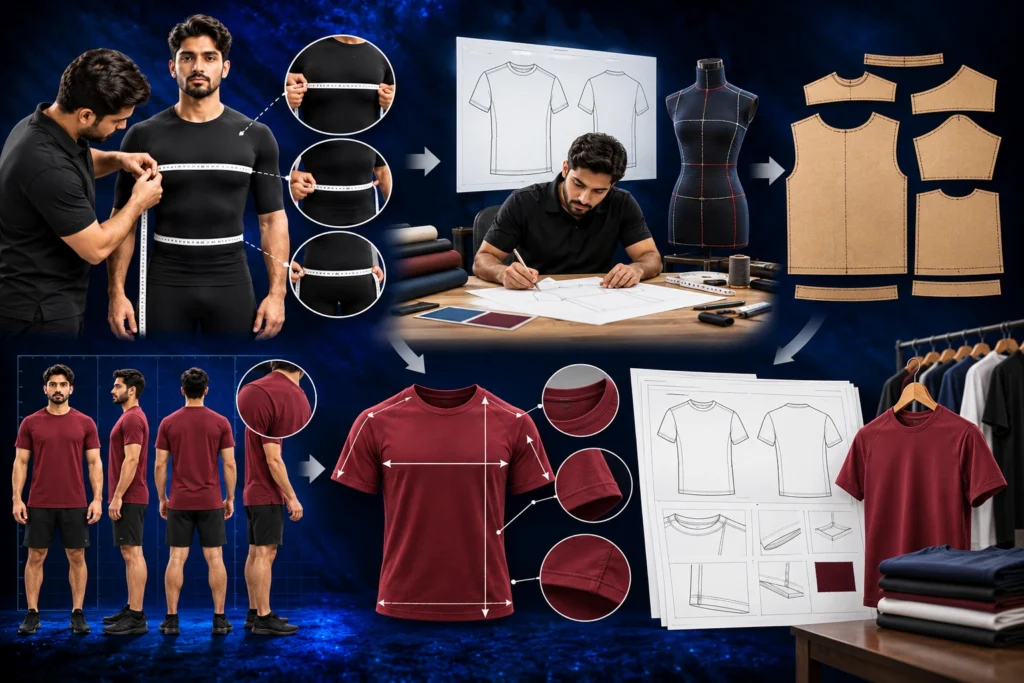
A body measurement is a number taken on an actual person: the real circumference of a chest, the real distance from a shoulder to a wrist. A garment measurement is a number taken on the finished garment, laid flat on a table. These are not the same figure, and treating them as interchangeable is one of the more common ways a first-time brand ends up with a sample that technically matches “the measurements” and still doesn’t fit.
The gap between the two is called ease, the extra room built into a garment beyond the body’s actual dimension. A fitted t-shirt might carry two to three inches of ease at the chest. An oversized hoodie might carry eight or more. Ease isn’t a rounding error or a safety margin, it’s a design decision, and it’s why a spec sheet lists garment measurements, not body measurements, as the numbers a factory actually cuts and sews to. Our own garment spec sheet guide goes into how that finished-measurement chart is structured, point of measure by point of measure, and how tolerance gets applied to each one.
Body measurements matter earlier in the process, at the point where a base size gets defined in the first place, before there’s a pattern or a sample to measure instead.
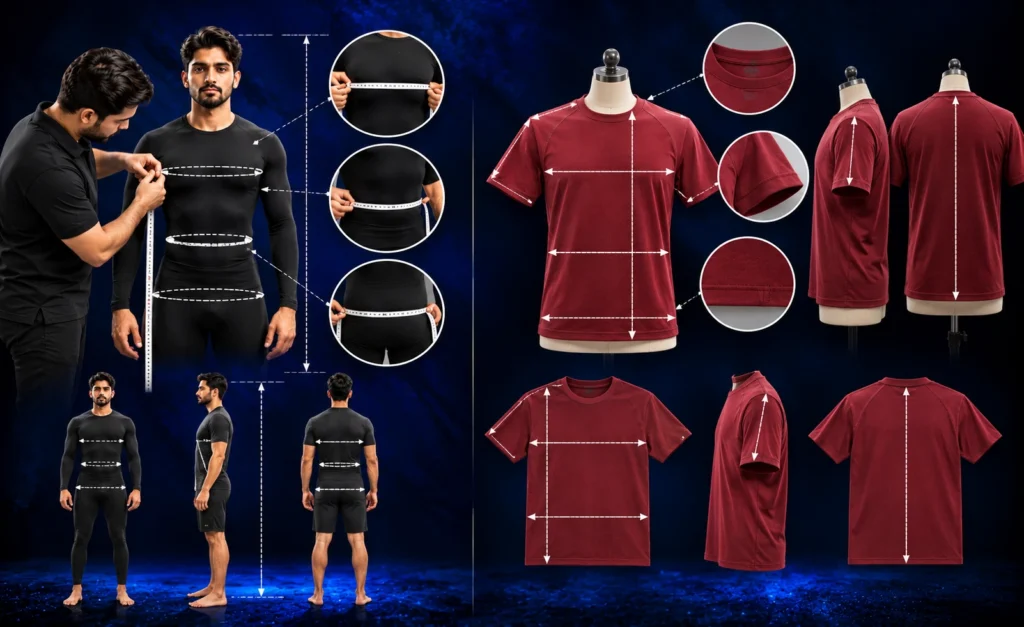
A handful of body measurements come up across nearly every source on this topic, competitor guides and manufacturer training material alike, because they’re the ones that determine whether a garment fits at all before anything else gets fine-tuned.
Chest or bust circumference, measured around the fullest point, tape level front to back, arms relaxed at the sides. This is the single most load-bearing number on a top, dress, or jacket spec.
Waist circumference, measured at the narrowest point of the natural waist, not at wherever a pair of pants happens to sit. A string or ribbon tied loosely around the waist first, then having the model bend slightly to one side, is a common trick to find the actual natural waistline before measuring.
Hip circumference, measured around the fullest point of the seat, usually somewhere in the lower third of the buttocks depending on body shape.
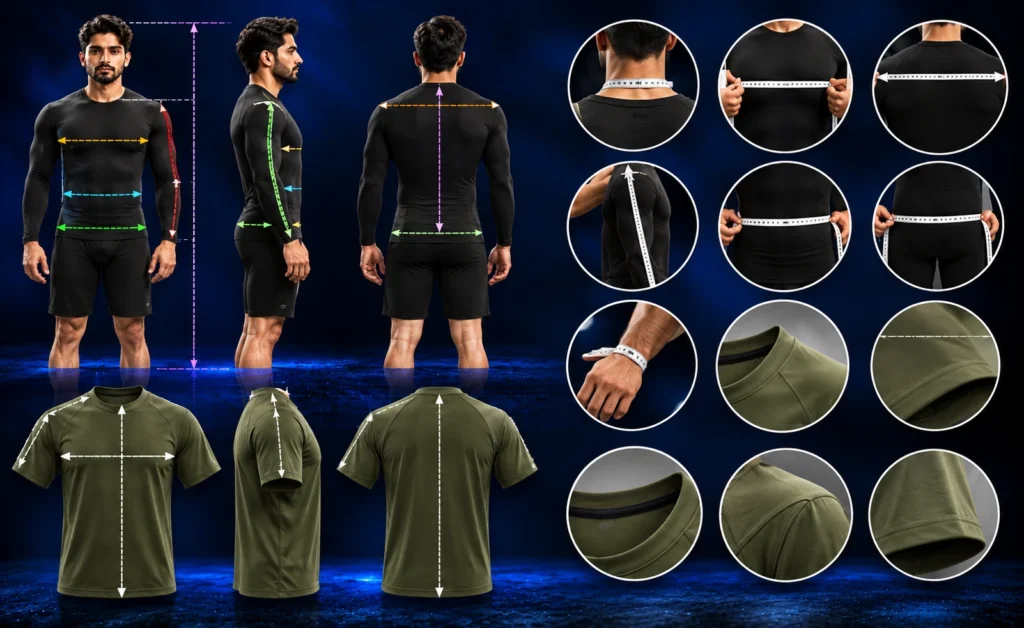
Shoulder width, measured from one shoulder point to the other across the back, and sleeve or arm length, measured from the shoulder point down to the wrist with the arm slightly bent, round out the measurements that show up on almost any top or jacket base spec. Neck circumference, measured around the base of the neck with a finger’s width of slack left under the tape, matters just as much on anything with a collar, a placket, or a zip pulled up to the chin, even though it gets skipped more often than the other core measurements.
For bottoms specifically, inseam (crotch to ankle along the inside of the leg) and rise (crotch seam to waistband, front and back measured separately) matter as much as waist and hip. None of these numbers are exotic on their own. What trips people up is inconsistency: measuring loosely one time and snugly the next, or having two different people take the same measurement and getting two different answers, both of which are solved by using a flexible tape, a light and consistent tension, and the same reference points every single time.
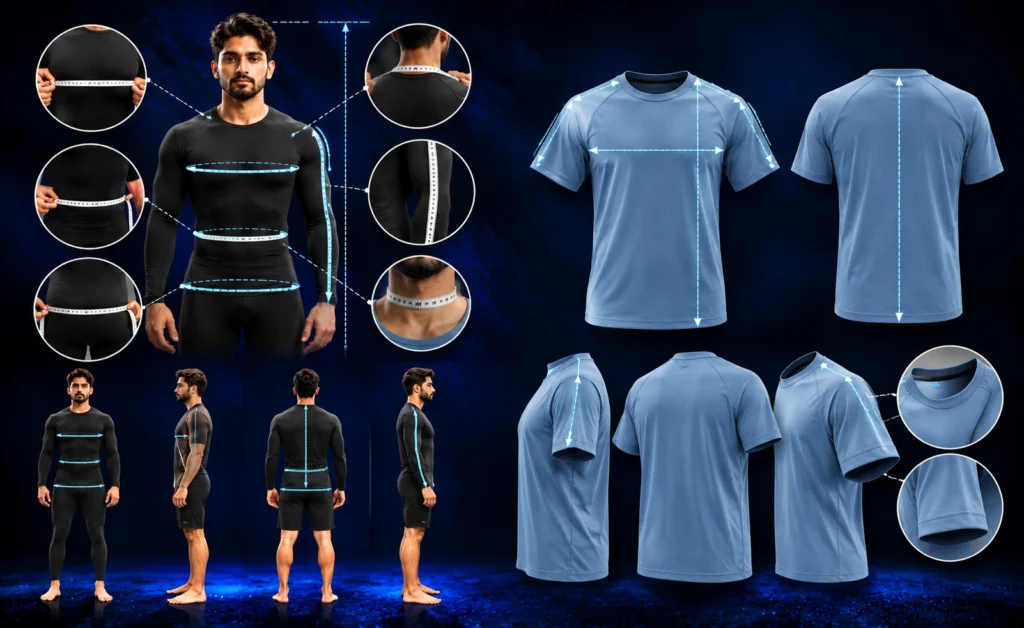
Accuracy here comes down to method more than tools. A flexible tape measure is the only real requirement, ideally a second one or a ribbon to mark the natural waist before taking any vertical measurements from it. The model should stand straight, feet about shoulder-width apart, shoulders and hips level, wearing fitted (not bulky) clothing or undergarments so the tape reads the body, not the fabric on top of it.
For a circumference measurement, chest, waist, or hip, the tape should sit snug against the body with no slack, but not tight enough to compress or reshape the tissue underneath it. Pulling too tight is one of the most common sources of an inaccurate body measurement, and it tends to happen without the person measuring realizing they’ve done it, which is why a second measurement, taken independently, is a reasonable check on anything that’s going to anchor a whole size range.
For a vertical or point-to-point measurement, sleeve length or rise, the reference points (shoulder socket, natural waist, crotch seam) need to be identified consistently before the tape moves, not estimated on the fly. This is where the terminology standards in the next section earn their keep: when a design team in one country and a factory’s pattern room in another are both working from the same defined term for “waist” or “shoulder point,” a measurement taken once translates cleanly instead of needing a clarifying round of questions.
This is the part most guides on this topic skip past: body measurements are one of the least reliable ways to build a base-size garment spec, not the default, gold-standard method. Building a spec straight from a body measurement plus an assumed ease allowance takes real, practiced judgment about how a specific fabric and a specific garment style behave, and getting it wrong is easy even for an experienced team.
Three other sources produce a more reliable starting spec, in roughly descending order of reliability. Pulling measurements directly from an already-approved pattern is the most accurate, since the pattern already reflects real construction and seam allowances, not an assumption layered on top of a raw body number. Measuring a reference garment, an existing sample in a similar fabric and fit to what’s being designed, is the next best option and the most common when a factory is building the pattern from scratch. Reusing specs from a brand’s own previous, similar style (a proven block) is a close third, and it’s also the fastest, since it skips remeasuring anything.
Body measurements plus an assumed ease allowance is the fallback, useful when none of the above exist yet, best treated as a starting point to double-check against a fit sample rather than a number to cut a bulk order against directly. None of this means body measurements aren’t useful, they’re the foundation every other method still traces back to eventually, it means they’re rarely the most direct path to an accurate spec on their own.
Two published standards exist specifically to keep body-measurement language consistent across a design team and a factory that may be working in different countries, different software, and different habits around what a given term means.
ASTM D5219 is a standard terminology document: it defines the terms used for body dimensions in apparel sizing, so that “waist” or “shoulder point” means the same physical location whether it’s written by a designer in one country or read by a pattern maker in another. It doesn’t set specific size numbers, it standardizes the vocabulary describing them.
ISO 8559-1:2017 goes a step further and defines the anthropometric measurement locations and method themselves, the actual points on the body and how they should be measured, intended as a basis for building consistent measurement databases across the apparel industry internationally.
Neither standard replaces a brand’s own fit-model process or its own size chart. What they do is give a design team and a factory a shared, checkable reference for what a measurement term is actually supposed to mean, which matters more than it sounds like the first time a spec sheet crosses a language or unit-system gap and a term gets misread.
Digital body scanning has become a real, standards-backed alternative to manual measuring at scale, particularly for brands building size charts across a wide range rather than fitting one model at a time. ISO 20685-1:2018 governs how body dimensions extracted from a 3D scan get evaluated against traditional manual measurement, essentially the quality check that confirms scan-derived numbers are close enough to hand-measured ones to be used interchangeably. It’s a real option, not a shortcut with no rigor behind it, but the scan data still feeds into the same base-size-plus-grading process a manual measurement would.
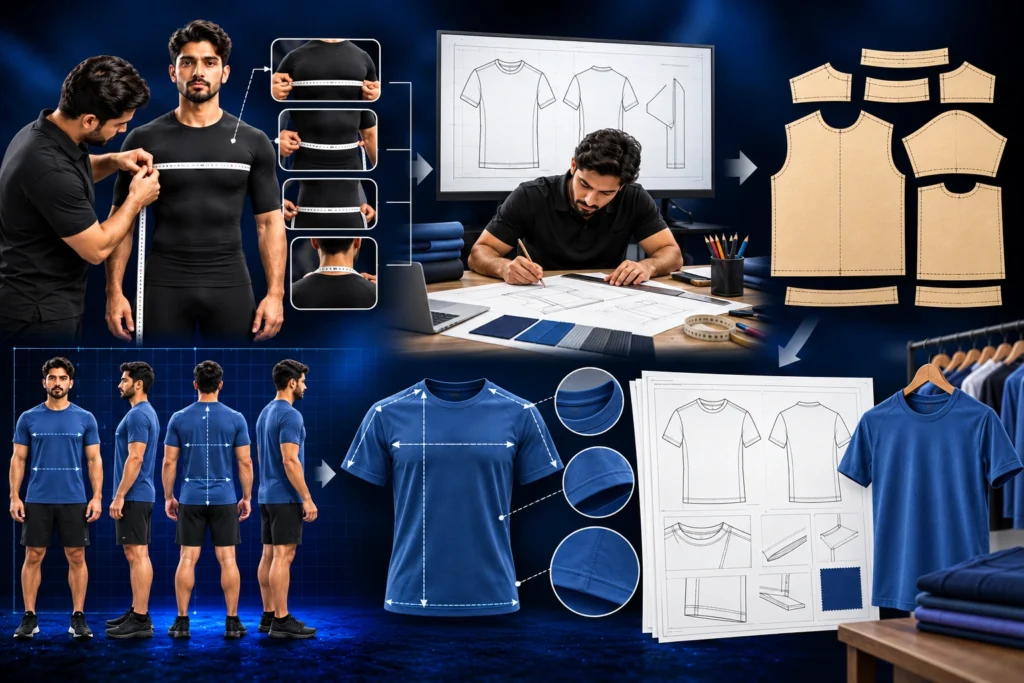
This is the part that’s ours specifically, not general measurement theory. When a brand comes to us with body measurements but no pattern or reference sample yet, we treat that data as a starting point, not a finished spec. Our pattern making and grading team builds the base block from those numbers plus an ease allowance appropriate to the garment style and fabric, and every intersecting seam gets mathematically verified against the others before it goes anywhere near a cutting table. Once that base pattern is approved, how we grade it across a full size run is a separate, later step, worth understanding on its own since a body measurement only ever sets the base size, not the sizes graded off it.
That base pattern then gets validated physically, not just on screen. A muslin or first sample is cut from the digital pattern and checked on a real fit model, and any adjustment gets fed back into the pattern before grading rolls it out across the rest of the size range. If a brand’s tech pack already has body measurements filled in but nothing else, our tech pack design team can review what’s there and flag exactly which fields still need a reference garment, a block style, or a fit-sample round before bulk production is safe to schedule against them.
We run this the same way for prototyping and sampling generally: a body measurement gets a brand into the conversation, but it’s the sample round, checked against real people and real fabric, that actually locks the spec in. If you’re starting from body measurements and nothing else, get in touch and we’ll walk through what else needs to happen before that number is safe to cut a bulk order against.
A body measurement is taken on an actual person. A garment measurement is taken on the finished garment, laid flat. The gap between the two is ease, the extra room designed into a garment for comfort and movement, which is why a garment's chest measurement is always larger than the wearer's actual chest measurement.
Chest or bust, waist, and hip circumference come up across nearly every garment type and are the three to get right first. Shoulder width, sleeve length, inseam, and rise matter just as much depending on whether the garment is a top or a bottom.
It's possible but it's one of the less reliable methods, not the default. Pulling measurements from an approved pattern, a reference garment, or a previous similar style all tend to produce a more accurate starting spec, since each already accounts for ease and fabric behavior in a way a raw body number plus an assumed ease allowance doesn't.
It's a standard terminology document that defines the terms used for body dimensions in apparel sizing, so a term like "waist" or "shoulder point" means the same physical location across different teams and countries. It doesn't set specific size numbers.
ASTM D5219 standardizes the terminology. ISO 8559-1 goes further and defines the actual measurement locations and method on the body itself, intended as a basis for building consistent measurement databases internationally.
It's a real, standards-backed alternative at scale, governed by ISO 20685-1, which evaluates how closely scan-derived measurements match traditional manual ones. It still feeds into the same base-size-and-grading process a manual measurement would, it isn't a shortcut around that process.
Roughly a half-inch either way on a larger circumference measurement like chest or waist is a common, expected allowance. Smaller points, like a neck or wrist measurement, need a tighter tolerance since the same half-inch reads as a much bigger relative difference there.
Usually because the tape tension or the reference point wasn't consistent, one measurement pulled snugger than the other, or the natural waist or shoulder point was estimated instead of properly located first. Using a flexible tape, consistent tension, and the same defined reference points every time is what fixes this.
A published standard like ASTM D5219 or ISO 8559-1 is a shared reference for terminology and measurement method, not a substitute for a brand's own fit-model process. The standards keep everyone using the same definitions; they don't replace the actual fit-sample work needed to confirm a spec matches a brand's real target customer.

FOUNDER & CEO AT RIJIZ