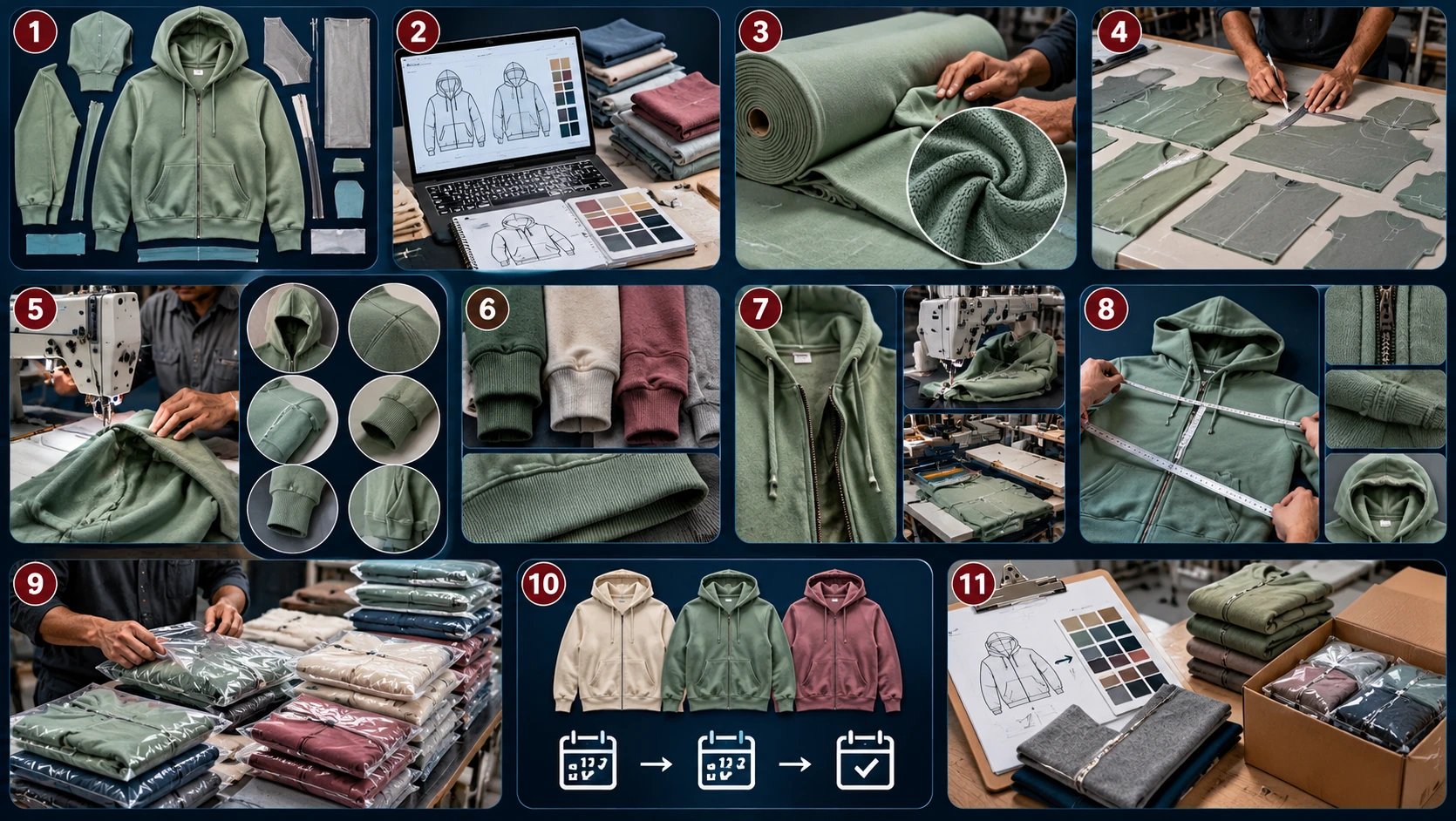

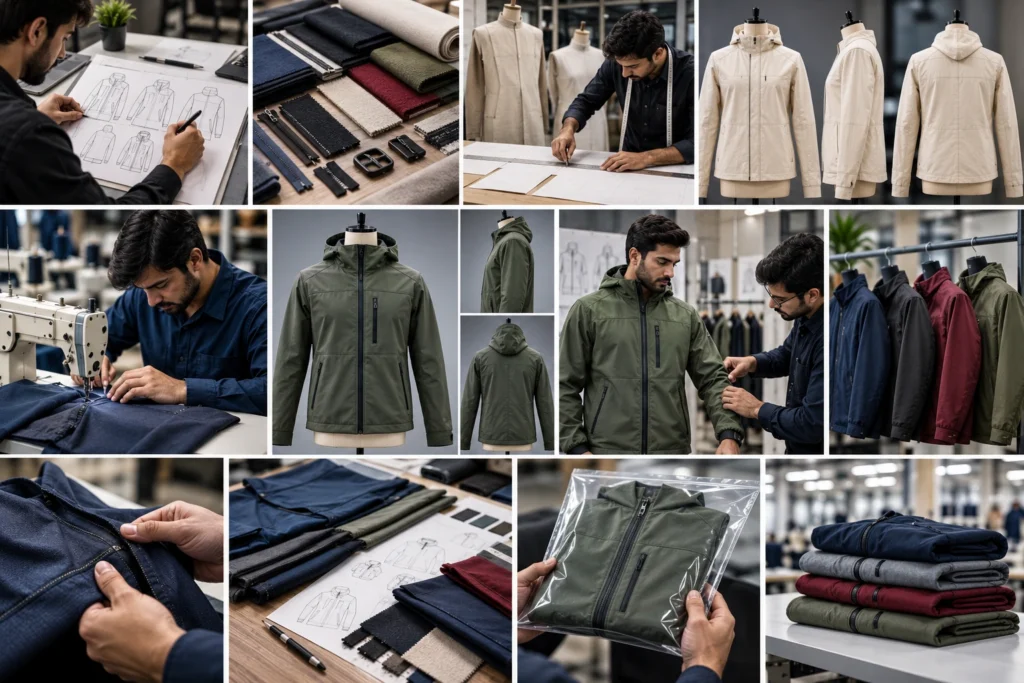
A brand that’s never worked with a factory before sometimes expects one sample to confirm everything at once, fit, fabric, construction, cost. That’s not how it works, and for a real reason: each stage exists to de-risk a specific decision before the next, more expensive one gets made. Getting the fit wrong on a muslin costs almost nothing to fix. Getting it wrong on a bulk run of 500 units costs real money and real time.
On average, brands go through 5-7 rounds of sampling before a bulk run: mock-up, proto, fit (often twice), size set, PP, and sometimes a press or shipment sample layered on top. That number surprises first-time brands who assume one or two rounds is normal. It isn’t, and treating the funnel as one step is the single most common reason a first program runs long.
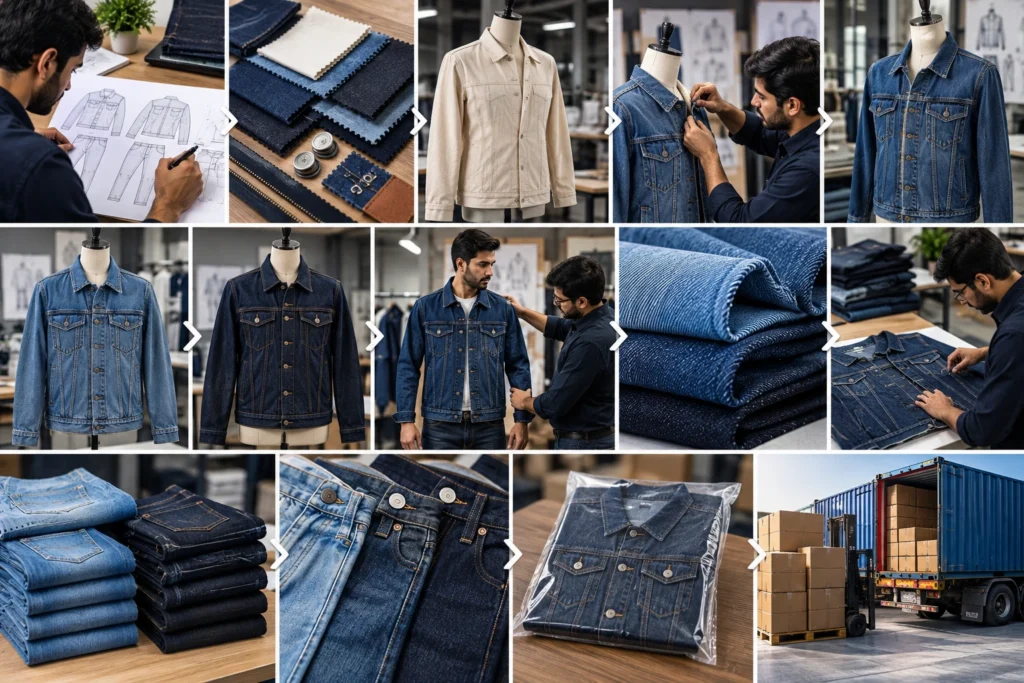
The muslin, or mock-up, is built in cheap, undyed fabric, not the actual production material, and its only job is to test whether the design works as a garment at all before any real fabric or trims get committed. Not every design needs this stage; a simple, well-understood silhouette can sometimes skip straight to a fit sample. A genuinely new construction, an unusual seam layout, a first-time working relationship between a brand’s designer and a new factory, benefits from it.
What gets checked here: does the pattern actually produce the silhouette the sketch implies, do the panels come together the way the construction notes describe, is there anything structurally wrong before it’s worth spending on real fabric.
The fit sample moves into production-weight fabric, or something close to it, and tests measurements, fit, and construction against the tech pack’s point-of-measure spec. Industry standard is at least two rounds of fit samples for a new style, not one. A single fit round that comes back “close enough” and gets waved through is how a size run ends up inconsistent later.
What gets checked: chest, waist, hip, sleeve length, and every other point-of-measure against tolerance, plus how the garment actually sits and moves on a body, not just how it measures flat on a table.
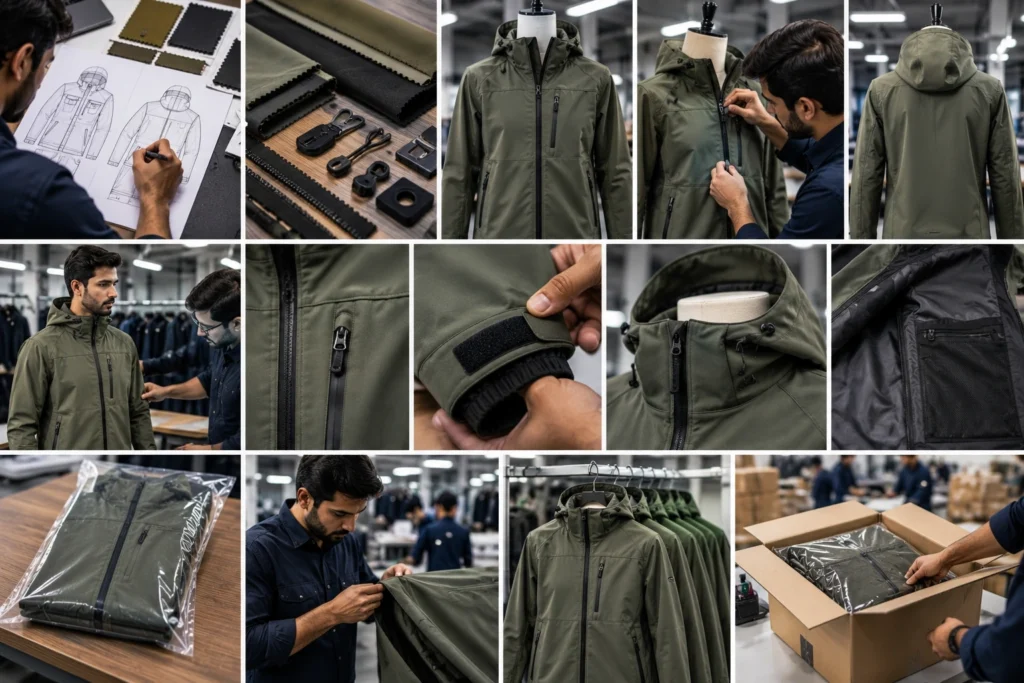
This is the highest-stakes sample in the funnel. It’s built with the actual production materials and trims, not substitutes, and its approval is what locks the design for bulk production. Changing anything after PP approval, a trim, a stitch detail, a measurement, is expensive in both time and materials, since it usually means unwinding decisions the factory has already started acting on.
Once approved, the PP sample typically gets sealed, sometimes called a gold-seal or red-seal sample depending on the outcome, and from that point forward it’s the actual physical benchmark bulk production gets checked against, not the written tech pack alone. This is worth understanding clearly: a tech pack describes intent, a sealed sample is the enforced standard, and it’s the core of how Rijiz’s own prototyping and sampling process is structured.
The TOP sample is pulled directly from the actual production line after bulk sewing has started, not built separately, to confirm the real output matches the sealed PP sample. It’s also the point where packaging gets checked alongside the garment itself, since a correct garment in the wrong packaging is still a failed shipment from a retail buyer’s perspective.
If a TOP sample doesn’t match the sealed benchmark, that’s a signal to stop and investigate before the rest of the run ships, not after.
Every stage above depends on the same input: a complete tech pack. A factory can only build what’s documented, not what a designer imagined but didn’t write down. At minimum, that means: technical flat sketches showing front and back (sometimes side), a full point-of-measure spec sheet with tolerance levels stated per measurement, not just a single number for the whole garment, a bill of materials listing every fabric and trim with fiber content, weight, and color reference, drawn from a fiber and materials market that’s broader and more specific than most brands’ first draft accounts for, construction notes covering seam types, stitch density, and finishing method, and a visual point-of-measure sheet showing exactly where each measurement starts and ends on the sketch.
A tech pack missing any of these isn’t a smaller version of a complete one, it’s a set of open questions a sampling team has to guess the answer to, and a guess is exactly where a rejected sample starts.
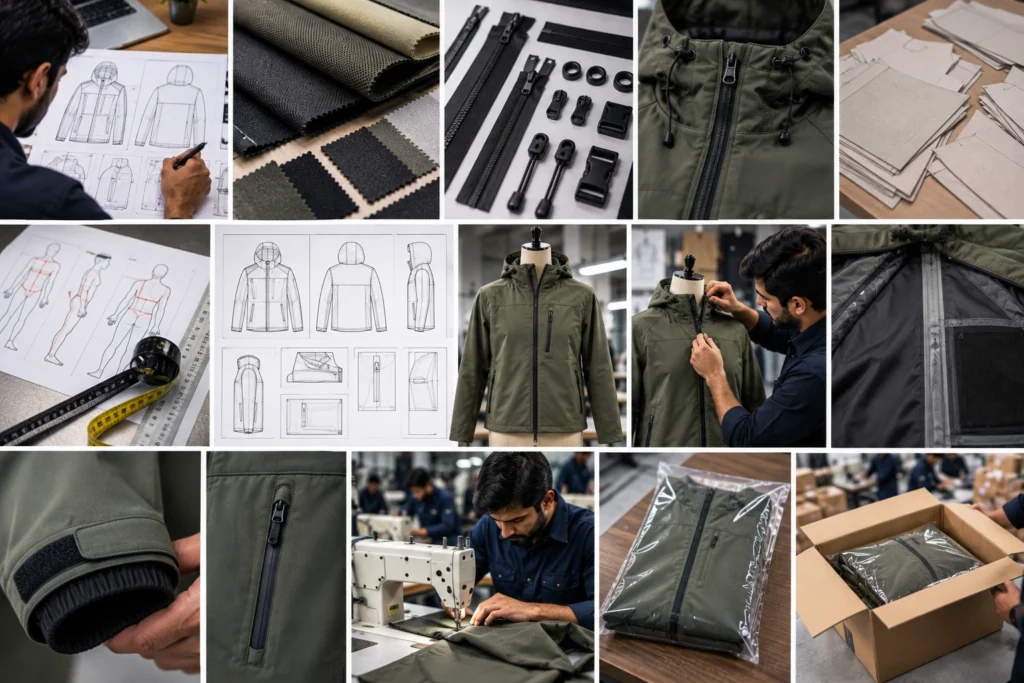
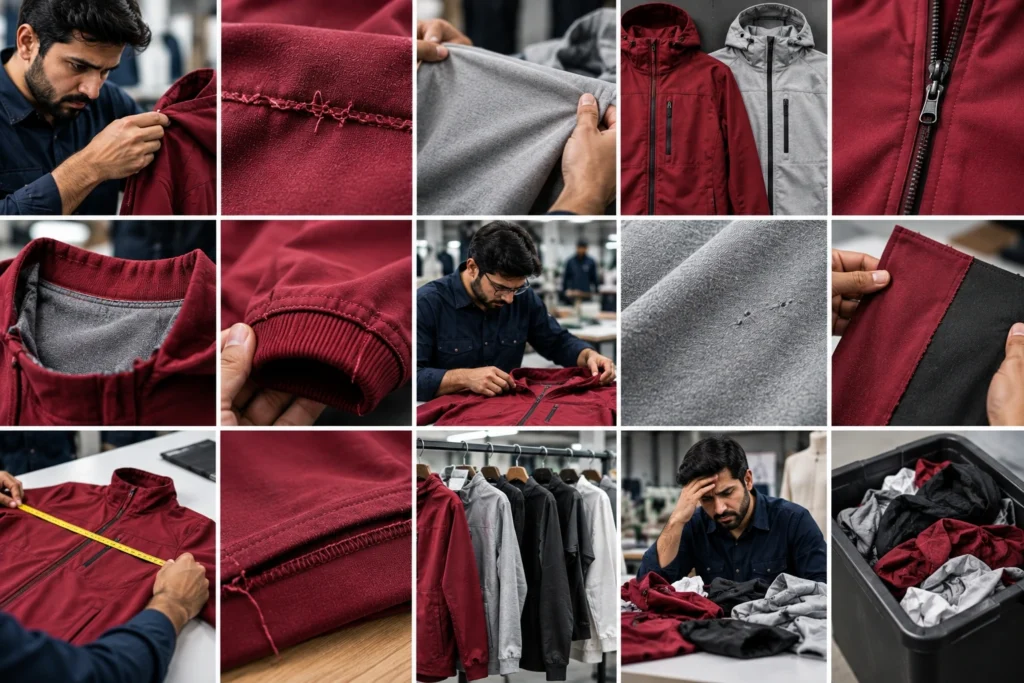
Four causes come up again and again across real sampling programs, and none of them are exotic.
Incomplete or unclear tech packs. If a measurement, construction detail, or trim isn’t documented, the sampling team fills the gap with their own interpretation, and that interpretation doesn’t always match what the brand actually meant.
Unavailable trims or fabric substituted without a flag. A factory that swaps in a similar zipper or button because the specified one wasn’t in stock, without telling the brand, creates a sample that looks right at a glance but fails on close inspection.
Fit issues evaluated against the wrong reference. Balance, proportion, shoulder position, rise, and sleeve shape all need to be checked against the correct fit model for the actual target market, not a generic body form.
Delayed or unclear buyer feedback. A revision cycle that drags because feedback comes back vague (“it doesn’t feel right”) rather than specific (“shorten the sleeve by half an inch”) adds rounds that a clearer note could have avoided.
This is the section where most sourcing content either goes quiet or makes up a number. Here’s the honest version.
Sample cost varies enormously by factory, complexity, and region, and there’s no single industry-wide figure worth quoting as if it applies everywhere. Whether a sample fee gets credited back against the bulk order is genuinely inconsistent across the industry, some factories treat it as a deposit refunded once the bulk order clears an agreed threshold, others don’t credit it at all. The only reliable practice is getting the credit percentage and refund threshold in writing before sampling starts, not assumed and discovered later.
Lead time follows a similar pattern: sample production itself, once specs are finalized, commonly runs in the range of 10-14 days covering pattern making, cutting, sewing, and quality checks at every stage , but that number means little on its own, because fabric and trim sourcing frequently adds more time on top of it, sometimes 2-6 weeks, and considerably longer for a custom-milled fabric. The sewing is rarely the bottleneck. Sourcing the materials is.
Not always. A simple, well-understood silhouette can sometimes go straight to a fit sample. A new or unusual construction, or a first program with a new factory, benefits from the extra step.
It's typically sealed and becomes the physical benchmark bulk production is checked against, not just the tech pack. Changing anything after this point is expensive in both time and materials.
It's standard, not excessive. A single fit round that gets approved without a second confirmation pass is one of the more common reasons a size run comes back inconsistent later.
Technically yes, but it's a real risk. Skipping the earlier stages means fit and construction problems that would have been cheap to catch early get caught, if at all, at the most expensive stage instead.
A fit sample checks measurements and construction, often in a fabric close to but not necessarily the final production material. A PP sample uses the actual production materials and trims, and its approval locks the design.
Don't assume either way. Practice varies by factory. Ask directly and get the credit percentage and refund threshold in writing before sampling starts.
Because sewing a sample is a matter of days once materials are in hand, but sourcing the right fabric, especially a custom-milled or dyed-to-match fabric, can take weeks on its own, well before a single stitch happens.
Clear tolerance levels per measurement (not one blanket number), a complete bill of materials with real fiber content and color references, and specific, measurable feedback at each revision round rather than general impressions.
Yes. A PP sample confirms the design and materials. A TOP sample confirms the actual production line is executing that approved design correctly once bulk sewing is underway, which is a different check.
* * *

FOUNDER & CEO AT RIJIZ