
Screen printing is an incredible technology for bold, flat colors, but it hits a hard mechanical wall the moment a design requires millions of overlapping gradients, drop shadows, or true photographic reproduction. If your brand relies on complex watercolor illustrations, high-resolution portrait photography, or intricate 3D shading, forcing that artwork through a traditional mesh screen often results in a thick, muddy graphic that lacks detail.
We provide DTG printing services (Direct-To-Garment) designed specifically to bypass the physical limitations of screen mesh.
However, DTG is not the cheap, “print-on-demand” fallback that internet marketers claim it is. It is a highly specialized chemical process. We utilize industrial-grade, dual-CMYK print heads to inject eco-friendly water-based pigments directly into the fibers of the garment. The result is a profoundly soft, highly detailed print that captures every microscopic pixel of your original digital artwork, entirely without the heavy, plastic feel of traditional plastisol ink.
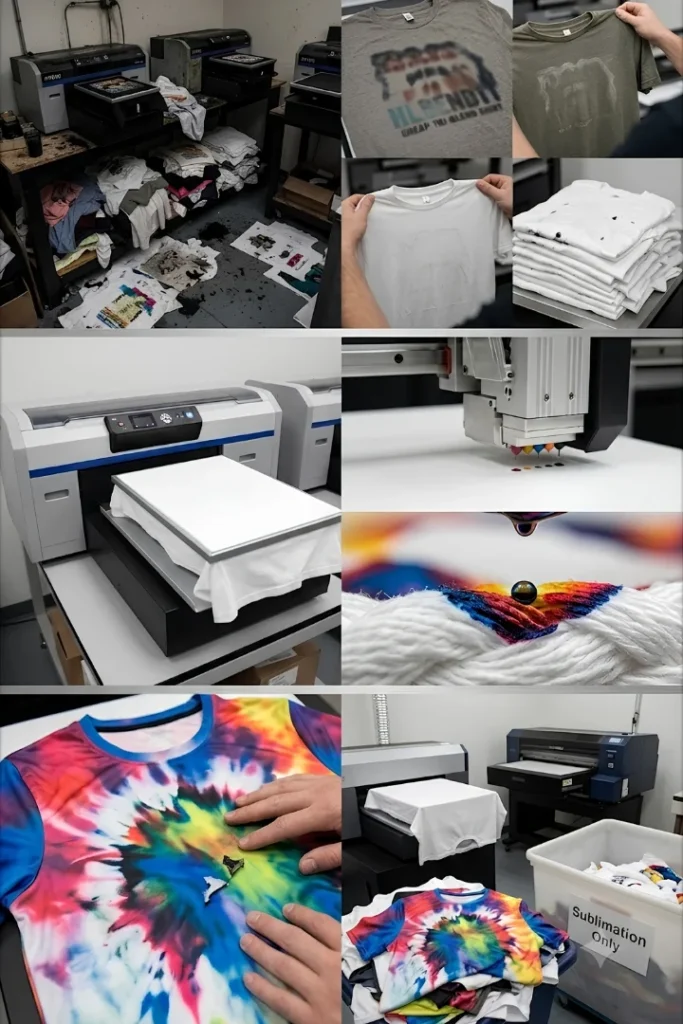
Amateur print shops will tell you that a DTG machine can print on any fabric. They are lying to secure your business, and their clients pay the ultimate price when the prints wash out after a single laundry cycle.
The water-based inks used in true direct to garment manufacturing are chemically engineered to bond exclusively with natural cellulose fibers (cotton, bamboo, hemp). They physically cannot bond with synthetic plastics. If you attempt to run a DTG print on a 100% polyester athletic shirt or a cheap tri-blend, the ink will simply sit on the surface of the plastic fibers. It will bleed wildly during the curing process and flake off the moment the customer washes it.
To achieve gallery-quality, permanent prints that outlast the garment itself, we strictly enforce a 100% cotton requirement for our DTG production lines. We highly recommend using combed and ring-spun cotton. This industrial spinning process removes stray, fuzzy fibers from the yarn before it is knitted, creating an incredibly flat, smooth surface area for the microscopic ink droplets to land on.
If your project mandates polyester blends, moisture-wicking activewear, or tri-blends, we will immediately route your order to our Screen Printing or Sublimation hubs. We refuse to execute a printing method if the chemistry guarantees failure.
Amateur print shops will tell you that a DTG machine can print on any fabric. They are lying to secure your business, and their clients pay the ultimate price when the prints wash out after a single laundry cycle.
The water-based inks used in true direct to garment manufacturing are chemically engineered to bond exclusively with natural cellulose fibers (cotton, bamboo, hemp). They physically cannot bond with synthetic plastics. If you attempt to run a DTG print on a 100% polyester athletic shirt or a cheap tri-blend, the ink will simply sit on the surface of the plastic fibers. It will bleed wildly during the curing process and flake off the moment the customer washes it.
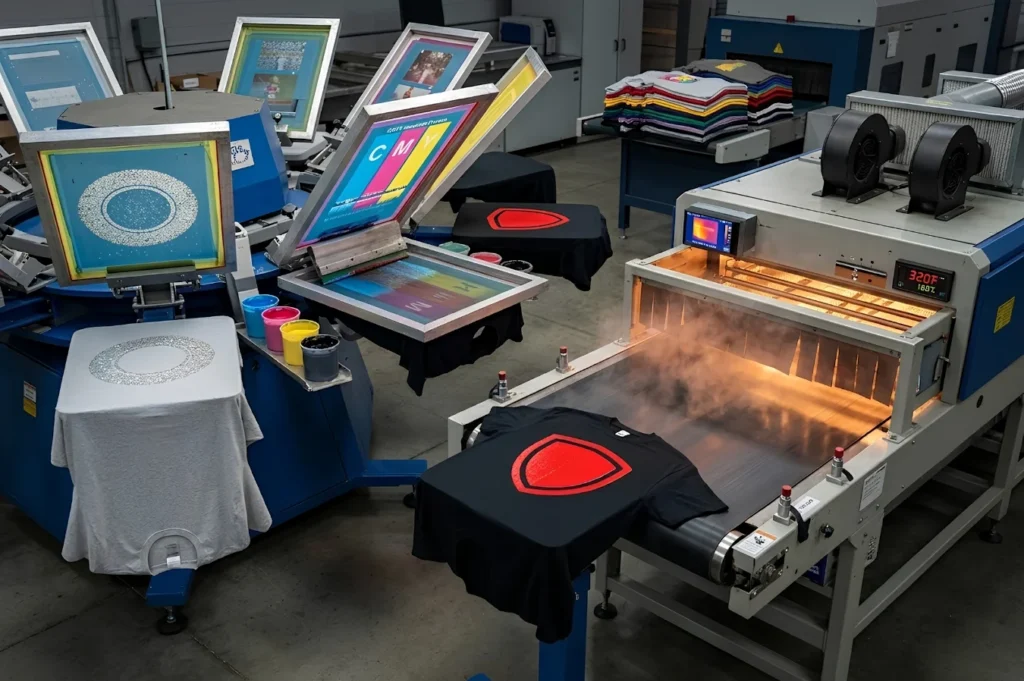
If you have a bold, single-color athletic logo, we use lower mesh counts. This allows maximum ink to flow through, giving you bright, solid coverage that pops on dark fabrics.
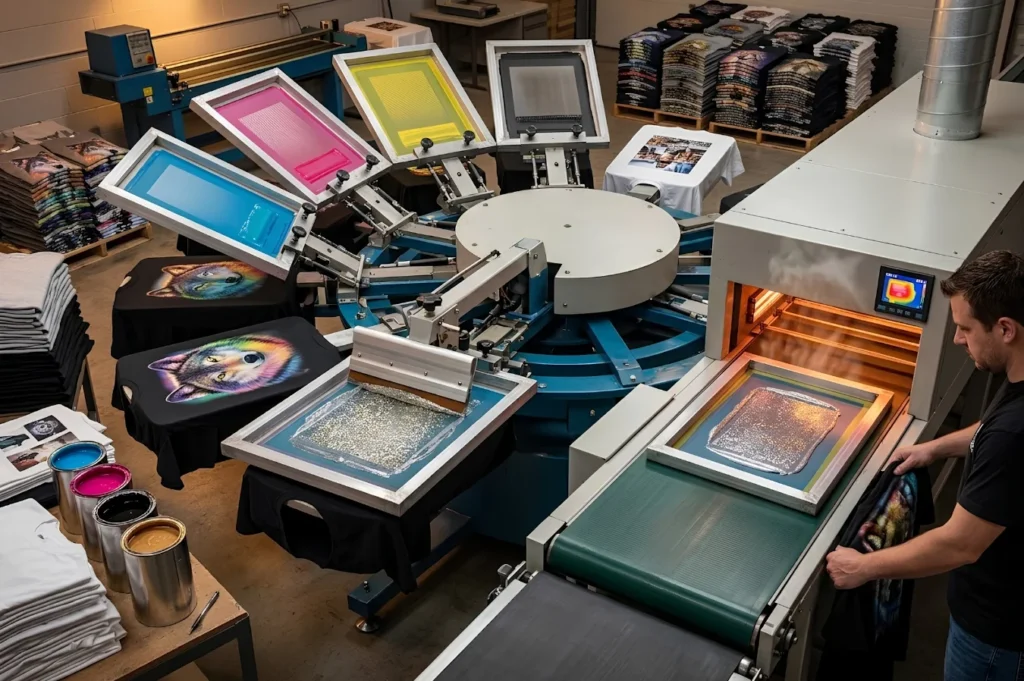
For complex gradients or photorealistic artwork, we burn the image onto ultra-fine 230 to 305-mesh screens. This separates the colors into microscopic halftone dots. It creates smooth, flawless blends that generic printers simply cannot replicate.
Sometimes, standard flat colors aren’t enough to capture a high-end streetwear aesthetic. Our factory floors handle complex specialty additives to make your designs stand out.
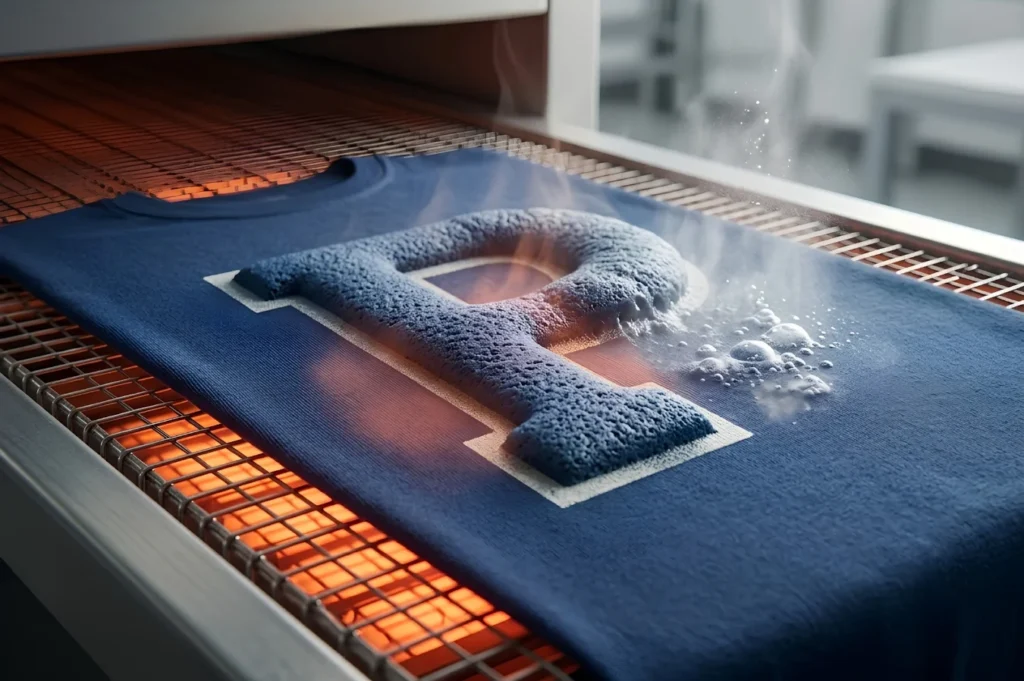
We mix a special foaming agent into the ink. When the garment hits the curing oven, the heat activates the foam. The ink expands upward, creating a raised, 3D texture. It is perfect for vintage athletic fonts and bold streetwear logos.
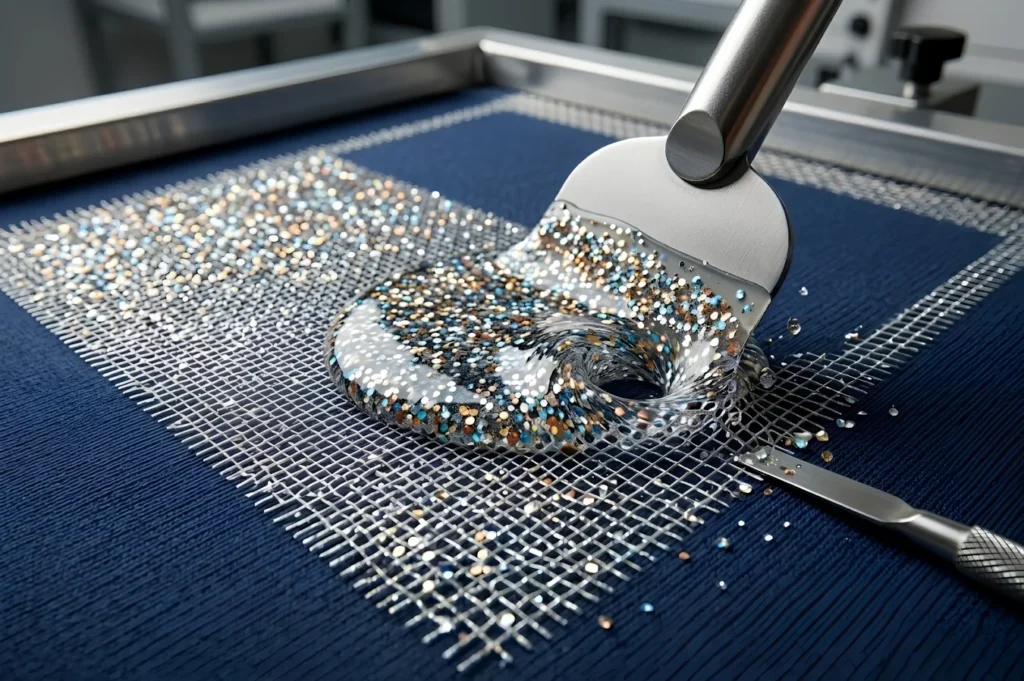
For high-contrast designs, we mix microscopic metallic flakes into a clear base gel. This requires highly specialized screens so the physical flakes can pass through without clogging the mesh.
The single biggest complaint brands have when dealing with a cheap bulk DTG printing company is the infamous “yellow box effect” or “stain ring.”
When you print liquid water-based ink onto a dark-colored shirt, the fabric instantly absorbs the ink like a sponge, making the image completely invisible. To fix this, the printer must apply a chemical pre-treatment fluid to the shirt. This fluid acts as a chemical primer, allowing the white ink underbase to sit on top of the fabric rather than soaking in.
Cheap print shops spray this chemical unevenly using hand-held spray bottles. They then press the shirt and ship it. This leaves a stiff, crusty, yellowed square around the logo that infuriates retail customers.
There is a massive, unspoken divide in the DTG industry regarding the hardware used on the factory floor.
Over 90% of local print shops and entry-level dropshippers use modified desktop inkjet printers (such as basic Epson or Brother models) that process one shirt every ten to fifteen minutes. While fine for a hobbyist, these machines lack the pneumatic pressure and ink flow necessary to force pigment deep into heavyweight, premium garments.
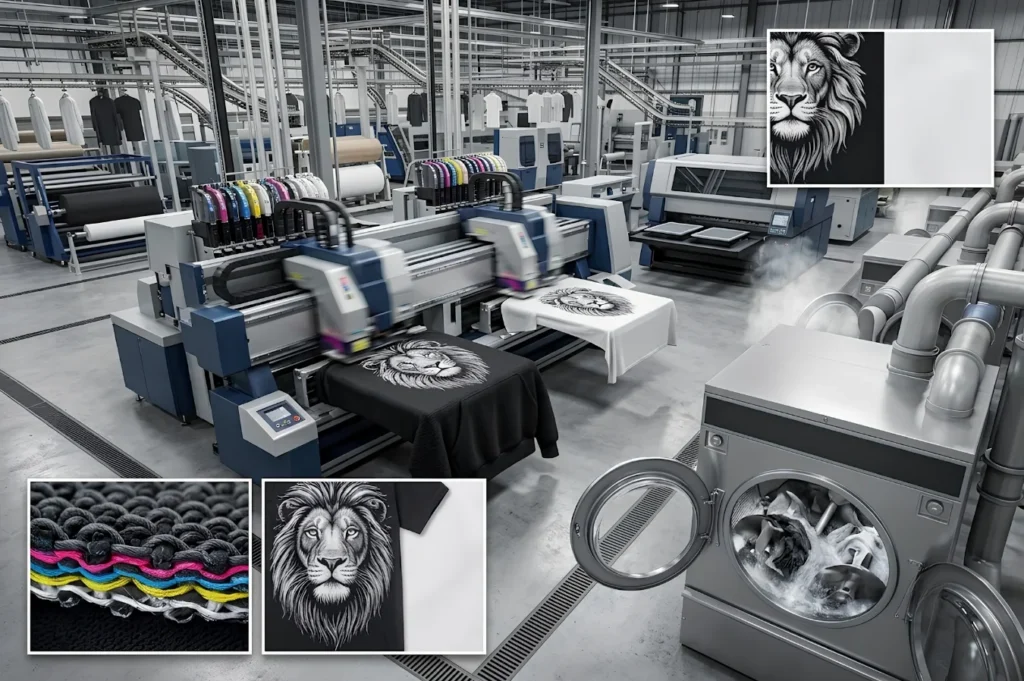
As a high-volume commercial DTG printer services facility, we utilize true industrial manufacturing machinery (such as Kornit Avalanche or equivalent half-million-dollar systems). These industrial machines feature dual-CMYK heads and massive built-in white underbase channels. They fire ink with immense pressure, driving the pigment deep into the core of a 400 GSM heavyweight French Terry hoodie just as easily as a lightweight 150 GSM t-shirt. This deep penetration ensures the print survives intense industrial wash cycles without degrading, cracking, or fading.
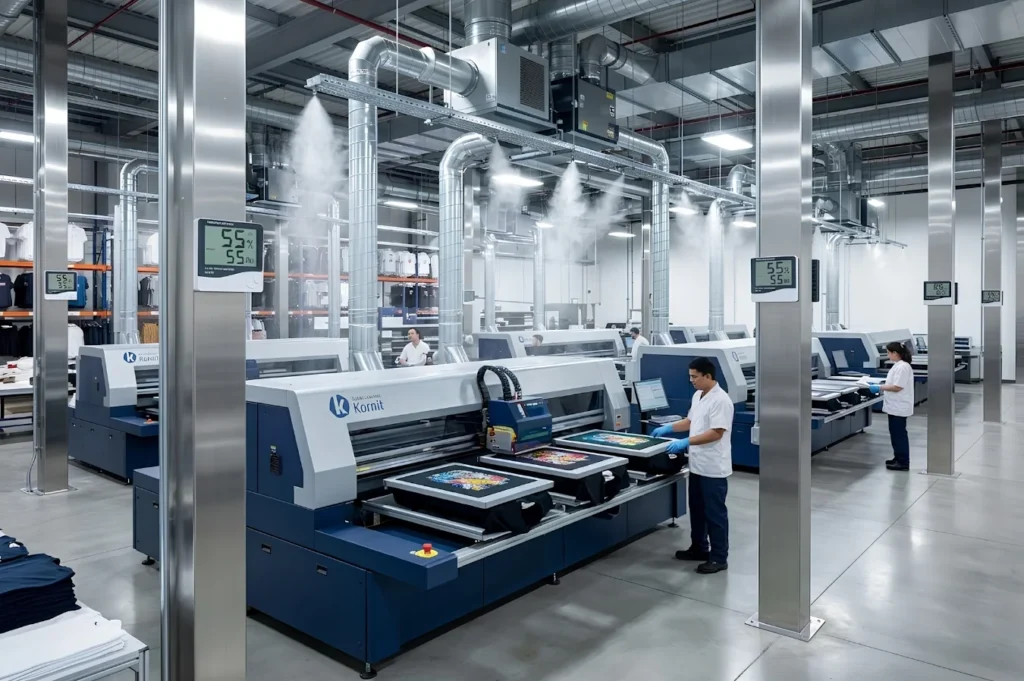
Water-based DTG inks are incredibly sensitive to environmental factors. If the air in the factory is too dry, the ink will literally dry and clog inside the microscopic print heads before it ever reaches the shirt. Our DTG production floors operate under strict, 24/7 climate control, maintaining a constant 50-60% ambient humidity. This prevents head-strikes, banding, and inconsistent color output across massive bulk runs.
The most common point of friction between a fashion designer and a printing factory is color expectation. When you look at your artwork on an Apple Retina monitor, you are seeing light emitted in RGB (Red, Green, Blue). A monitor can display glowing neon greens, hyper-vibrant pinks, and impossibly bright blues.
Printers do not use light; they use physical liquid pigment. DTG machines mix Cyan, Magenta, Yellow, and Black (CMYK) to recreate your image. The CMYK color gamut is physically smaller than the RGB gamut. It simply cannot replicate glowing neon or fluorescent colors.
Before we accept a bulk run for our B2B direct to garment services, our prepress engineers actively convert your digital files into a strict CMYK color profile. We then flag any “out-of-gamut” colors—these are specific shades in your artwork that will look duller when printed than they do on your glowing screen. We run a physical swatch test so you can approve the exact, real-world physical color output before we initiate the full production run.
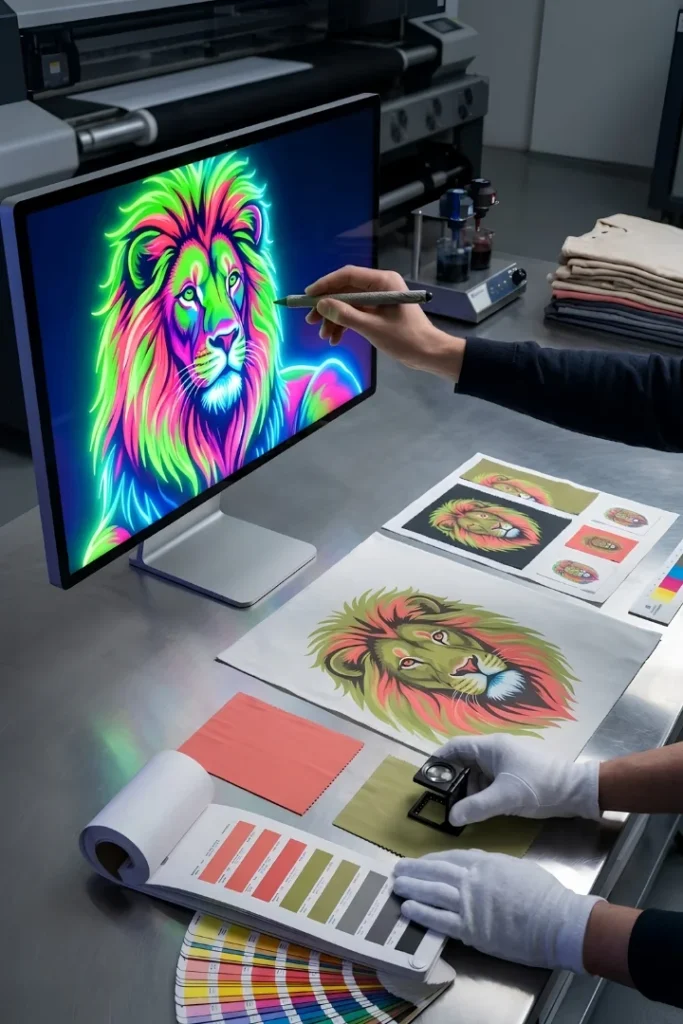
Because DTG relies entirely on digital print heads rather than physical mesh screens, the quality of the final output is 100% dependent on the quality of your input file. A machine cannot “fix” a blurry image during the printing phase. Our prepress team institutes strict engineering protocols on your files before the machine is engaged.
A common mistake in amateur DTG printing involves drop shadows and semi-transparent gradients (like smoke or glowing effects) fading into a black shirt. If not engineered correctly, the machine will print a solid white underbase beneath the semi-transparent smoke, resulting in a horrible grey blob instead of a smooth fade. Our prepress team utilizes specialized RIP (Raster Image Processor) software to manually adjust the opacity masks, ensuring the white underbase chokes back exactly where it needs to, allowing smooth, flawless gradients.
We require all artwork to be exported at exactly 300 DPI (Dots Per Inch) at the exact physical dimensions you want it printed (e.g., 14 inches wide by 18 inches tall). Upscaling a low-resolution JPEG will result in jagged, pixelated edges that the DTG machine will print with brutal accuracy.
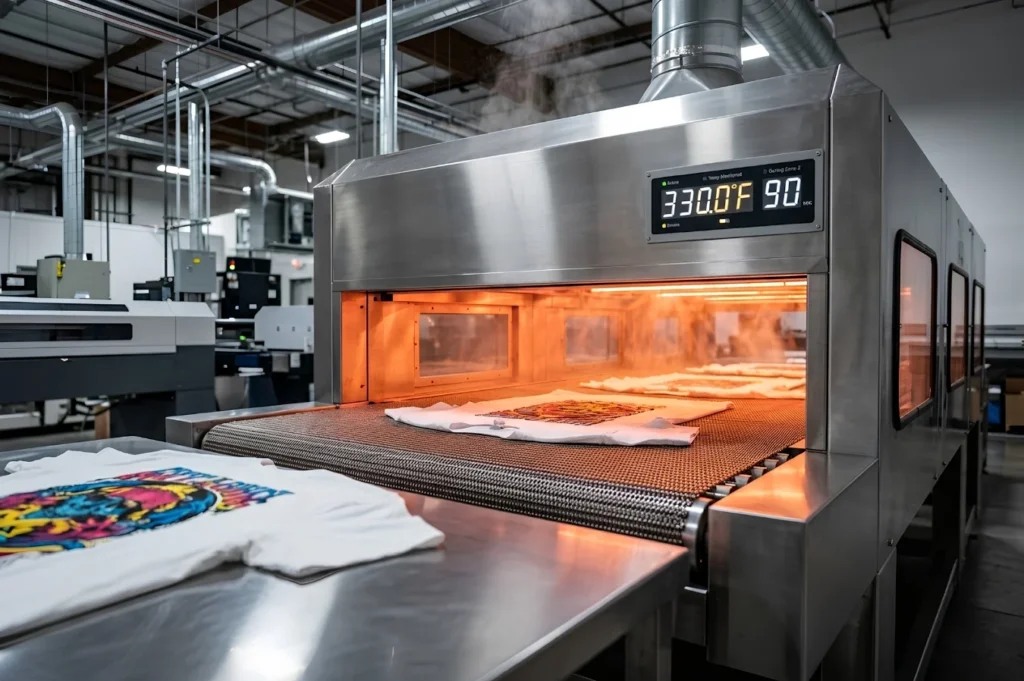
A DTG print fresh off the machine is essentially a wet watercolor painting sitting on a piece of fabric. If it is not cured correctly with exact thermal science, the water will evaporate but the pigment will not physically bond to the cotton fibers.
Every garment that comes off our DTG line is immediately processed through a massive forced-air conveyor dryer or a strictly calibrated industrial heat press. The garment is held at exactly 330°F (165°C) for up to 90 seconds.
This specific thermal window is critical. It evaporates the water base and triggers a chemical reaction that permanently locks the CMYK pigments into the cotton cellulose. If the temperature drops to 310°F, the bond fails. If it spikes to 360°F, the cotton fibers scorch. Our conveyor belts are digitally monitored to maintain exact thermal equilibrium throughout the entire bulk run.
Modern consumers demand sustainability, and traditional screen printing can involve heavy PVC plastics (plastisol) and harsh chemical solvents during the screen-washing process.
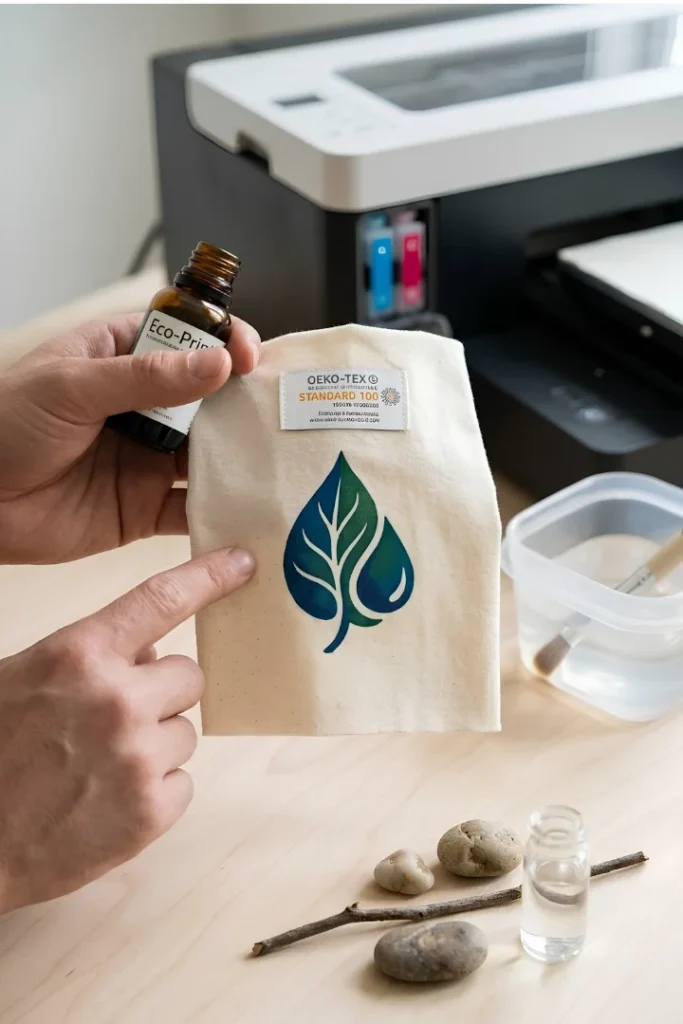
DTG printing provides a massive environmental advantage. The water-based inks we utilize in our contract DTG printing operations are 100% non-toxic, vegan, and biodegradable. Our primary ink sets are certified by the OEKO-TEX Standard 100, meaning they are guaranteed to contain no harmful chemicals, heavy metals, or volatile organic compounds (VOCs). They are completely safe for infant and toddler apparel.
Furthermore, because DTG eliminates the need to wash out physical screens with heavy chemical solvents, our water consumption and chemical runoff footprint is a fraction of a traditional print shop.
EXCELLENT Based on 31 reviews
 Posted on Google
 Tomy
TomyTrustindex verifies that the original source of the review is Google.
We have worked with this supplier on the development and production of high-performance sportswear, and the experience has been very positive. We especially value their clear communication, willingness to make adjustments, and commitment to quality. They were open to technical feedback and worked closely with us to improve fabrics, finishes, and details until meeting our standards. Deadlines were met properly and the final result was professional. We definitely recommend this supplier to brands looking for a serious, long-term partnership.Posted on Google Josiah RayGreat productPosted on Google
 J SHighly recommend this company for your custom clothing for your brand. One of my favorite things working with them is the constant and clear communication, and the attention to detail. Also they are very quick especially for producing high quality apparel, and provide updates and progress photos throughout the process. A+ across the board, ive recommended them to my peers in the industry and will certainly use them again.Posted on Google
 sRGGohar was very helpful and worked with our team every step of the way. He providing useful tips and thorough inspection during the manufacturing process. The clothes were extremely high quality and all designs, embroidery, etc was perfect.Posted on Google
 Nomada transExcellent communication, service and products. Material is always as agreed and of top quality. Very much recommended.Posted on Google
 vari sybAmazing Service, Shipping and Very Affordable Prices, Highly Recommended!Posted on Google
 Alicia VasquezThey are SO fast. Very good to work with and responsive. They are knowledgable about what looks good and giving you exactly what you want.Posted on Google
 Thomas Skinner
Trustindex verifies that the original source of the review is Google.
I have build a hand full of entrepreneurial businesses, but recently made my first venture into the sportswear sector, and decided to work with Rijiz as my first clothing manufacturer. They did an incredible job bringing my flat sketches to life, and working with me throughout the iterative design process, making small tweaks and suggestions as we moved towards the final product. Their communication was good via email, and they were supportive throughout the process, even checking in with me periodically to ask how things were going. The only hiccups were a last minute increase in the cost per unit of the product, and a slightly longer than expected lead time, but my order quantity was very small, so these problems make sense. I'm sure larger order with them take priority. Overall, they are a great company that I will continue to work with as this business grows, and I would highly recommend them!Posted on Google Naleye AliEvery good communication skills, always delivering and make the customer wholesome. Very very happy for the results💯💯💯Posted on Google
 Teh Jerry KumGreat manufacturer and makes sure every detail is on point, Very satisfied with their work. What i ordered was exactly what was delivered to me, Much respect to them 🫡Verified by TrustindexTrustindex verified badge is the Universal Symbol of Trust. Only the greatest companies can get the verified badge who has a review score above 4.5, based on customer reviews over the past 12 months. Read more
If cured correctly with our thermal protocols on 100% cotton, a premium DTG print will easily survive 50+ heavy wash cycles without significant fading. However, it will never outlast a heavy plastisol screen print, which is essentially a permanent layer of melted PVC plastic sitting on top of the shirt. DTG trades a slight amount of sheer, bulletproof durability for an incredibly soft hand-feel, superior breathability, and infinite color complexity.
No. The print heads on an industrial DTG machine hover just millimeters above the fabric surface. If a thick zipper, a bulky seam, or a raised pocket hits the print head during its rapid pass, it will instantly destroy a highly expensive, precision-calibrated piece of equipment. DTG printing must be executed on perfectly flat, unobstructed panels.
Our industrial platens can accommodate massive oversized prints, typically maxing out at 16 inches wide by 20 inches tall. This easily covers the entire front or back panel of a standard adult heavyweight hoodie or t-shirt, allowing for massive, wrap-around graphic placements.
White ink cracking is caused by two things: under-curing or printing on highly elastic fabric. Because DTG ink is designed for rigid 100% cotton, it does not stretch well. If a customer buys a shirt that is too tight and the cotton stretches across their chest, the layer of white underbase ink will micro-fracture. We mitigate this by ensuring deep ink penetration and exact 330°F curing, but we always advise clients to print on heavier GSM cottons to reduce fabric stretch.
Do not trust complex, high-color artwork to a shop that forces everything through a standard mesh screen, and do not trust it to a dropshipper using a cheap desktop printer in a garage. If your design features gradients, shading, or photographic elements, you need the heavy-duty precision of industrial inkjet technology.
Our DTG printing services provide the dual-CMYK hardware, the exact pre-treatment chemistry, the environmental controls, and the strict thermal curing protocols required to make your detailed graphics look flawless and feel permanent.
Rijix Limited - 7 Bell Yard, London, England, WC2A 2JR
Rijiz International - Mohala Chawinda Daburji Arayian Pasrur Road Sialkot, Pakistan.
Phone : +44 7307582940 Phone : +92 336 140 8321