
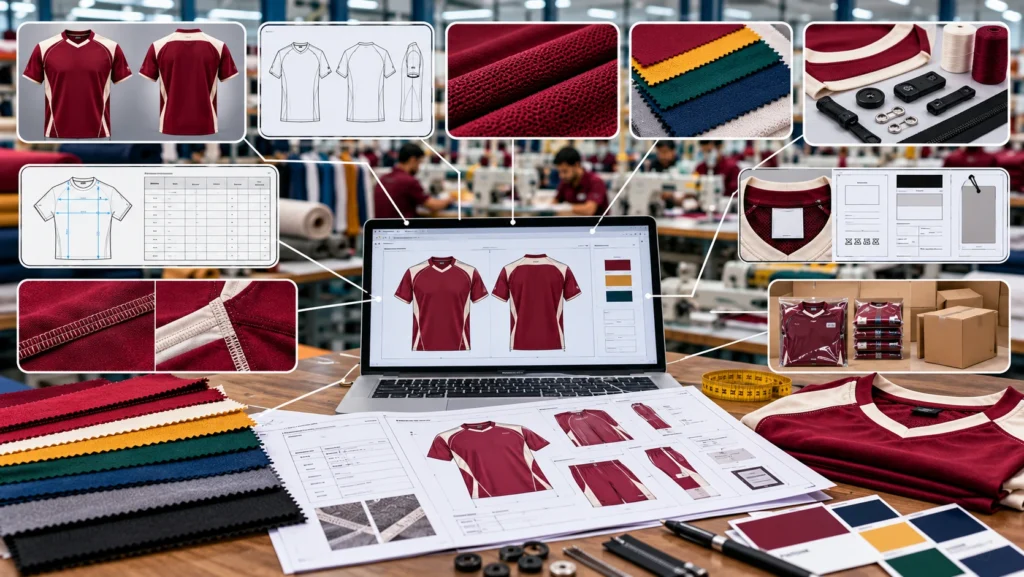
A tech pack is the working package of drawings, material lists, and construction instructions that tells a factory exactly how to build one style. It is not a sketch, not a moodboard, and not a single measurement chart. Those communicate a look; a tech pack communicates a build.
The reason this distinction matters shows up at the quoting stage, before a single sample is cut. A factory pricing a garment from a sketch alone is pricing a guess: it does not know the fabric weight, the trim spec, the seam type, or the labour that specific construction requires. Our own tech pack design service exists because that gap between a nice drawing and a buildable document is where most first-time brands lose weeks and money before production even starts.
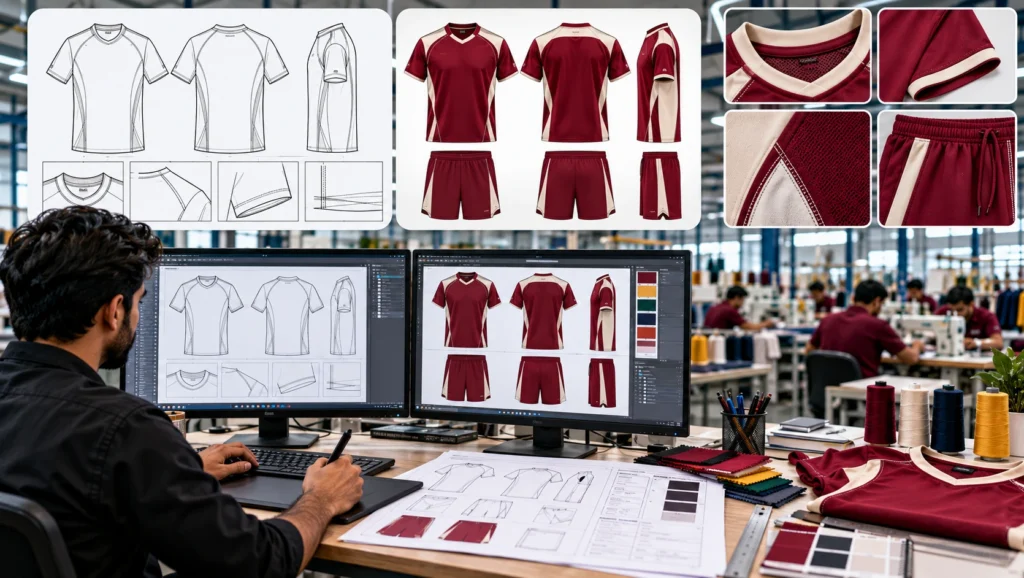
A technical flat, sometimes called a CAD, is a proportionate, un-styled line drawing of the garment: front, back, and any side or interior view a detail actually needs. It is not a fashion illustration. No shading, no styling, no model pose, just a clean drawing to scale with callout lines pointing to every seam, pocket, placket, and piece of hardware.
A common first-timer mistake is submitting a front view only. A factory building a pocket, a hidden zipper, or a lined interior needs the back and interior views just as much as the front, because a pattern maker cannot invent a construction detail that was never drawn.
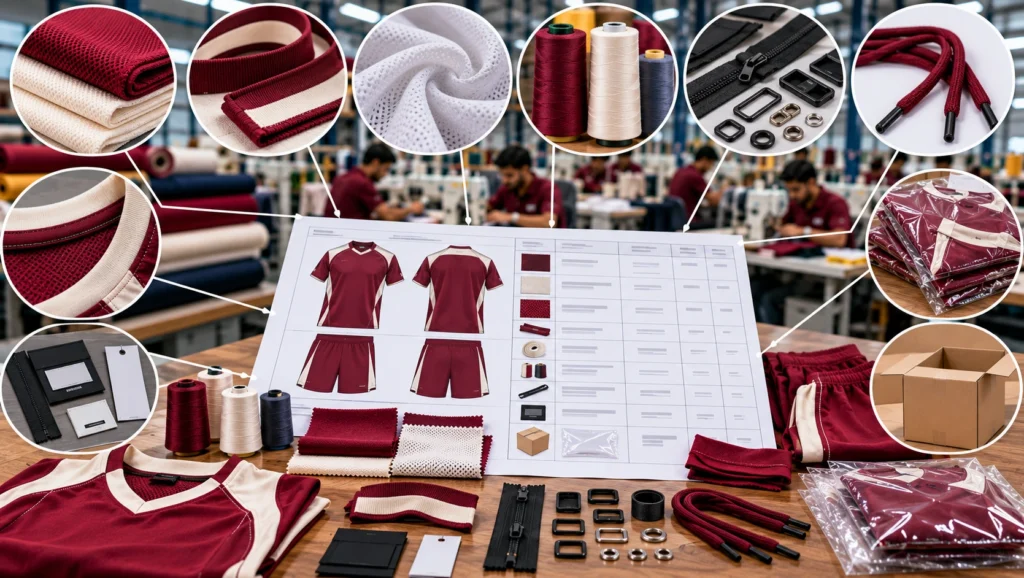
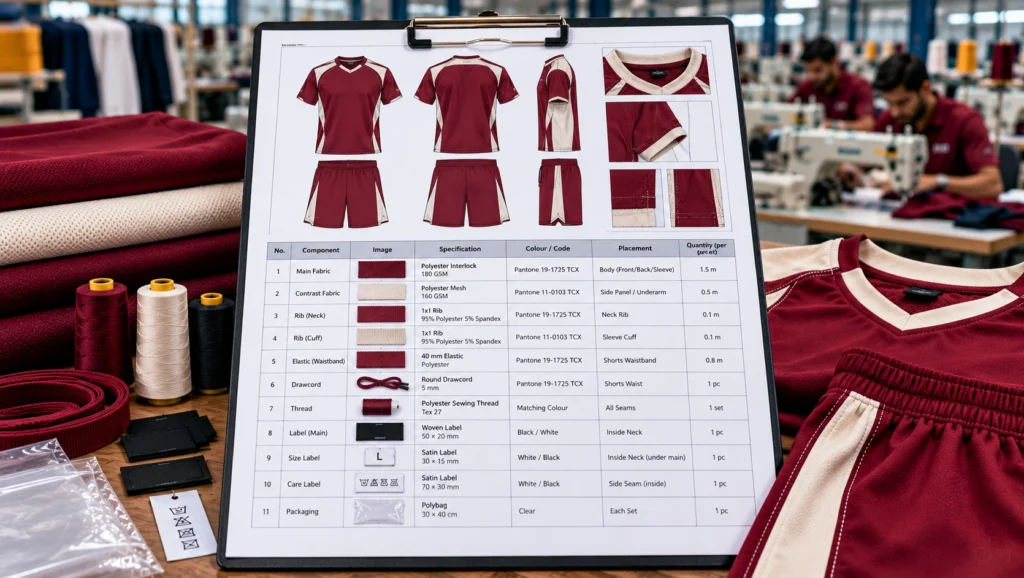
The bill of materials, or BOM, is the itemised list of everything physically going into the garment: main fabric, lining, interfacing, thread, and every trim, with fibre content, weight, colour reference, and quantity noted against each one.
A BOM with a gap does not stay a gap once it reaches a factory. A missing fabric weight or an unspecified thread colour becomes a decision the sourcing team makes on your behalf, usually toward whatever is already in stock rather than what your brand actually wants. A complete BOM is also what makes two factory quotes genuinely comparable, since both are pricing the same list of components instead of two different guesses.
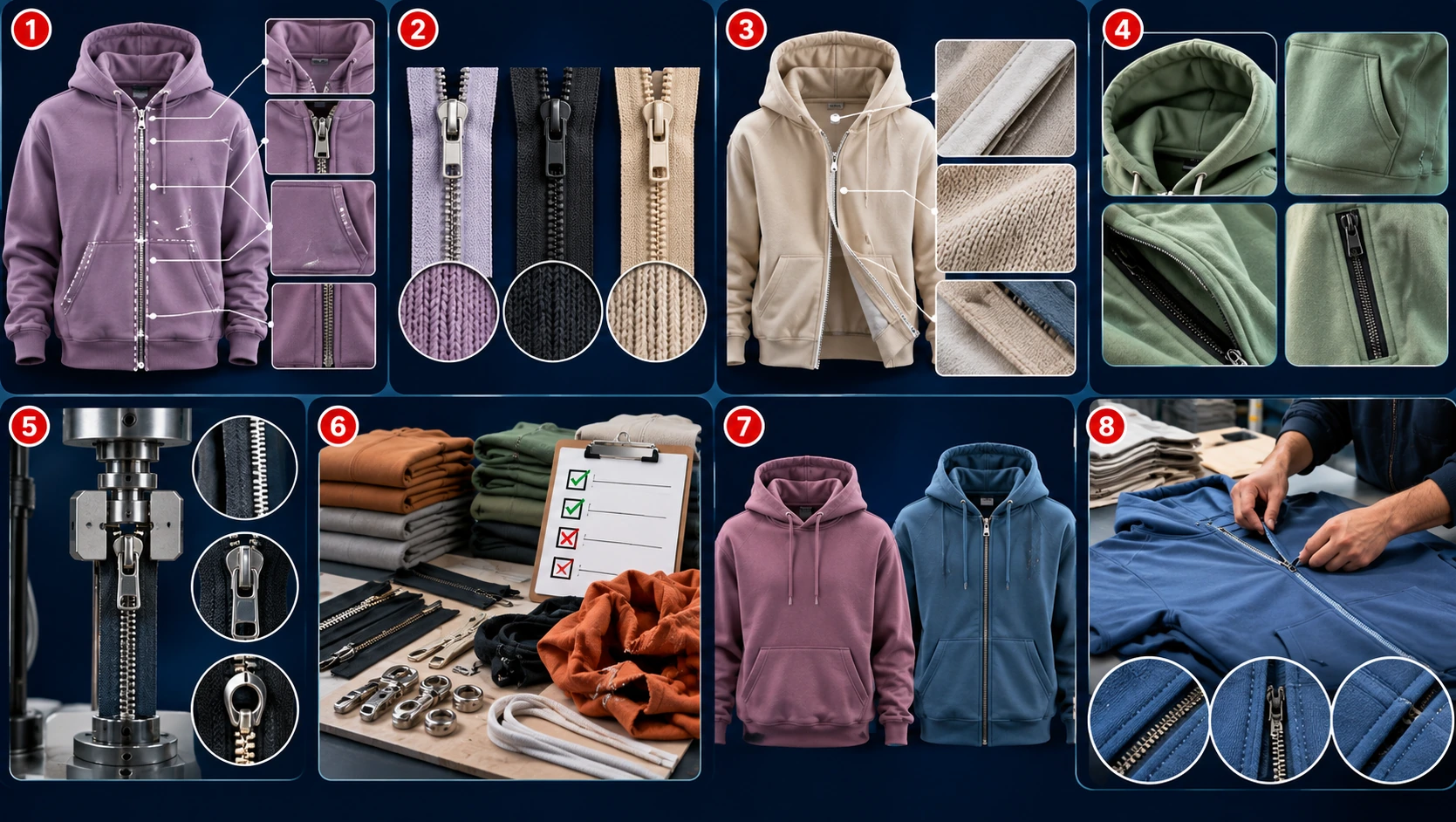
Trims sit inside the BOM, but they earn their own attention because they cause a disproportionate share of delay. A zipper, a button, a drawcord tip, a snap: each one needs a size, a material, a colour, and where possible a supplier reference, not a generic description.
An unavailable trim substituted without a flag is one of the more common causes of a sample that looks right at a glance and fails on close inspection. Naming the trim precisely, and asking to be told before a substitution happens rather than after, closes that gap before it reaches a cutting table.
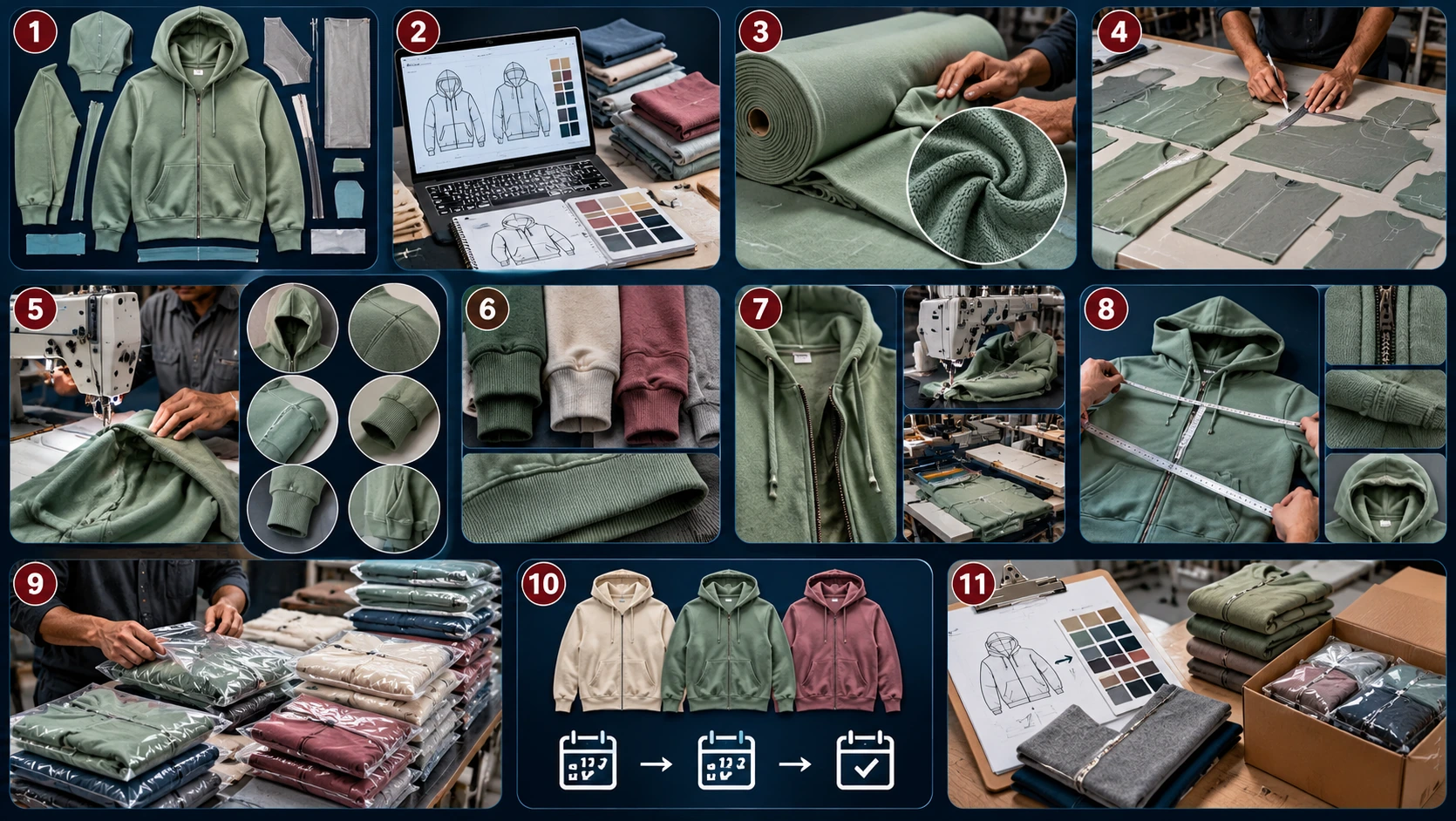
Construction notes specify how the pieces actually get joined: seam type, stitch type, stitches per inch, seam allowance, and finishing method at every point that matters. A drawing shows where a seam sits. A construction note says how it is sewn, and that second piece of information is what a sewing operator actually works from.
This is where a real classification system earns its place in a tech pack rather than a vague phrase like “standard construction,” which means something different at every factory. ASTM D6193, the industry practice for stitches and seams, sets out named stitch and seam classes specifically because strength, elasticity, and durability all trace back to which stitch and seam type was actually used, not an assumption of what “standard” means locally.
The point-of-measure spec sheet, the chart listing every measurement, its target value, and its tolerance, is one page inside a tech pack, not a substitute for the rest of it. A brand that sends only a spec sheet has sent the numbers with no context for how they connect to the actual build.
The POM terminology, the tolerance logic, and the body-measurement standards behind a spec sheet are covered in full in what a garment spec sheet needs to include, which pairs with the body-measurement standards covered in what body measurements actually are. Both sit inside the tech pack as components, not as separate documents competing with it.
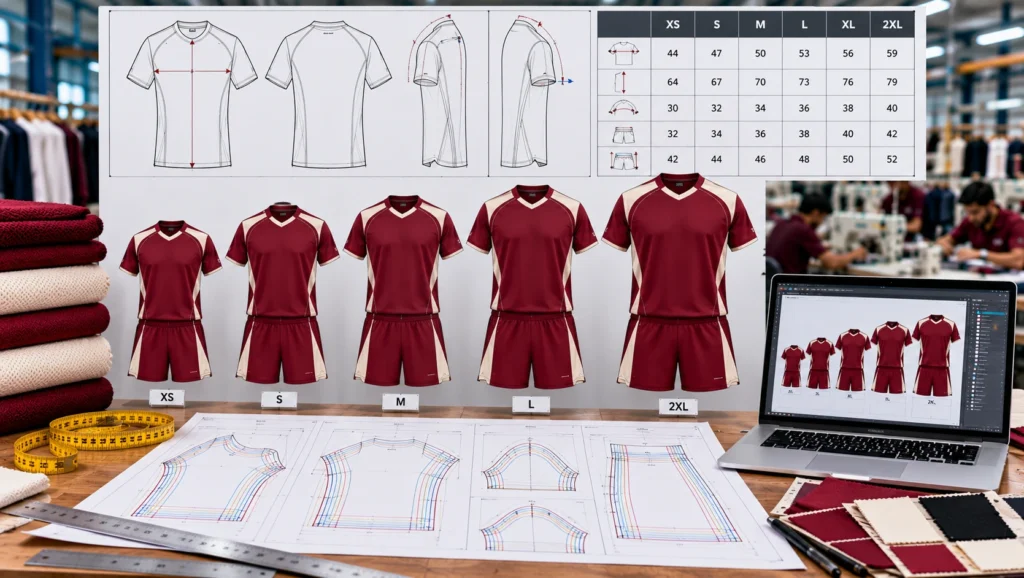
A tech pack specs one base size in full detail, then relies on grading rules to scale that spec across the rest of the size run. Each point of measure needs its own grade increment, since a chest measurement and a neck drop rarely grow at the same rate between sizes.
A tech pack that stops at the base size and leaves grading as an assumption is handing a plus-size or petite range over to whatever default the factory’s grading software applies. The mechanics of how a base pattern actually gets scaled, cut, and nested are covered in full in how pattern grading works.
A colourway page lists every approved colour combination for a style, and each colour needs a Pantone reference, not a name. “Navy” reads differently on a phone screen, a printed swatch, and a bolt of dyed fabric; a Pantone code on the Fashion, Home + Interiors cotton standard does not.
Colour only becomes real once it is dyed against that reference and checked under a consistent light source, which is the lab-dip stage covered in full in how the fabric dyeing process actually works. The tech pack’s job is to name the target color code precisely enough that a dye house has something exact to match against, not a description to interpret.
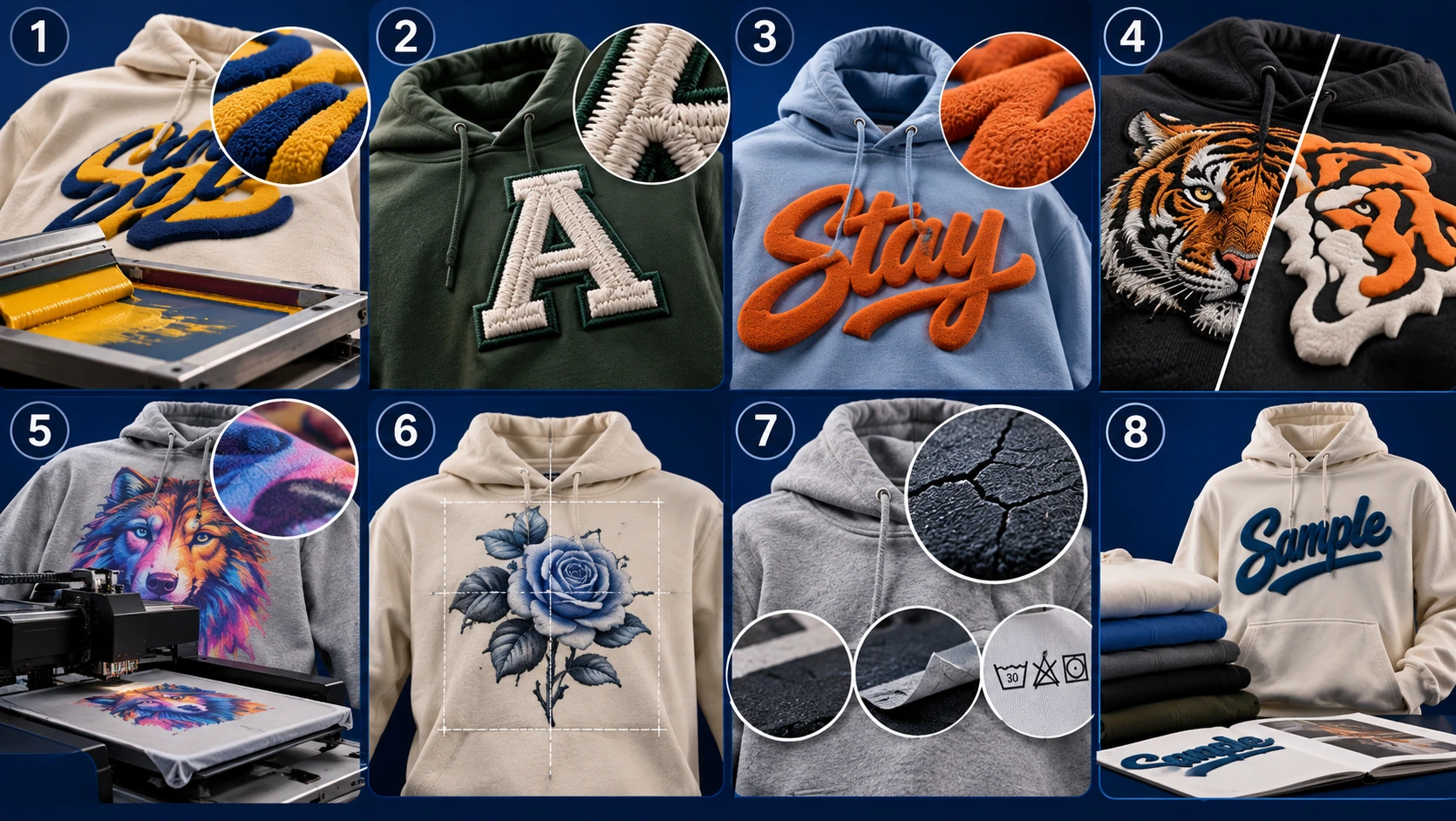
Any graphic, logo, or embroidery gets its own page: the artwork file, the exact placement measured from a fixed point on the garment, the application method, the size, and the approved colours. A placement described as “centred on the chest” is not a placement; a placement measured “4 inches below the shoulder seam, centred on the front panel” is.
Alignment tolerance matters here too. A print or embroidery position that drifts a few millimetres from unit to unit reads as sloppy at scale even when every individual piece would pass on its own, so the acceptable variance is worth stating alongside the measurement itself.
Two labels usually apply to a single garment: a brand label and a care label, each with its own placement, content, and size requirement stated precisely, not left to whatever the factory’s default happens to be. Care label content in particular, fibre content and wash instructions, needs to be correct for the actual fabric used, not copied from a previous style.
Packaging instructions cover folding, bagging, hangtag placement, and any barcode or size-sticker requirement. A garment built correctly but packed wrong is still a failed order from a retail buyer’s perspective, which is why packaging earns its own page rather than a one-line note at the bottom of the BOM.
A tech pack changes. A fit comment adjusts a measurement, a trim goes out of stock, a colour gets refined after the first lab dip, and each of those changes needs a version number and a short note on what changed, when, and why.
Without version control, a factory working from an email thread full of revisions has no reliable way to know which version is current. A dated, numbered tech pack removes that ambiguity and gives both sides a single reference for what was actually approved, which matters as much in a quality dispute as it does during normal sampling.
A handful of gaps account for most of the rework a first sample comes back with, and none of them are exotic.
A single front-view sketch with no back or interior detail. A BOM missing a fabric weight or a trim colour reference. Construction notes that say “standard” instead of naming a stitch and seam type. A colour named instead of Pantone-coded. And a tech pack with no version number, so a factory works from whichever copy happens to be in an email thread rather than the one actually approved.
Every one of these is a documentation gap, not a manufacturing failure, and every one of them is closed before a single sample gets cut, not discovered after it comes back wrong.
This is where a tech pack earns the time spent on it. Once it is complete, it is the document a factory quotes from, the reference a sample gets checked against, and, once a sample is approved, the benchmark bulk production is held to.
At Rijiz, that flow runs on the same document from first quote to final shipment. We work from your tech pack’s full BOM and construction notes to quote accurately at MOQ 30 per design, sample in 12 days, and move approved styles into an 18-day bulk run with 6-day shipping once production clears. If the finished order does not match what the tech pack specified, that is covered by a full refund or a free remake, because the tech pack is the standard we are actually holding ourselves to, not a formality on the way to production. If you have a design that needs this level of documentation before your next factory conversation, our tech pack design service is where that starts.
A tech pack is the package of drawings, materials lists, measurements, and construction notes that tells a factory exactly how to build a specific garment, covering everything a quote, a sample, and a bulk run all get checked against.
No. A spec sheet is the measurement chart alone. A tech pack includes the spec sheet plus flats, BOM, trims, construction notes, colourways, artwork, labels, packaging, and a revision log.
It scales with garment complexity. A basic tee can run 4 to 6 pages; a technical jacket with lining, multiple pockets, and hardware can run well past 12.
It is usually built or commissioned by whoever owns the design, a founder, an in-house designer, or a technical design service. A factory can point out gaps once it receives one, but it should not be inventing the spec on your behalf.
A simpler style with a factory that already knows your standards can sometimes work from an updated spec sheet plus a short change note, but a genuinely new construction or a new factory relationship still benefits from a complete package.
An incomplete or ambiguous section, most often the BOM or the construction notes, that forces the sampling team to guess rather than build to a stated instruction.
A drawing shows where a seam sits, not how it is constructed. A named stitch and seam type, the kind covered under ASTM D6193, tells the sewing operator exactly which machine setup and stitch density to use.
Yes. Even a colour that looks simple can shift between fabric bases and dye lots, and a Pantone reference is what a dye house matches against instead of interpreting a name.
That usually means the factory is confident it can interpret your design from a photo or reference sample for an initial quote, but it leaves you with no documented standard to hold a finished order against later.
Yes, a single tech pack typically documents every approved colourway for one style on its colourway page, noting any material or trim colour changes specific to each one.
The tech pack's base-size spec sheet is the starting point; grading rules, covered separately, define how each measurement scales up and down across the rest of the size range from that base.
* * *

FOUNDER & CEO AT RIJIZ