
Industrial Apparel Prototyping Services: Validating the Math Before Bulk Production
Moving directly from a digital tech pack to a bulk manufacturing run is the single fastest way to destroy a fashion brand. A digital CAD file assumes perfect conditions. The physical reality of raw materials, how a 4-way stretch fabric behaves under an industrial overlock machine, or how heavyweight denim shrinks after an enzyme wash, can only be verified through physical prototyping.
We provide apparel prototyping services that act as the ultimate risk-mitigation protocol. We do not just sew a single test garment to check the visual aesthetic. We run a rigorous, multi-stage physical validation process to test stitch tension, fabric yield, and grading accuracy before a single piece of fabric is cut for bulk.
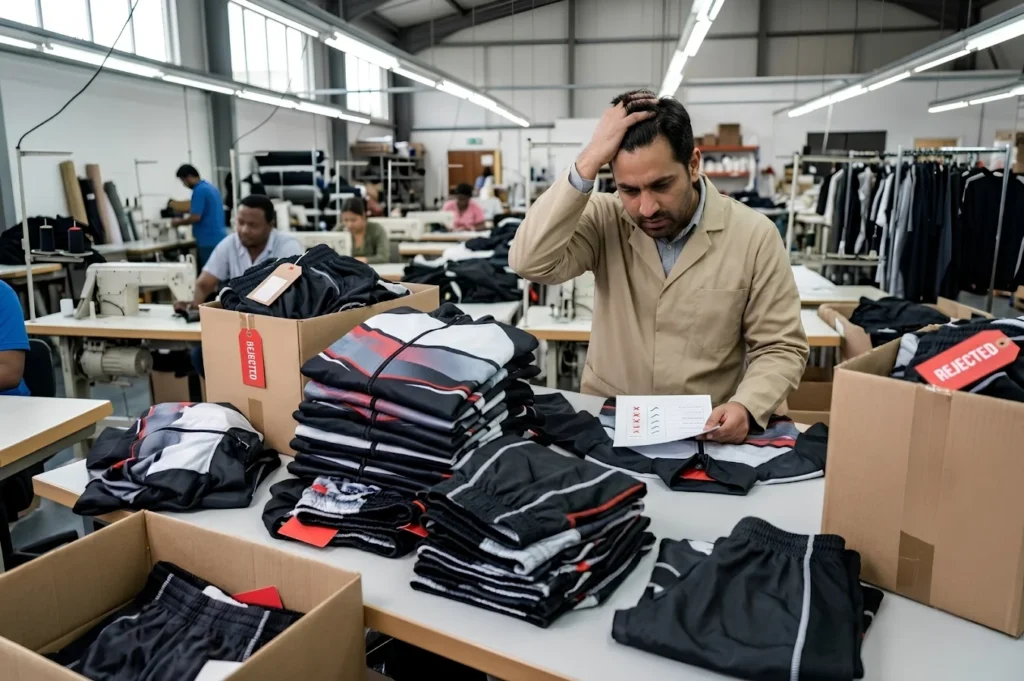
The Financial Risk of Skipping the Prototype Phase
You approve a digital blueprint. You pay the deposit for 2,000 units. Six weeks later, the freight arrives. The design looks correct on a hanger, but when your fit model puts it on, the armhole binds, the neckline droops, and the fabric puckers heavily along the side seam.
Because you skipped the physical prototyping phase, you now own 2,000 unwearable garments.
A professional clothing sample maker does more than just stitch fabric together. They validate the engineering. A physical prototype reveals the hidden mechanical conflicts between your chosen textile and the drafted geometry. By investing in rigorous garment sampling services, you isolate and fix these mechanical failures on a single unit, rather than replicating the failure thousands of times on the factory floor.
The Six Critical Stages of Industrial Garment Sampling
Amateur facilities treat sampling as a single step. Professional manufacturing requires a staged progression. Our pre-production apparel sampling protocol isolates specific variables at distinct stages to ensure absolute perfection.
The Muslin Draft (First Proto)
The Fit Sample
The Size Set Sample (Grading Validation)
The Pre-Production Sample (PPS)
The Salesman Sample (SMS)
Top of Production Sample (TOP)
Machinery Calibration and Shrinkage Validation
A proper prototype tests the factory, not just the design. Different textiles require radically different industrial setups.
During the Fit and PPS phases, our production engineers monitor exactly how the fabric interacts with the machinery. If a tightly woven nylon requires a specific ballpoint needle to prevent thread breakage, we identify that requirement during sampling. If a specific seam requires a 4-thread overlock instead of a standard lockstitch to maintain elasticity, we update the Bill of Materials (BOM) immediately.
Furthermore, we subject the physical prototypes to strict wash testing. We document the exact shrinkage percentages in both the warp and weft directions. If the garment shrinks by 4% after a standard wash cycle, we feed that data back into the digital CAD system to scale the digital pattern up by 4%. This ensures the end consumer receives a garment that fits perfectly after laundering.
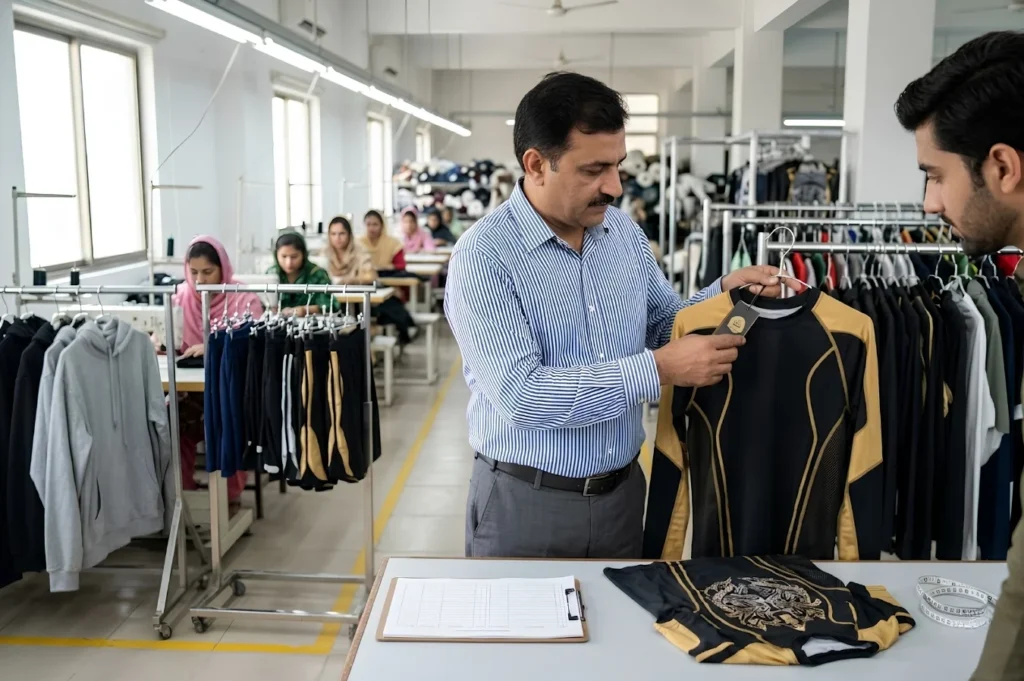
The Contractual Power of the "Golden Sample"
Many brands view a prototype simply as a visual preview. At Rijiz, the Pre-Production Sample functions as a binding manufacturing contract.
When you approve the final PPS, it officially becomes the Golden Sample. We place this physical garment directly on the factory floor alongside the digital tech pack. Our Quality Control inspectors use this physical garment as the absolute benchmark for Acceptable Quality Limits (AQL).
If a garment on the bulk line has a collar width that deviates from the Golden Sample beyond the allowed tolerance (e.g., +/- 0.25 inches), it is instantly rejected. The prototype is what keeps the factory accountable.
How to Review a Garment Sample Like a Pro
When we send you a physical prototype, reviewing it requires more than just looking in the mirror. To keep production moving efficiently, we train our brand partners to provide actionable, industrial feedback.
If a seam is too loose, do not just say "make it tighter." Put the garment on a fit model and physically pin or tape the excess fabric. Take detailed photographs of the pinned areas so our pattern makers know exactly how many centimeters to subtract from the digital file.
We do our own industrial wash tests, but we always advise clients to wash the Fit Sample in a standard home washing machine. This validates how the garment will behave in the real world when your actual customer owns it.
A garment might look perfect when the model is standing still. Have your fit model sit down, raise their arms, and stretch. If the armscye is cut too high, the entire shirt will lift when they raise their arms. Mobility testing is the only way to validate true athletic or streetwear fits.
Required Assets to Initiate Sampling
We cannot build an accurate physical prototype based on a mood board. To move into the sampling phase, the preliminary engineering must be complete.
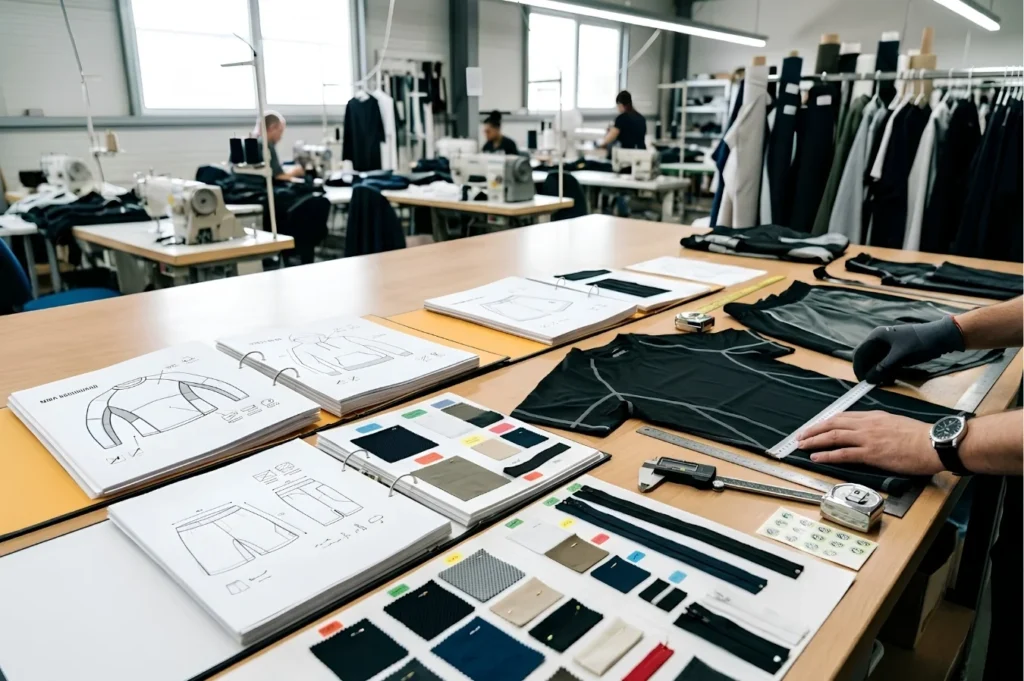
Our sample makers require a fully finalized tech pack containing detailed construction callouts, stitch types, and exact Points of Measure (POM). Without this, the sewing operators are forced to guess your intentions.
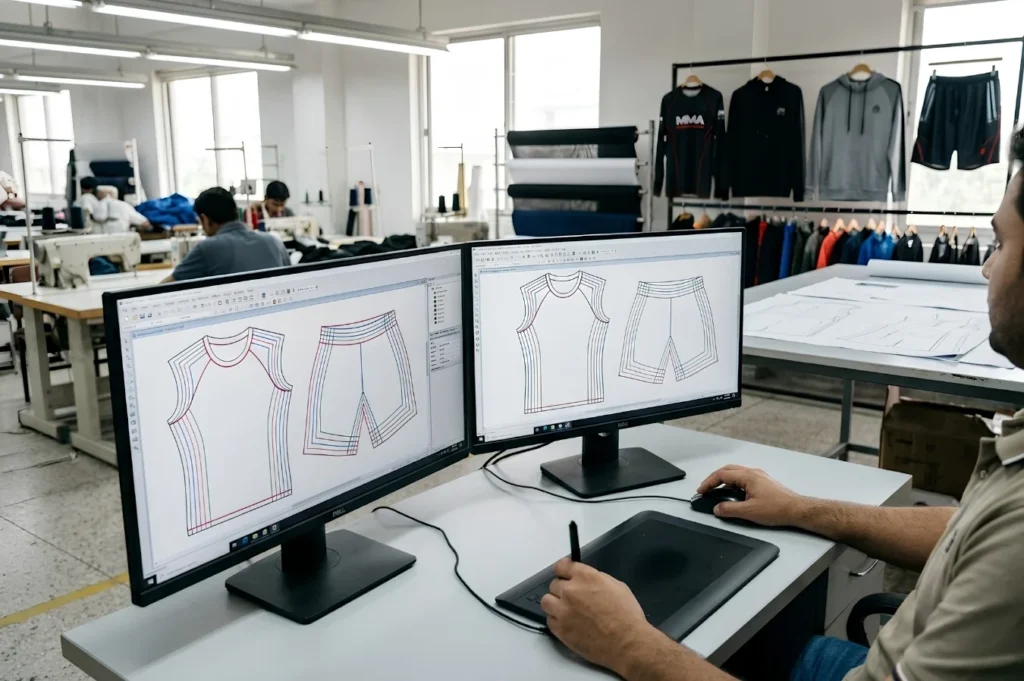
We require production-ready digital CAD files (DXF/ASTM formats). If you only have sketches, you must route through our pattern drafting department before we can begin cutting fabric for a physical sample.
Testimonial
EXCELLENT Based on 31 reviews
 Posted on Google
 Tomy
TomyTrustindex verifies that the original source of the review is Google.
We have worked with this supplier on the development and production of high-performance sportswear, and the experience has been very positive. We especially value their clear communication, willingness to make adjustments, and commitment to quality. They were open to technical feedback and worked closely with us to improve fabrics, finishes, and details until meeting our standards. Deadlines were met properly and the final result was professional. We definitely recommend this supplier to brands looking for a serious, long-term partnership.Posted on Google Josiah RayGreat productPosted on Google
 J SHighly recommend this company for your custom clothing for your brand. One of my favorite things working with them is the constant and clear communication, and the attention to detail. Also they are very quick especially for producing high quality apparel, and provide updates and progress photos throughout the process. A+ across the board, ive recommended them to my peers in the industry and will certainly use them again.Posted on Google
 sRGGohar was very helpful and worked with our team every step of the way. He providing useful tips and thorough inspection during the manufacturing process. The clothes were extremely high quality and all designs, embroidery, etc was perfect.Posted on Google
 Nomada transExcellent communication, service and products. Material is always as agreed and of top quality. Very much recommended.Posted on Google
 vari sybAmazing Service, Shipping and Very Affordable Prices, Highly Recommended!Posted on Google
 Alicia VasquezThey are SO fast. Very good to work with and responsive. They are knowledgable about what looks good and giving you exactly what you want.Posted on Google
 Thomas Skinner
Trustindex verifies that the original source of the review is Google.
I have build a hand full of entrepreneurial businesses, but recently made my first venture into the sportswear sector, and decided to work with Rijiz as my first clothing manufacturer. They did an incredible job bringing my flat sketches to life, and working with me throughout the iterative design process, making small tweaks and suggestions as we moved towards the final product. Their communication was good via email, and they were supportive throughout the process, even checking in with me periodically to ask how things were going. The only hiccups were a last minute increase in the cost per unit of the product, and a slightly longer than expected lead time, but my order quantity was very small, so these problems make sense. I'm sure larger order with them take priority. Overall, they are a great company that I will continue to work with as this business grows, and I would highly recommend them!Posted on Google Naleye AliEvery good communication skills, always delivering and make the customer wholesome. Very very happy for the results💯💯💯Posted on Google
 Teh Jerry KumGreat manufacturer and makes sure every detail is on point, Very satisfied with their work. What i ordered was exactly what was delivered to me, Much respect to them 🫡Verified by TrustindexTrustindex verified badge is the Universal Symbol of Trust. Only the greatest companies can get the verified badge who has a review score above 4.5, based on customer reviews over the past 12 months. Read more
Technical Sourcing and Sampling FAQ
Sampling is a highly labor-intensive process. We must stop the automated bulk line, manually calibrate the cutting lasers for a single unit, and assign a master sample maker to construct the garment by hand. The cost of sampling covers the immense engineering hours required to set up the bulk run correctly.
Prototyping is an iterative process. It is completely normal for the first fit sample to require micro-adjustments. We log your pinned feedback during the fit session, update the digital pattern, and cut a second iteration. We do not proceed to the Pre-Production stage until the fit is mathematically flawless.
If you are providing a verified, factory-tested pattern, yes. If this is a brand-new design that has never been sewn before, skipping the muslin draft is highly dangerous. It almost always results in wasted bulk fabric because the base geometry hasn't been validated.
We use 3D CAD modeling during the pattern-making phase to verify seam truing, but we do not rely on it as a final prototype. Virtual fabric does not behave exactly like physical fabric under the tension of a sewing machine. Physical sampling remains the only way to guarantee a flawless bulk run.
Ready to Validate Your Design?
Do not guess on your bulk production. A mechanical flaw in your pattern will multiply across thousands of units on the factory floor.
Our clothing sample making services provide the hard physical validation you need to protect your investment. Let our engineers stress-test your design, lock in your shrinkage tolerances, and deliver the Golden Sample that guarantees a flawless bulk run.
Fast & secure delivery worldwide.
Hassle-free refunds
Confidence in every purchase.
Dedicated customer assistance.
Get in touch
Rijix Limited - 7 Bell Yard, London, England, WC2A 2JR
Rijiz International - Mohala Chawinda Daburji Arayian Pasrur Road Sialkot, Pakistan.
Phone : +44 7307582940 Phone : +92 336 140 8321