
Source high-volume synthetic promotional bags directly from the manufacturing floor. We engineer non-woven polypropylene bags with precision ultrasonic welding, customizable GSM thicknesses, and direct-to-factory pricing specifically designed for massive corporate trade shows and grocery compliance mandates.
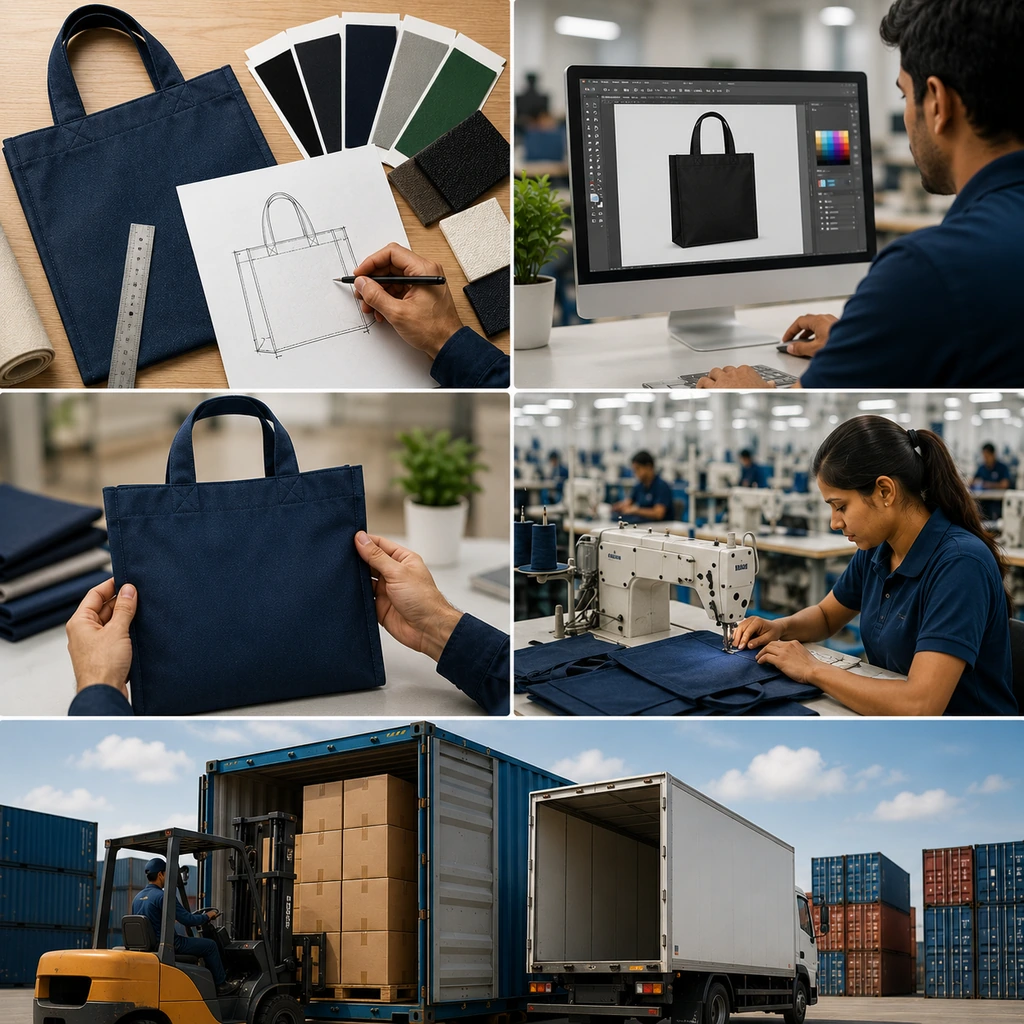
Non-woven polypropylene (NWPP) is the absolute backbone of the global promotional industry. It is the most cost-effective material available, making it the default choice for trade show exhibitors, corporate giveaways, and retail grocery chains operating under single-use bag bans. However, because these bags are ordered in massive volumes, even a markup of a few cents per bag by a US promotional broker can destroy your marketing budget.
At Rijiz, we manufacture recyclable non-woven bags directly on our own factory floors, one line in our full tote bag lineup. By controlling the extrusion, lamination, and ultrasonic heat-sealing processes, we eliminate the structural inconsistencies found in cheap imported blanks. We provide absolute transparency regarding GSM fabric weight, ensuring your bags actually hold heavy catalogs without splitting at the seams. Whether you require lightweight die-cut trade show bags or heavy-duty 120 GSM grocery totes that comply with strict state legislation, you secure premium structural integrity while maximizing your return on investment through our zero-broker pricing models.
Planning a large promotional bag order for an event or retail launch? Send us your B2B purchase request now. Our factory MOQ is 50 units, and runs of 10,000+ units get our most aggressive tiered wholesale discounts. Get factory-direct pricing on custom GSM weights and state-compliant reusable bags for your campaign.
Fast & secure delivery worldwide.
Hassle-free refunds
Confidence in every purchase.
Dedicated customer assistance.
Classic eighty-gram polypropylene synthetic bags featuring flat bottoms and long handles for supermarket retail checkouts.
Thicker reinforced polypropylene synthetic bags designed to carry heavy canned groceries without splitting the seams. For loads heavier than non-woven is rated for, see our woven polyester tote bags instead.
We recognize that the B2B promotional space is flooded with resellers pushing paper-thin synthetics that split immediately. Here is the 6-point blueprint of why leading grocery chains and event planners trust our manufacturing pipeline.
Brokers frequently advertise heavy-duty bags but secretly ship incredibly thin 60 GSM material to increase their margins. We operate with absolute transparency. You dictate the exact GSM (Grams per Square Meter) required for your campaign, guaranteeing your bags possess the exact tensile strength needed to hold your products safely.
Corporate retail chains must navigate a complex web of regional legislation. We explicitly engineer our heavy-duty non-woven bags to comply with strict reusable bag mandates (such as California SB 270), ensuring they meet the required minimum thickness and durability standards to be legally sold at checkout.
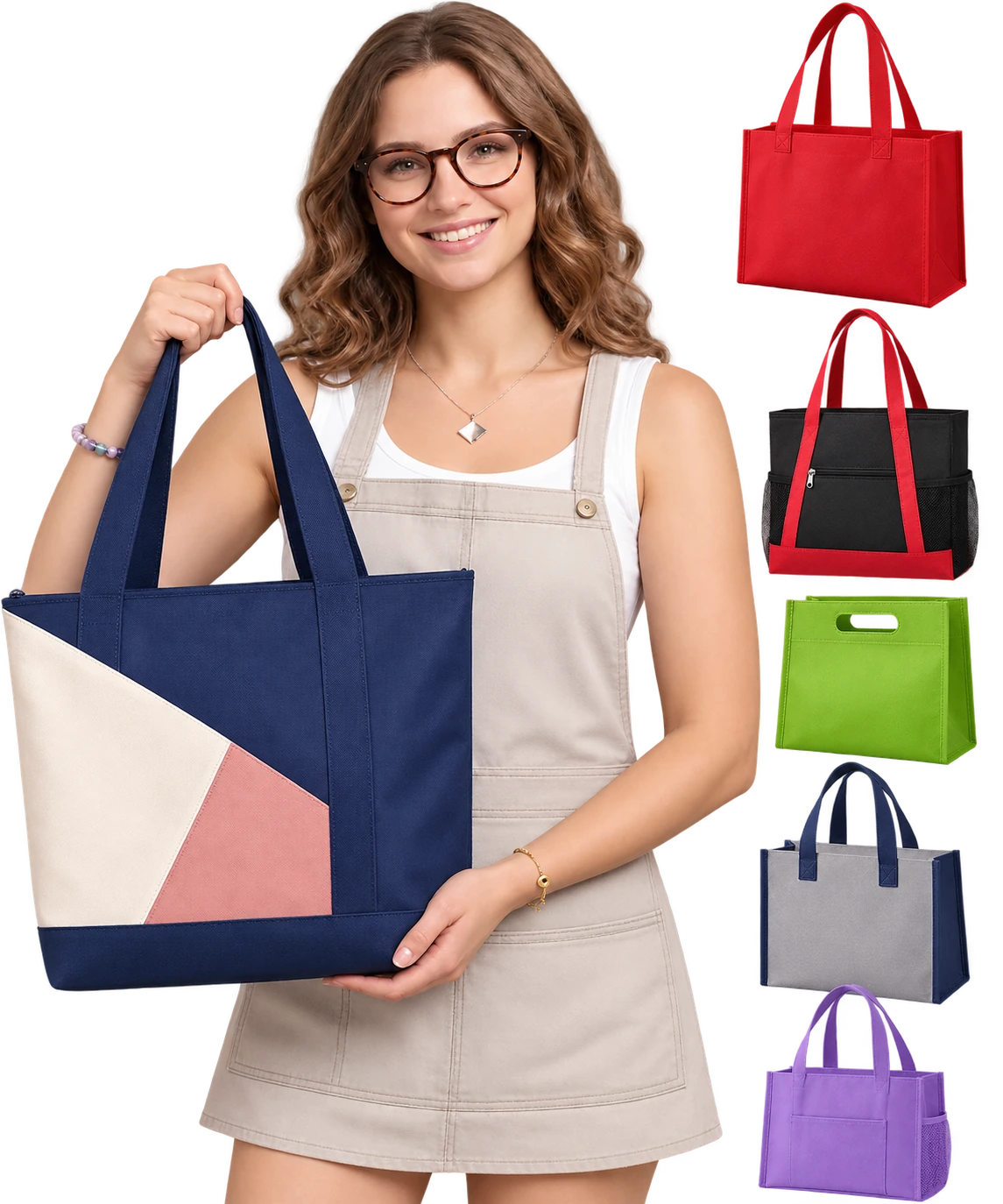
Purchasing directly from our own manufacturing floor allows you to bypass the standard 40% markup applied by promotional companies in the US. We extrude the polypropylene, cut the patterns, apply the lamination, print the logos, and ship massive shipping containers directly to your loading dock.
Synthetic bags must survive heavy retail loads without the handles tearing out. We implement strict Acceptable Quality Limit (AQL) 2.5 inspections on our entire non-woven line to physically test the tensile strength of the heat-sealed seams and stitched handles before shipping.
Understanding the mechanical properties of NWPP is critical for procurement officers. The manufacturing process dictates the bag’s lifespan, compliance capabilities, and overall structural integrity.
GSM stands for Grams per Square Meter. It is the universal metric used to determine the thickness and structural density of non-woven fabrics. Understanding this scale is the only way to ensure you are purchasing the correct bag for your specific use case.
The method used to assemble the bag fundamentally changes its cost and load capacity. Heat-sealed bags use high-frequency ultrasonic acoustic vibrations to melt the synthetic edges together. This is incredibly fast and cheap, making it perfect for lightweight giveaways. Conversely, stitched bags utilize traditional sewing machines and heavy thread to bind the panels together. While slightly more expensive, stitched bags with cross-reinforced handles provide significantly higher tensile strength, making them mandatory for heavy grocery applications.
For procurement officers executing massive global campaigns, understanding how raw synthetic polymers become a retail bag provides critical leverage when negotiating with manufacturers. Polypropylene (PP) is a highly durable synthetic polymer.
Unlike standard fabrics which require agricultural harvesting, spinning yarn, and mechanical loom weaving, non-woven polypropylene is created through a high-speed chemical extrusion process known as spunbonding. The raw polypropylene resin pellets are heated to their melting point and pushed through an extrusion die, which spins the molten material into thousands of continuous, microscopic filaments. These hot filaments are immediately blown onto a moving conveyor belt, creating a chaotic, web-like pattern. As the material cools, large heated calendar rollers compress the web under extreme pressure, fusing the filaments together. This instantly creates the flat, porous, fabric-like material known as non-woven polypropylene.
The Cost-Efficiency Paradigm
This spunbonding process is the sole reason why non-woven bags are the cheapest promotional items on the planet. By completely bypassing the yarn-spinning and mechanical weaving phases, we manufacture the raw fabric at blistering speeds. A spunbond production line can produce thousands of square meters of NWPP per hour. Because we own these massive extrusion machines, we eliminate the supply chain bottlenecks that plague smaller US promotional companies. When you order 100,000 bags from Rijiz, we are not searching for blank inventory; we are simply turning on the extruders, dialing in your requested GSM, and producing the fabric on demand.
The unique chemical structure of NWPP requires highly specialized printing capabilities. A common mistake made by inexperienced promotional brokers is attempting to apply standard garment printing techniques to synthetic materials.
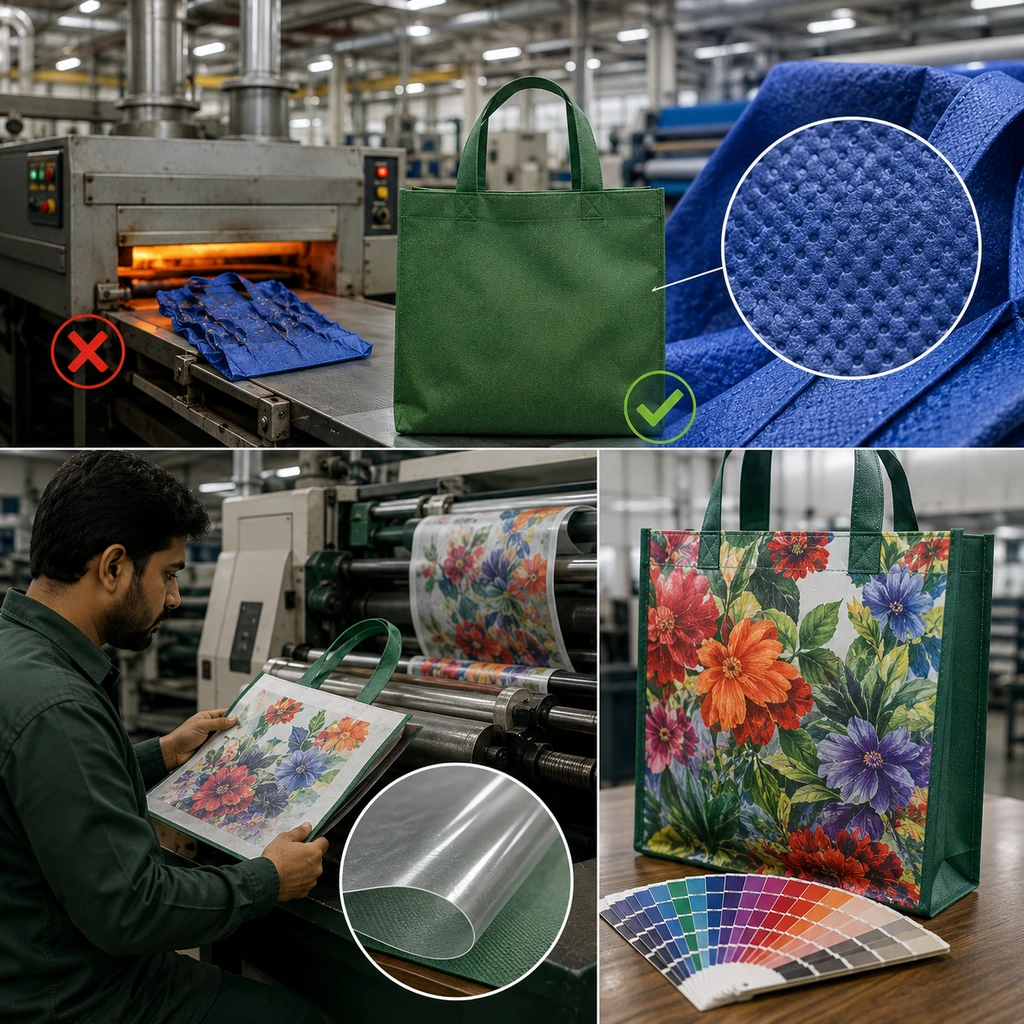
Standard plastisol screen printing requires curing ovens that run between 320°F and 350°F. If you expose a standard 80 GSM non-woven bag to this level of heat, the spunbond polypropylene will melt and shrink, permanently destroying the bag. To execute high-volume branding on NWPP, we utilize specialized low-cure pigment inks that flash dry at significantly lower temperatures, ensuring the bag retains its perfect structural geometry.
NWPP is inherently porous with a dimpled, cross-hatched surface texture resulting from the heated calendar rollers. If your brand utilizes a complex, multi-colored logo featuring intricate shading or tiny fonts, traditional screen printing will struggle to push the ink smoothly across the dimpled surface.
For high-definition corporate branding, we immediately transition clients to our Laminated Non-Woven line. By applying a completely flat, waterproof polyethylene (PE) or polypropylene (BOPP) film over the non-woven backing, we create a perfectly smooth substrate. This allows our rotogravure printing presses to lay down photorealistic, edge-to-edge designs with millions of colors. Rotogravure uses engraved copper cylinders to transfer the ink onto the lamination film before the film is bonded to the bag, resulting in a premium retail aesthetic that makes a cheap promotional bag look like a high-end fashion accessory.
The transition away from conventional single-use materials is heavily regulated. Retailers face steep fines if their branded checkout bags fail to meet local legislative requirements.


 Trustindex verifies that the original source of the review is Google.
 Trustindex verifies that the original source of the review is Google.
 Trustindex verifies that the original source of the review is Google.
 Trustindex verifies that the original source of the review is Google.
 Trustindex verifies that the original source of the review is Google.
 Trustindex verifies that the original source of the review is Google.
 Trustindex verifies that the original source of the review is Google.

 Trustindex verifies that the original source of the review is Google.
 Trustindex verifies that the original source of the review is Google.
 Trustindex verifies that the original source of the review is Google.
Our factory flow is built to cut friction, so you get exactly what you ordered and nothing left to guess.
Working with Rijiz means backing a supply chain that is ethical and tightly managed. We work to stamp out the exploitative labor habits common across promotional bag sourcing.
Fair labor is checked through audits of our plants, and independent labs test materials to confirm they contain no lead or harmful chemicals. To us, real quality means sound construction and respect for the people who make the bags. Since we run the whole process ourselves, we guarantee each bag leaving our plant meets top ethical and production standards.
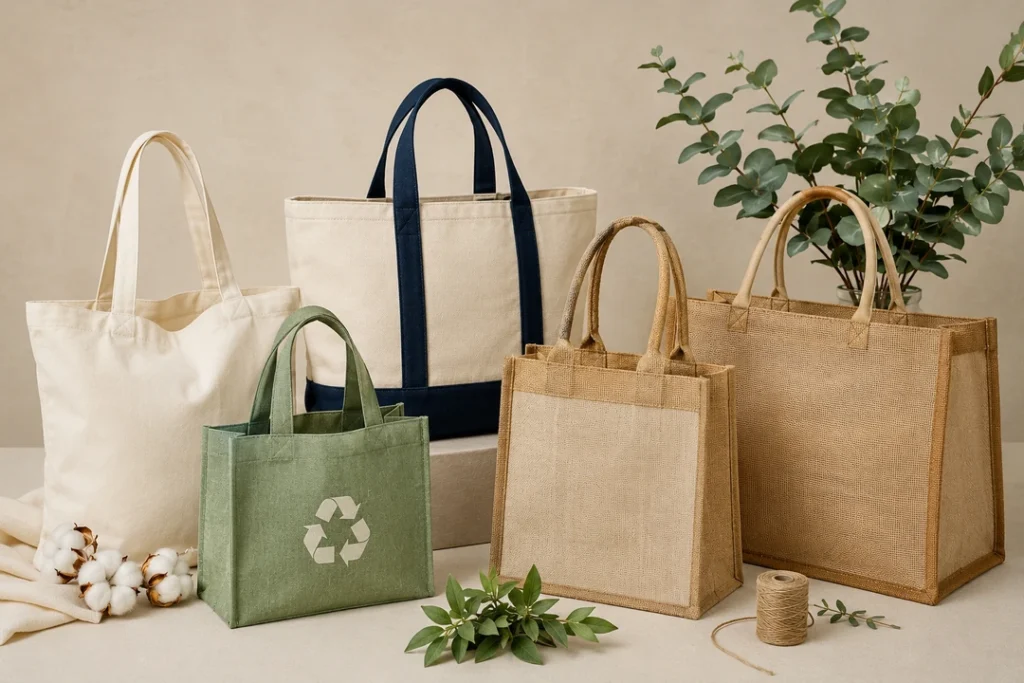
Equipping a whole trade show or a varied retail line? We make a full family of customizable bags to suit each structural need.
Yes. We offer a low factory MOQ of 50 units specifically so that boutique retail brands can test promotional lines without committing to massive inventory risks. For major corporate events, our pricing tiers drop significantly on runs of 5,000 to 50,000+ units.
We do not recommend placing standard non-woven polypropylene bags in a washing machine, as the heat and agitation can degrade the synthetic fibers and damage the printed logo. To maintain compliance with reusable bag hygiene standards, we recommend wiping the interior and exterior of the bags down with a warm, soapy cloth or antibacterial wipes.
Lamination involves applying a thin waterproof film over the non-woven backing. Glossy lamination provides a highly reflective, shiny finish that makes photographic colors pop intensely. Matte lamination provides a flat, non-reflective finish that absorbs light, offering a highly sophisticated and modern premium aesthetic. Both options provide identical structural reinforcement and waterproofing.
Since we operate our own factory, our lead times are highly optimized. Standard production takes 12 to 15 days, and air freight delivers in 5 to 7 days. For massive ocean freight orders exceeding 50,000 units, we provide detailed logistics tracking to ensure your delivery arrives weeks before your deadline.
Yes. Even on our highly affordable non-woven lines, we offer complete private label services. This includes custom woven neck tags and exterior hem tags to transform a standard promotional giveaway into a highly customized, retail-ready product.
Rijix Limited - 7 Bell Yard, London, England, WC2A 2JR
Rijiz International - Mohala Chawinda Daburji Arayian Pasrur Road Sialkot, Pakistan.
Phone : +44 7307582940 Phone : +92 336 140 8321