
Most comparisons treat private label and OEM as two points on a single line, with private label at the fast-and-cheap end and OEM at the slow-and-expensive end. That framing causes more confusion than it clears up, because it hides the fact that the two terms are actually answering different questions.
Private label describes a branding relationship: whose name is on the finished garment, and how exclusive is that relationship to your brand. OEM describes a production relationship: whose design and specification the factory actually built the garment from. A garment can be private label and OEM at the same time, built entirely to your own tech pack, then sold only under your brand with no other buyer able to order the same thing. It can also be private label without being OEM, built from a factory’s own existing block with your label sewn in afterward.
Our own private label clothing service is the branding side of that equation: we apply your labels, packaging, and decoration to a garment. Whether the base of that garment comes from an existing style or from a pattern built to your own spec is the OEM question underneath it, and it’s the one this guide is really about.
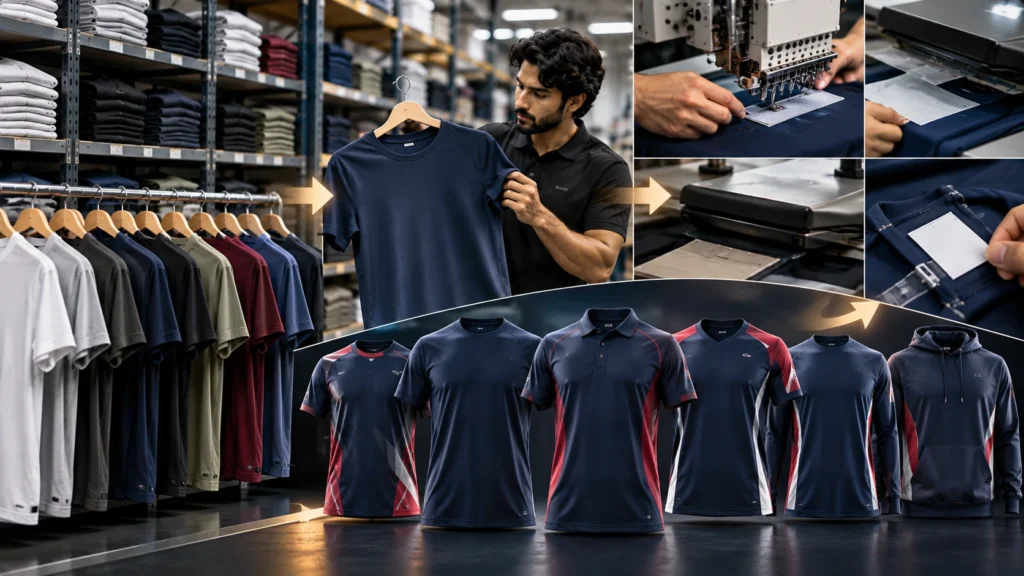
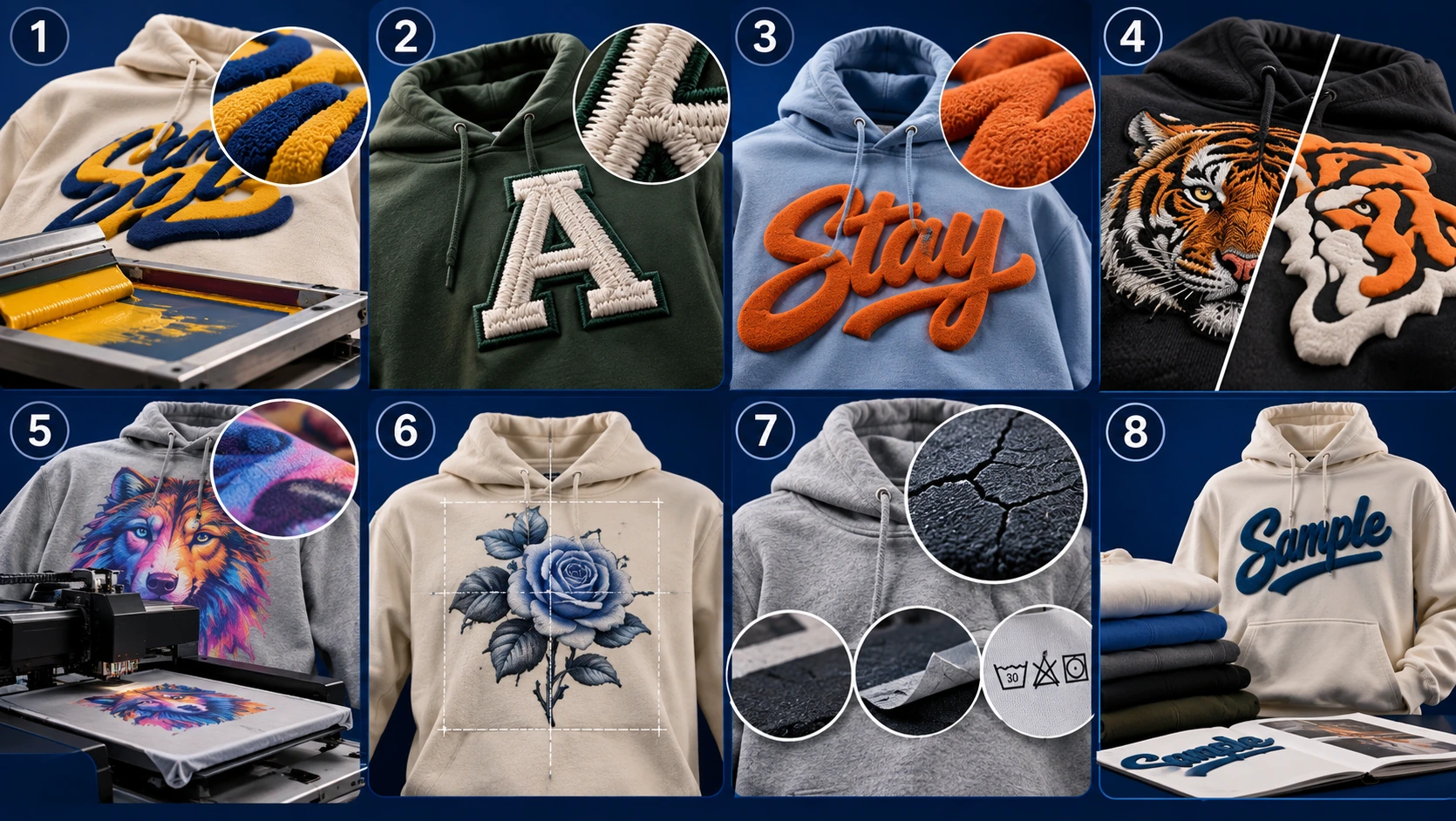
In a private label arrangement, the factory already has something built before you show up: a catalog of proven styles, a base block it has produced before, or in-house inventory of blank garments in common colors and weights. Your job is to choose from what exists, apply your branding (neck label, hang tag, packaging, and any decoration), and go to market on a shorter runway than building something from zero.
That speed is the real advantage. There’s no tech pack to develop from scratch, no pattern to draft, and often fewer sampling rounds, because the base garment has already been through its own development cycle with the factory. For a first collection, or for a style that isn’t meant to be the thing that defines your brand, that’s a genuinely good trade.
The trade-off sits on the other side of the same coin: unless exclusivity is agreed in writing, the base style you’re building on may still be available to other buyers from the same factory. Your branding is yours. The garment underneath it might not be. That distinction rarely shows up in a first conversation with a supplier, and it’s the single most common thing a first-time brand wishes it had asked about before its first production run, not after.
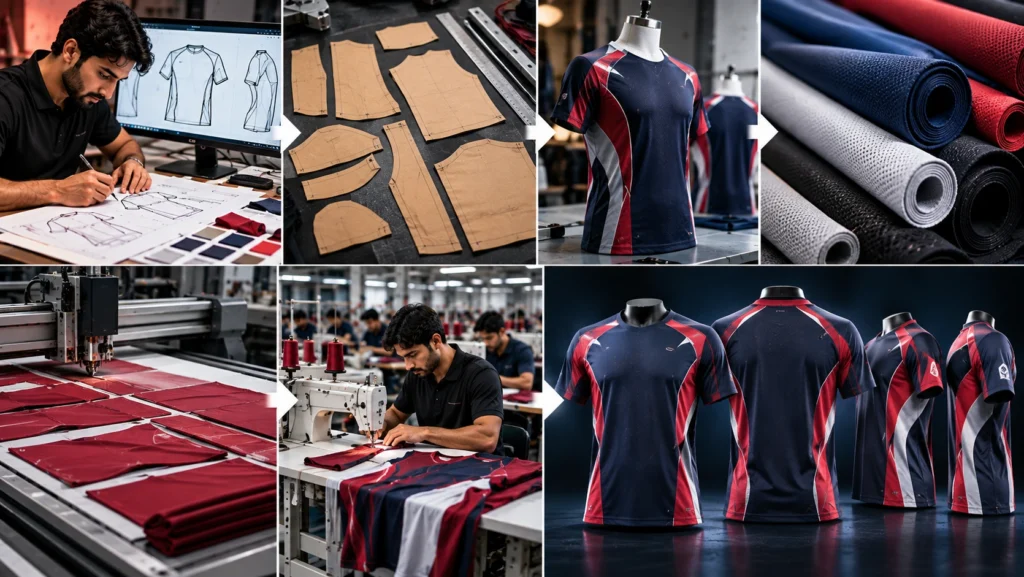
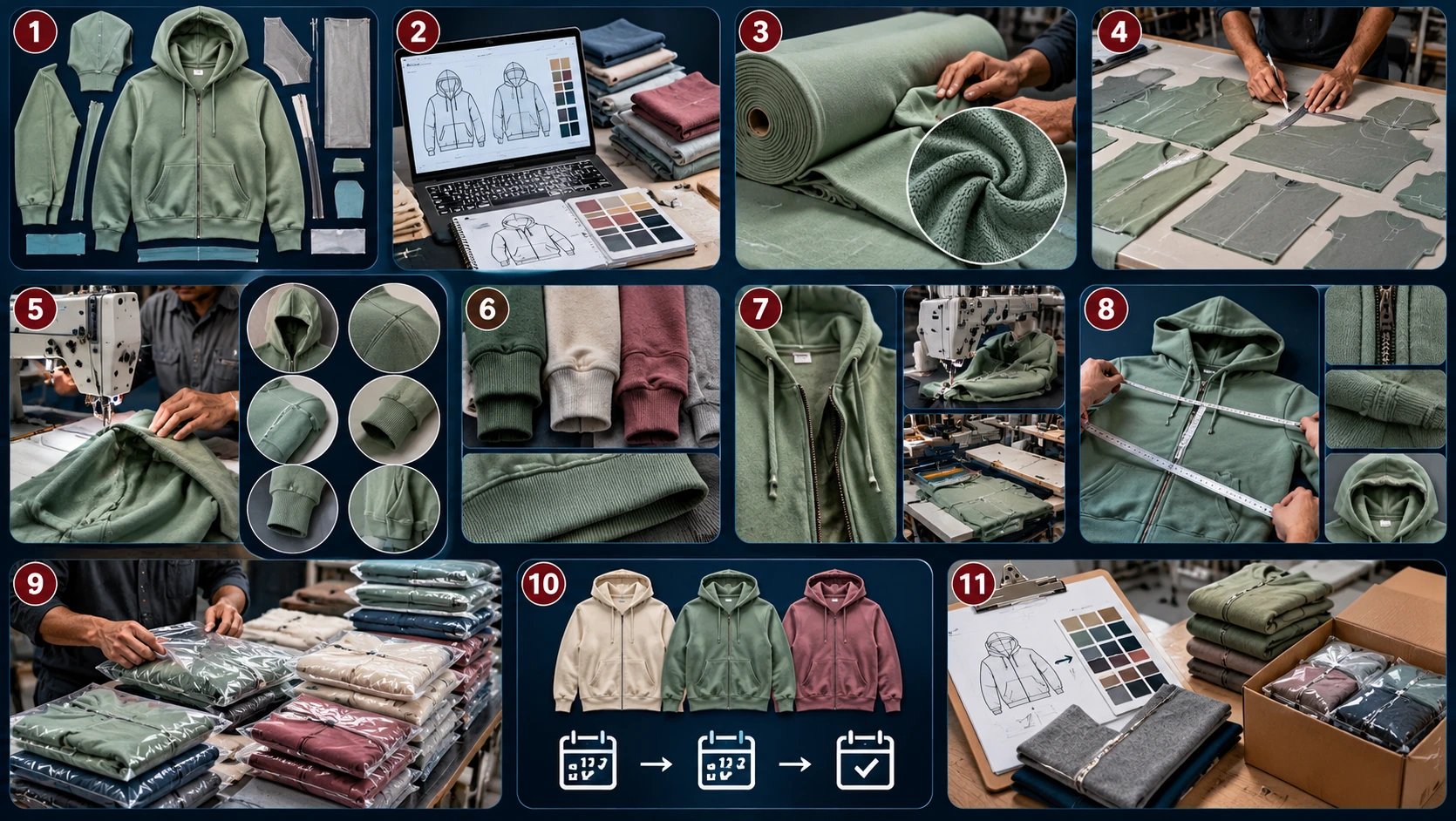
OEM, original equipment manufacturer, means the factory builds to a specification that starts with you, not with a catalog. You bring a tech pack, a reference garment, or a detailed brief covering fabric composition, construction, measurements, and finishing, and the factory develops a pattern and a sample against that document rather than pulling one off a shelf.
The upside is control over every variable that makes a garment recognizably yours: fit, fabric hand, seam construction, hardware, and trims, none of which are locked in before you arrive. For a brand whose product is the differentiator, not just the marketing around it, that control is the whole point of the exercise.
The upside comes with real cost on the other side. Building a pattern from nothing takes development time and sampling rounds that a private label style skips entirely, and that development work needs to be budgeted for separately from the per-unit price of the finished garment. Neither cost nor timeline is fixed across the industry, since both depend on the complexity of the design and the factory doing the work, which is why this guide won’t attach one number to either and call it universal. That development work starts with a complete tech pack , the document a factory actually builds the first pattern from, and a build that skips straight to sampling without one is usually the build that needs the most rounds to get right.
Two more terms come up constantly in the same conversation, and both sit closer to the private label end of the spectrum than OEM does.
White label is the least customized point on the map: a fully generic, ready-made garment that a factory sells to multiple buyers, each applying a different label. There’s no branding exclusivity at all, and the factory doesn’t build anything specifically for you. It’s the fastest and simplest route to a sellable product, and the one with the least room to look different from a competitor using the same supplier.
ODM, original design manufacturer, sits between white label and OEM. The factory already has a design or a pattern block, and you adapt it: a different fabric, a new colorway, an added pocket, your own trims and labels. You’re not designing from scratch the way you would under OEM, but you’re doing more than simply relabeling a finished product the way you would under white label.
None of these four terms are used with perfect consistency across the industry. A factory offering “private label” services might mean anything from pure relabeling to a fully customized build, which is exactly why the specific question (what design is this built from, and who owns it) matters more than which label a supplier attaches to their service.
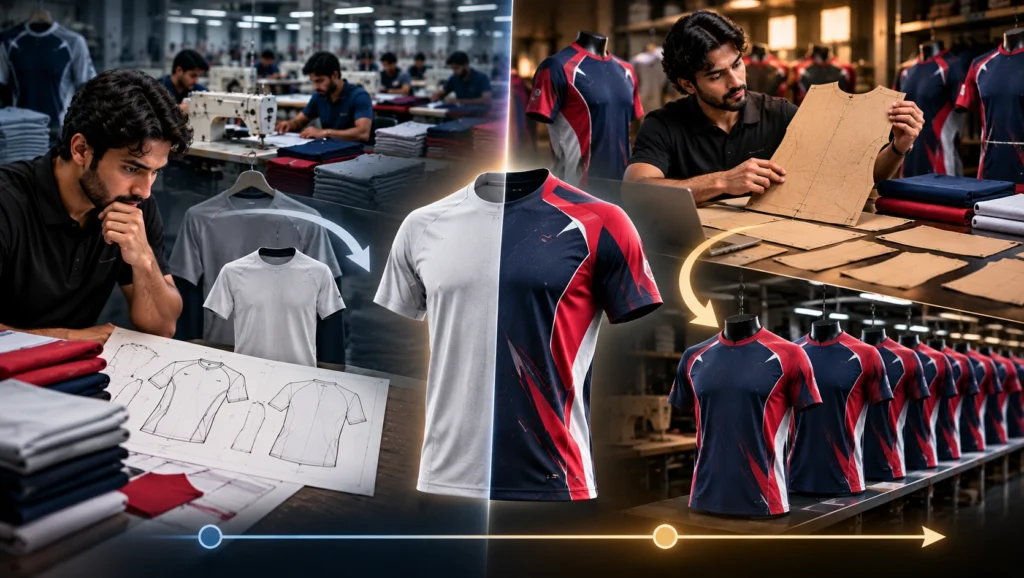
The decision that actually shapes a brand’s options later isn’t which model sounds more sophisticated at launch, it’s a narrower and more practical question: who owns the pattern the garment was built from, and can you take it to a different factory if you ever need to.
Under a fully custom OEM build, the pattern can be yours, transferable, and reusable at another factory, if that’s stated in writing before development starts. Under a factory’s own proven style or block (whether labeled ODM or private label), the base pattern typically stays the factory’s property, and a change of supplier means starting the design work over rather than simply moving files.
This is worth settling before the first production run, not after a bestseller emerges and a factory relationship goes sideways. A short list of questions covers most of what matters: is this design exclusive to us, and is that written down; do we receive the pattern files, and can the factory reuse them for someone else; and if a custom fabric color or trim was developed for us specifically, is it restricted from appearing on anyone else’s order. A brand’s own trademark, the name and logo on the label, is a separate protection from the pattern underneath it. The USPTO’s trademark basics guide is a useful primer on registering that protection, since owning a strong brand name doesn’t automatically extend to owning the garment design built for it. The pattern itself can be protected too, but only if it’s actually registered as an industrial design with a national IP office rather than assumed from a written agreement alone. WIPO’s guide to design protection covers what qualifies and how a single application can cover multiple countries, which matters for a brand sourcing internationally.
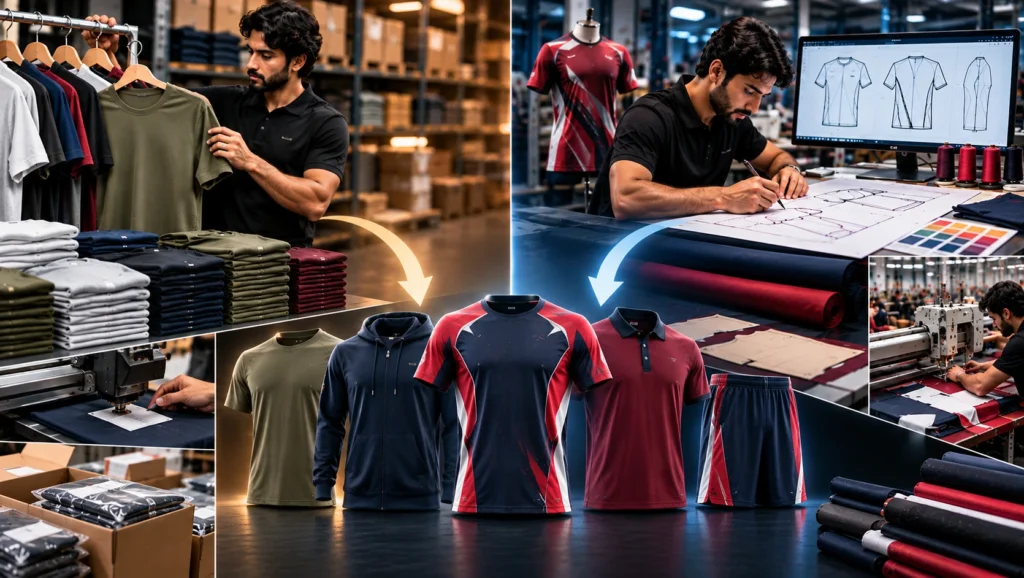
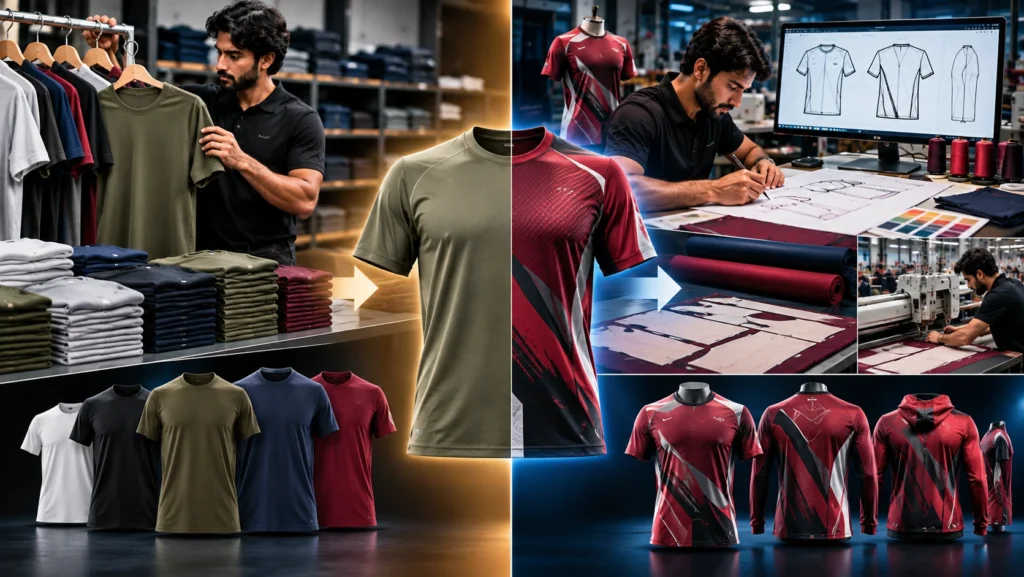
It’s tempting to read this as a permanent identity decision, private label brand versus OEM brand, when in practice most growing apparel businesses run both at once. A hero product, the style that’s actually supposed to define the brand, gets the OEM treatment: full development, a proprietary pattern, exclusivity locked in writing. Supporting styles, seasonal fill-ins, or a fast test of a new category often stay private label or ODM, because building a full custom spec for every single SKU isn’t a good use of development time or budget.
The more common growth path runs in one direction: a brand launches a style or two on private label to prove there’s real demand, then moves the styles that actually sell into a full OEM build once the risk of getting it wrong has already been answered by the market. Reversing that order (starting everything as a custom OEM build before any style has proven itself) is a much more expensive way to find out what a customer actually wants.
Minimum order quantity, sampling requirements, and development timeline all move between the two models, but not by a fixed, universal amount. A private label style built on an existing block typically needs less sampling and can often be approved faster, since the base construction has already been through its own development. An OEM build needs at least one full sampling round against a fresh pattern before bulk is safe to schedule, sometimes more if the first sample doesn’t match the tech pack cleanly.
MOQ moves for a related but separate reason: it isn’t set only by the manufacturing model, it’s set by whatever has the highest minimum in that specific order, whether that’s a fabric mill’s minimum yardage, a trim supplier’s colorway minimum, or the factory’s own production-line economics. A private label order pulling from existing stock inventory sidesteps most of those minimums. A fully custom OEM order, with a new fabric color or a new trim, inherits every one of them. This is exactly the kind of number-by-number detail our dedicated MOQ guide works through in full, since it deserves more room than a paragraph here can give it.
Whichever model a brand chooses, skipping the sample stage to save time on either one is a false economy. A private label style still needs its fit, fabric, and branding checked on a physical sample before a bulk order ships, not assumed correct because the base style already existed.
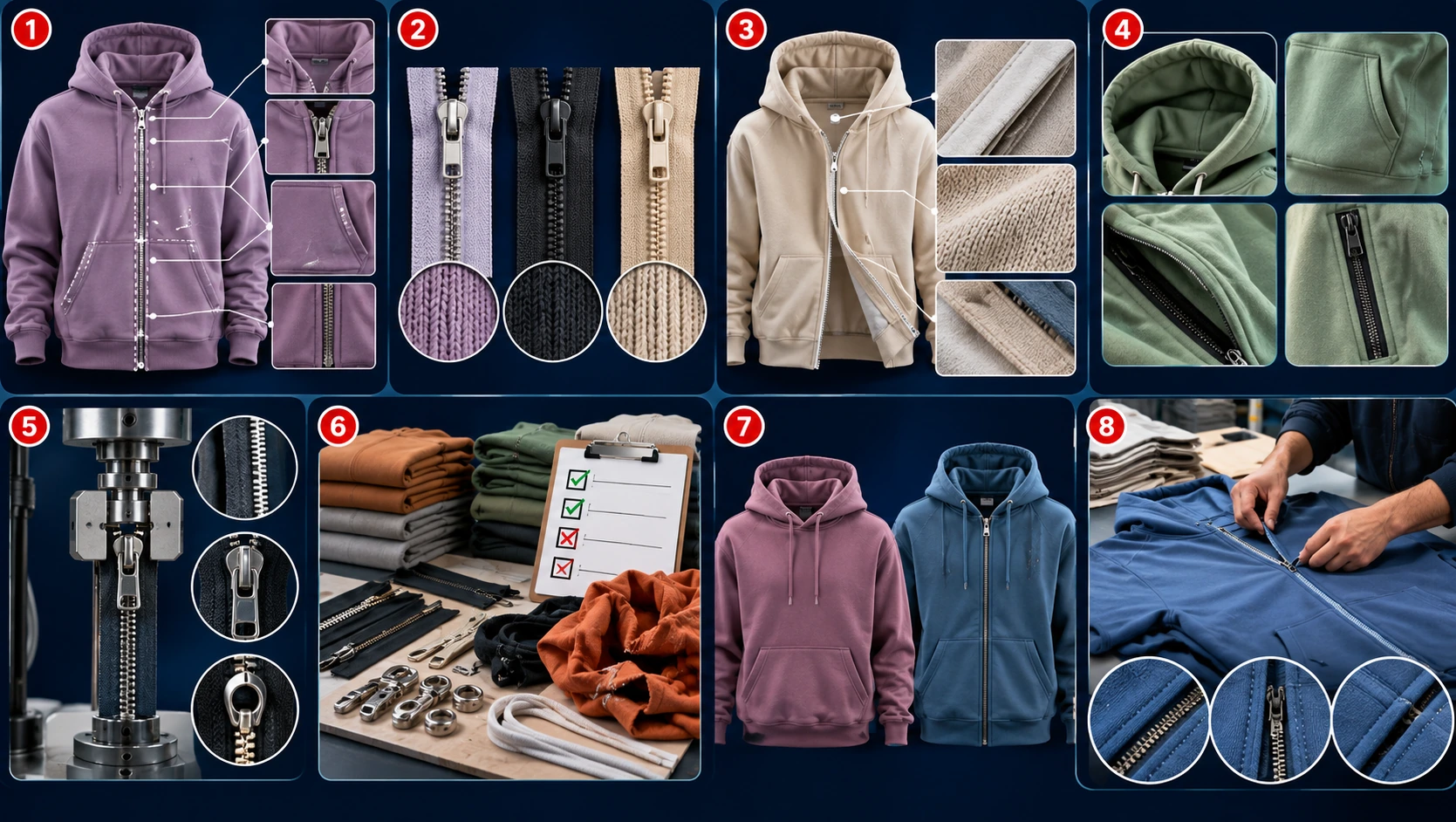
This is the part that’s ours specifically, not general sourcing theory. Our own private label clothing program runs on existing stock garments from our own inventory: your labels sewn in, your branding applied, and your packaging built around a base garment we already produce. If what you need doesn’t exist in that inventory yet, or your product needs to be built to its own construction, fit, and fabric from the ground up, that’s a different conversation, and our cut and sew manufacturing service covers that OEM-style build from your own tech pack instead.
Either way, nothing skips the sample stage. Every private label run gets checked against a physical sample before bulk, the same as every custom build coming out of our tech pack design and prototyping and sampling process. We run at MOQ 30 per design, with sampling typically around 12 days and bulk production around 18 days once a sample is approved, and if the order doesn’t match what was promised, that’s covered by a full refund or free remake, not a negotiation.
We’ve been doing this since 2016, working with brands across the EU, US, Australia, and Canada under ISO 9001 and REX certification, and both paths run through the same team , not two separate departments. If you’re not sure yet which model fits what you’re building, get in touch and we’ll walk through your specific product before you commit to either one.
Private label describes whose brand is on the garment and how exclusive that branding relationship is. OEM describes whose design and specification the factory built the garment from. They answer different questions, so a garment can be both private label and OEM at once, or private label without being OEM.
Yes, and it's a common combination. A brand can supply its own tech pack for a fully custom garment (the OEM part) and sell it only under its own brand with no other buyer able to order it (the private label part). The two labels aren't competing categories.
Private label generally requires less upfront development, since there's no tech pack or pattern to build from scratch and often fewer sampling rounds. OEM adds development and sampling costs before a single bulk unit is produced. Neither cost is fixed across the industry, since both depend on the specific garment and factory involved.
Not automatically, but not automatically the opposite either. Ownership depends entirely on what's agreed in writing before development starts. A private label build on a factory's existing block usually leaves the base pattern with the factory. A private label build on a pattern developed specifically for you can be exclusive to your brand if that's stated in the agreement.
White label is the least customized option: a generic, ready-made garment a factory sells to multiple brands, with only the label changed. Private label usually involves more customization (fabric choice, colors, fit adjustments, packaging) and can be exclusive to one brand if agreed. Private label is a step toward more control; white label is the fastest, least differentiated option.
ODM (original design manufacturer) means the factory already has a design or pattern block that you adapt, changing fabric, color, trims, or branding rather than starting from nothing. It sits between white label (no customization) and OEM (fully custom from your own spec), and is often used interchangeably with private label depending on the factory.
For a first collection, private label is usually the lower-risk starting point, since it avoids the cost and time of developing a full custom specification before knowing whether a style sells. Many brands move their proven bestsellers to OEM once demand is confirmed, rather than starting every style as a custom build.
Often, but not because of the model alone. MOQ is driven by whatever input has the highest minimum in a given order, whether that's fabric, trims, or the factory's own production economics. A fully custom OEM order with new fabric and trims tends to inherit more of those minimums than a private label order built from existing stock.
The brand selling the garment, not the factory, generally carries that responsibility. In the US, for example, the FTC's Care Labeling Rule requires accurate care instructions, fiber content, and country-of-origin information regardless of which manufacturing model produced the garment, so this isn't something either model exempts a brand from checking.

FOUNDER & CEO AT RIJIZ