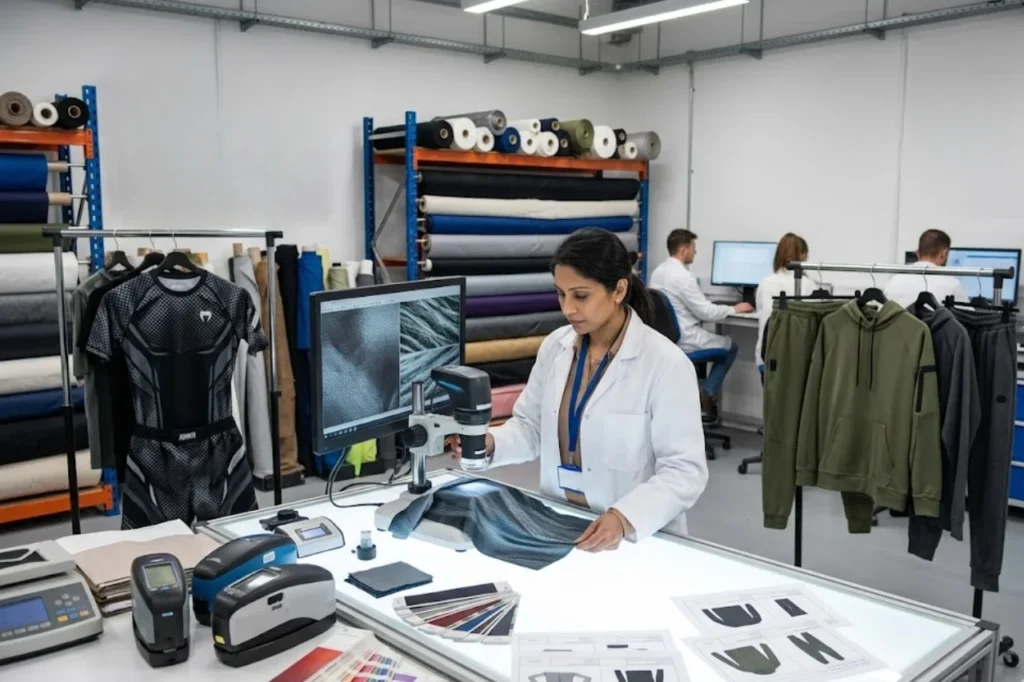
The most perfectly graded pattern in the world will fail if the raw material is cheap. In industrial apparel manufacturing, fabric is not just a texture,it is a mathematical variable. If the GSM is too low, the garment will lose its structure. If the dye formulation is rushed, the color will bleed in the first wash.
We provide apparel fabric sourcing services that eliminate the gamble of wholesale buying. We do not just buy pre-made rolls off a wholesale rack; we engineer your textiles from the yarn up. Whether you need custom-knit 450 GSM French Terry or a proprietary denim weave, we manage the exact specifications directly with the textile mills.
Most young fashion brands start by buying “stock” fabrics from local wholesalers. This seems cost-effective until your brand scales. You order 500 yards of a specific blue twill. Six months later, you need 2,000 more yards for a restock, but the wholesaler has discontinued that exact fabric. Your supply chain is instantly paralyzed.
When you use professional garment textile sourcing, you own the formula. We bypass the wholesalers and work directly with massive industrial mills. By utilizing our apparel material sourcing capabilities, we lock in your exact yarn blend, knitting structure, and dye recipe. When you need a restock two years from now, the fabric will be identical to the very first yard.
We do not bend your tech pack to fit existing fabric; we build the fabric to fit your tech pack.
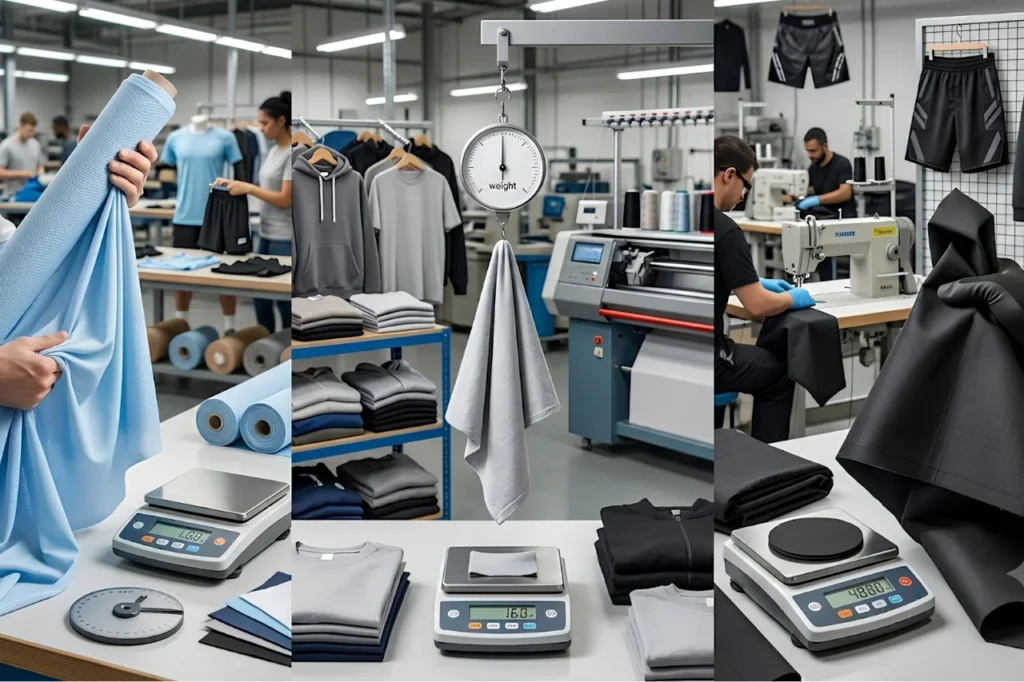
GSM (Grams per Square Meter) is the universal metric for fabric weight. It dictates how warm a garment is, how it drapes on the body, and how premium it feels on the retail rack.
You cannot build a luxury streetwear hoodie using a 200 GSM fleece. When brands come to us for B2B fabric sourcing, we engineer the exact weight required for the silhouette. If you need a heavy, structured 500 GSM loopback French Terry or an ultra-light, breathable 120 GSM modal blend, we calibrate the mill’s knitting machines to hit that exact mathematical target.
“Navy Blue” is a subjective term. In industrial manufacturing, color is a hard science dictated by chemical recipes.
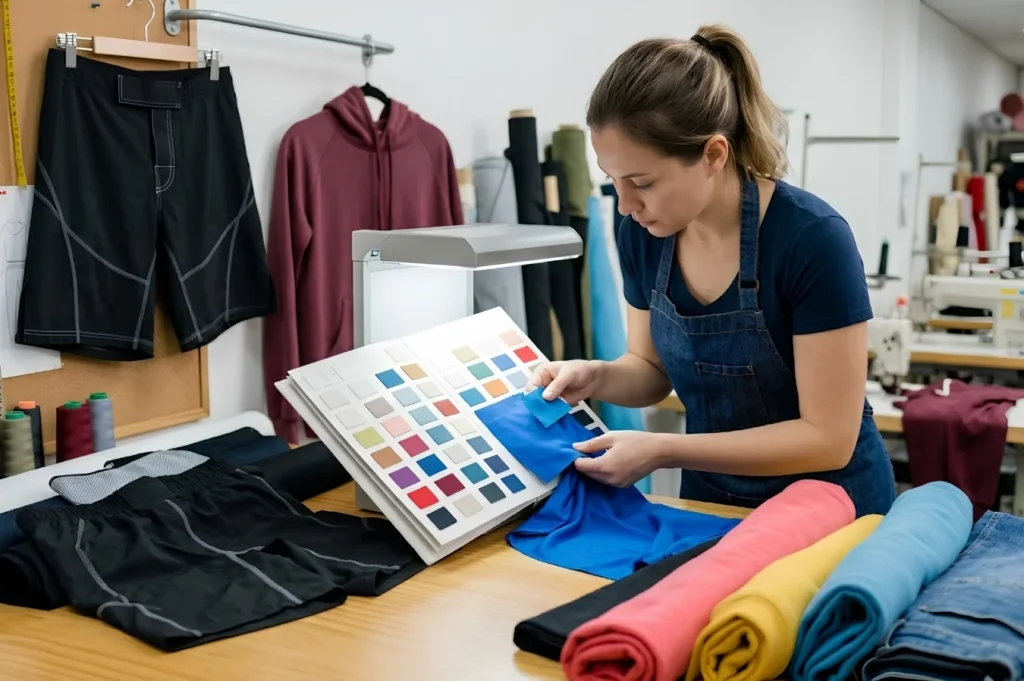
We do not use stock dye lots. We use a rigorous Dye-To-Match (DTM) process. You provide us with an exact Pantone TCX code or a physical color swatch. We take that standard to the dye house and formulate a custom chemical recipe to match it perfectly.
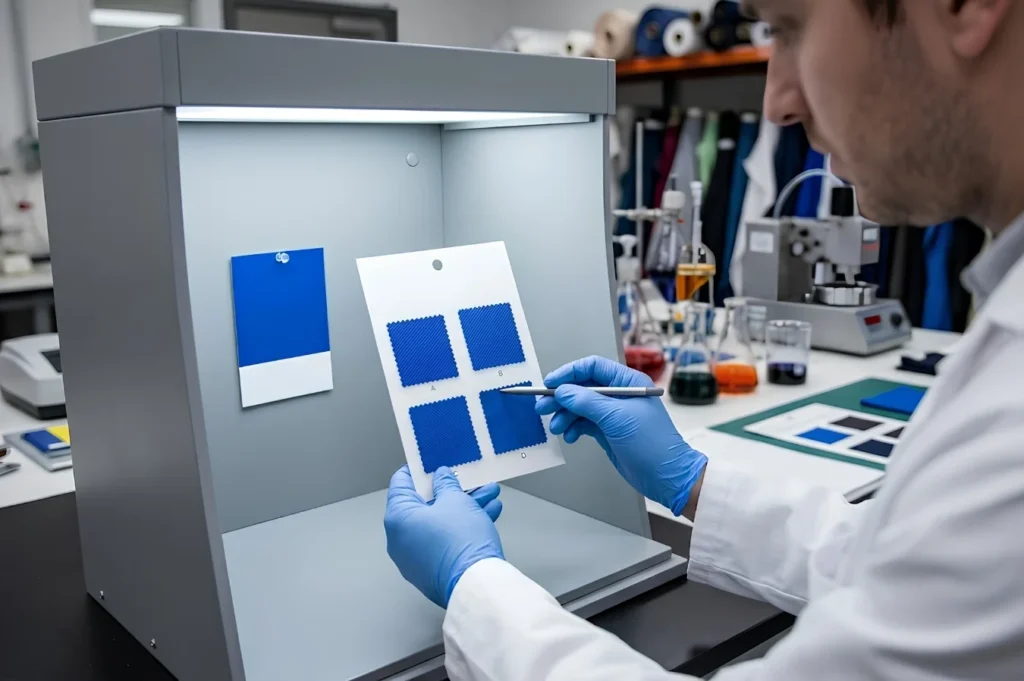
Before we dye 3,000 yards of fabric, we run a "Lab Dip." We dye a small 5x5 inch swatch of your specific raw fabric using different chemical variations (e.g., Option A, Option B, Option C). We ship these swatches to you. We only proceed with bulk dyeing once you approve the exact chemical formulation under a standardized light box.
Our direct relationships with some of the largest textile mills in South Asia give us unparalleled access to premium raw materials.
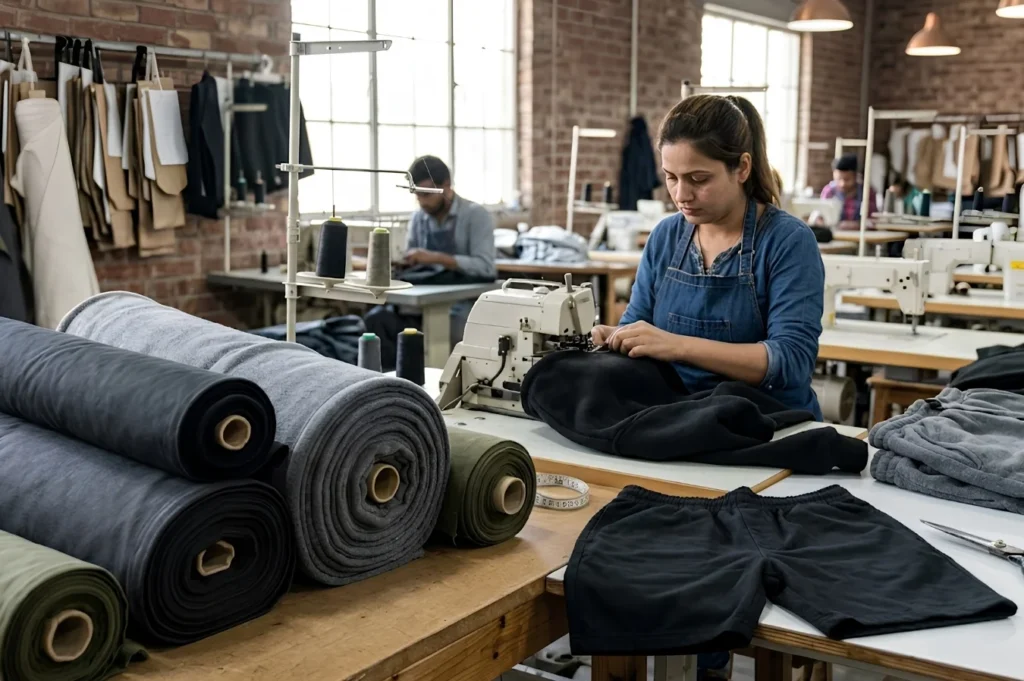
We excel in sourcing and knitting premium, high-GSM cottons. We supply combed cotton jersey for luxury t-shirts, and tightly knit French Terry and brushed fleece for high-end hoodies and sweatpants that require immense structural integrity.
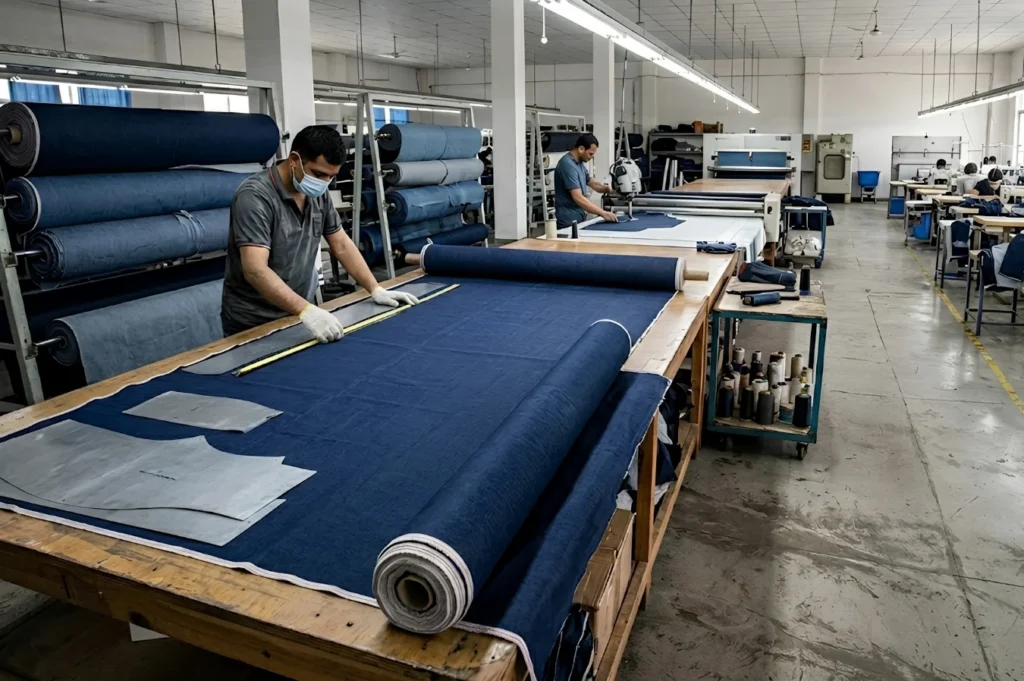
Denim requires specialized weaving capabilities. We source raw, sanforized, and selvedge denim in specific ounce weights (e.g., 12oz, 14oz). We also manage the exact blend of elastane required for stretch-denim fits.
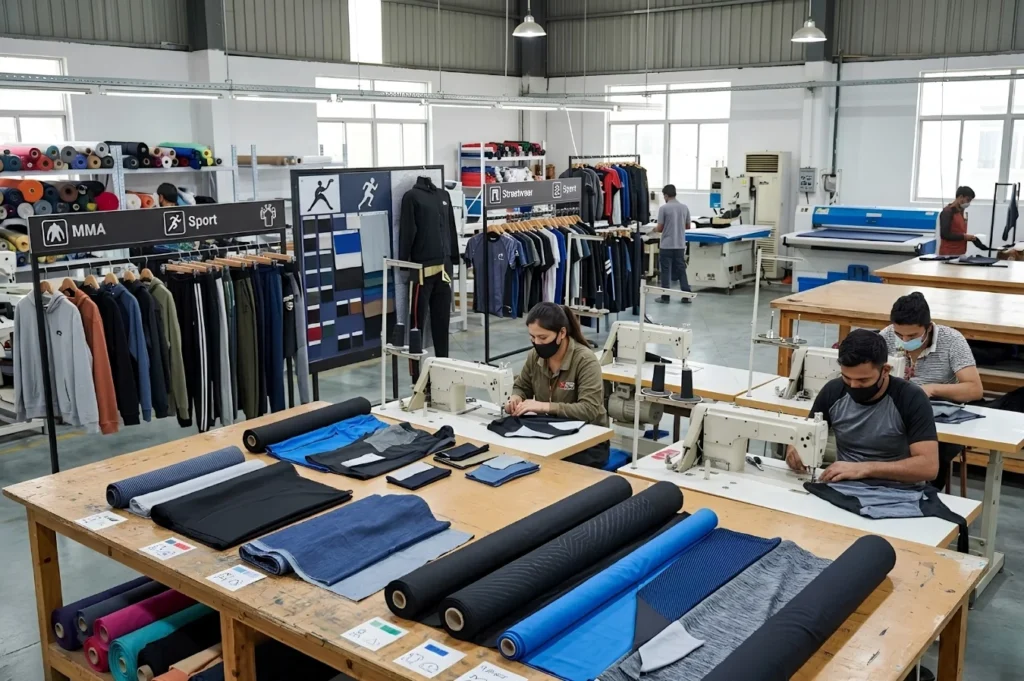
Athletic garments require strict moisture-wicking and four-way stretch properties. We source complex polyester, nylon, and spandex blends, ensuring the fabric retains its elasticity and compression after hundreds of uses.
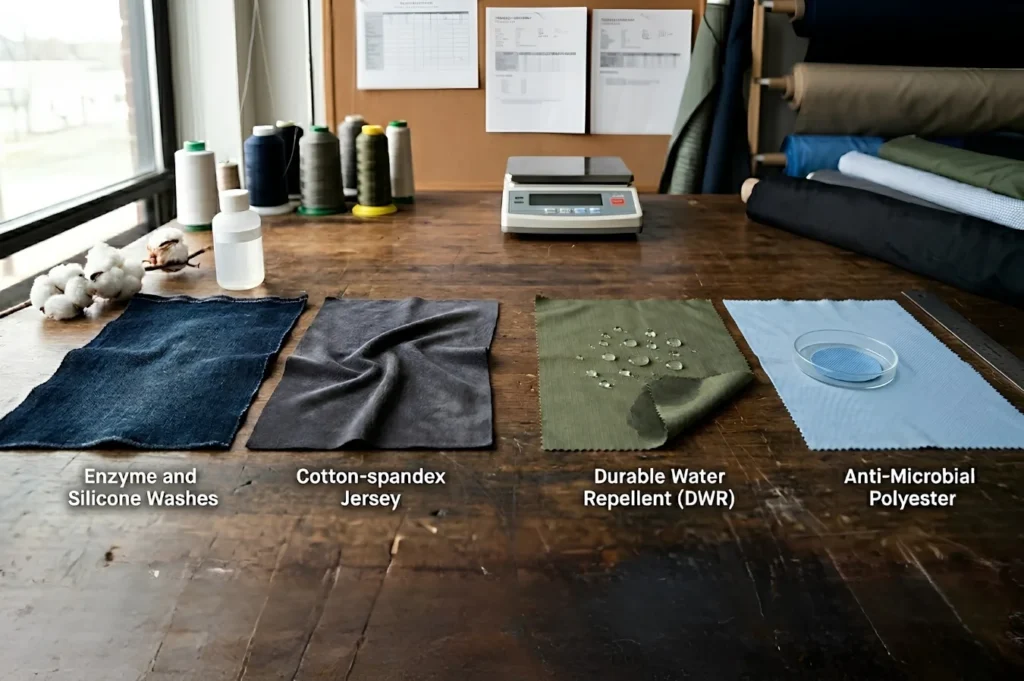
The raw fabric is only the baseline. How the fabric is finished dictates how it feels against the skin and how it ages.
Raw cotton can feel harsh. We mandate enzyme washes at the mill level to break down stray surface fibers, drastically reducing future pilling. We also apply silicone washes to give the textile a premium, ultra-soft "peach" hand-feel that luxury buyers expect.
For performance and outerwear brands, we manage advanced chemical finishes. This includes applying Durable Water Repellent (DWR) coatings to jacket shells, or anti-microbial treatments to activewear fabrics to prevent odor retention.
We treat garment factory fabric sourcing as a strict, phased progression to mitigate all financial risk before bulk production.
We review your tech pack and translate your aesthetic desires into industrial specifications (e.g., translating "heavy and soft" to "400 GSM Combed Cotton French Terry with a Silicone Finish").
We send the specifications to our network of vetted mills. If the fabric doesn't exist, we commission the mill to custom-knit the greige (raw, undyed) goods from scratch.
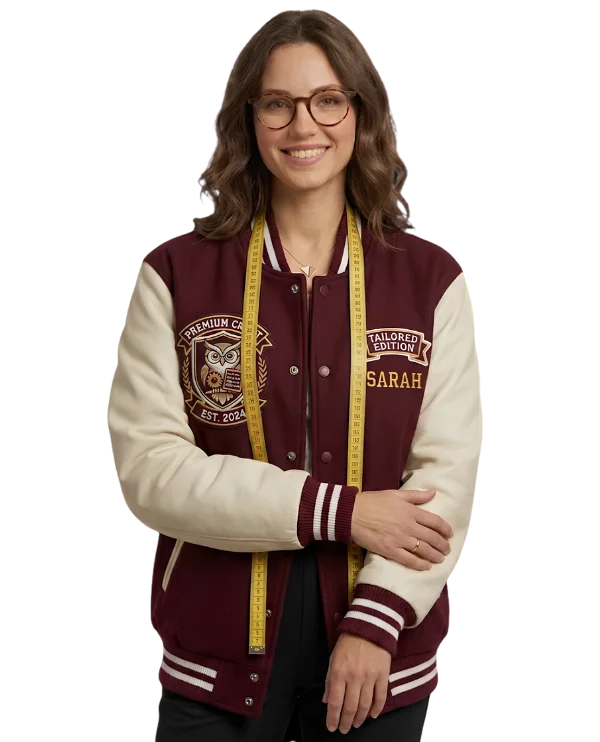
We formulate the DTM dye recipes and send physical lab dips and feel-swatches to your headquarters for strict tactile and visual approval.
Once the lab dip is approved, the mill dyes the bulk yardage. Before the fabric moves to our cutting room, it undergoes mandatory stress testing.
A fabric might feel great, but if it fails basic industrial stress tests, it will ruin your brand reputation. We do not accept fabric onto our cutting floor until it passes strict compliance checks.
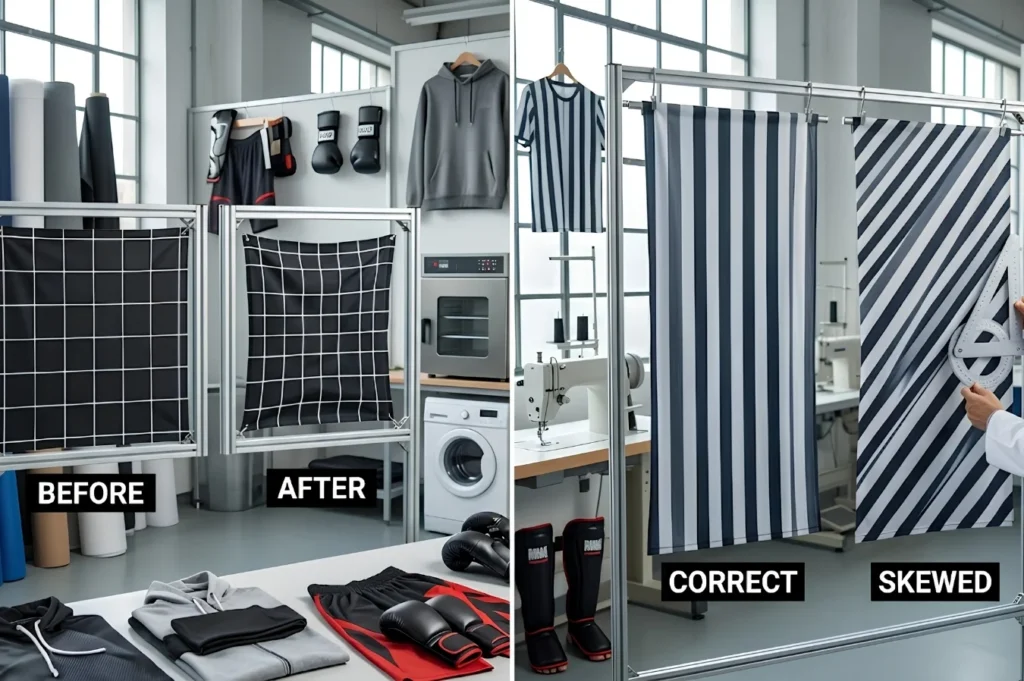
We cut a 50x50cm square of the bulk fabric, mark it, and run it through industrial washers and dryers. We measure the exact shrinkage in the warp and weft directions. If it shrinks beyond the acceptable tolerance (typically 3-5%), the entire roll is rejected.
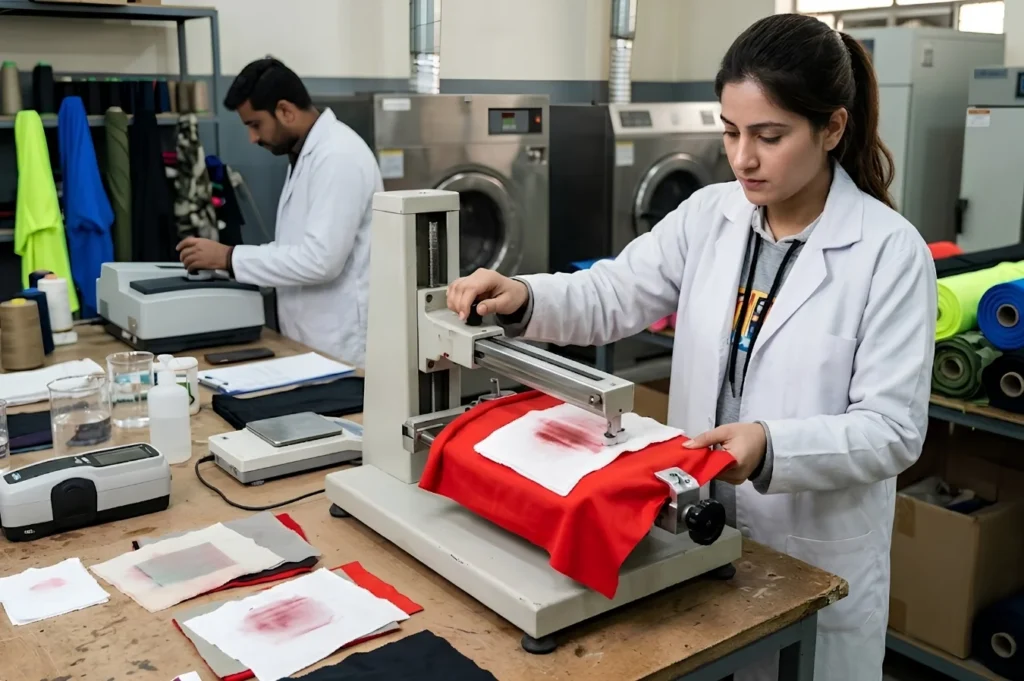
We test the dye's stability. We perform "crocking" tests by rubbing the dyed fabric against a white cloth under wet and dry conditions. If the dye bleeds or rubs off, the chemical fixation failed, and the fabric is sent back to the dye house.
Custom fabric engineering is an industrial process. It requires spinning yarn, calibrating massive knitting machines, and filling massive dye vats.
Because of this, true custom fabric sourcing manufacturer services carry Minimum Order Quantities (MOQs). While we can source smaller batches of stock fabric for sampling, commissioning a custom DTM dye run typically requires a minimum of 300 to 500 kilograms of fabric per colorway. This ensures the chemical recipes and machine calibrations remain economically viable for your bulk run.
Do not guess if your target fabric actually exists at your target price point. Our sourcing engineers will review your tech pack for free.
What we evaluate:
We review the science. You decide if you want us to source it.


 Trustindex verifies that the original source of the review is Google.
 Trustindex verifies that the original source of the review is Google.
 Trustindex verifies that the original source of the review is Google.
 Trustindex verifies that the original source of the review is Google.
 Trustindex verifies that the original source of the review is Google.
 Trustindex verifies that the original source of the review is Google.
 Trustindex verifies that the original source of the review is Google.

 Trustindex verifies that the original source of the review is Google.
 Trustindex verifies that the original source of the review is Google.
 Trustindex verifies that the original source of the review is Google.
Yes. If you send us a physical reference garment, our textile engineers will analyze the weave, weigh the GSM, and burn-test the fibers to determine the exact blend. We will then instruct the mill to replicate it.
Greige (pronounced "gray") refers to raw, unfinished, and undyed fabric straight off the knitting or weaving machine. We often buy massive quantities of greige goods and hold them in stock, allowing us to dye them quickly to your specific DTM Pantone codes.
Absolutely. We partner exclusively with mills that hold international certifications such as OEKO-TEX Standard 100 (ensuring no harmful chemicals are used in the dyes) and GOTS for organic cotton requests.
Our sourcing services are tightly integrated into our full-package manufacturing pipeline. We do not operate as a standalone fabric wholesaler; we source the materials explicitly to feed into our own cut-and-sew production floors.
Every day you rely on unpredictable wholesale fabric markets is a day you risk a catastrophic supply chain failure.
Our fabric sourcing services give you complete control over your raw materials. Stop settling for fabrics that are “close enough.” Start engineering textiles that perfectly match your brand’s premium standards.
Fast & secure delivery worldwide.
Hassle-free refunds
Confidence in every purchase.
Dedicated customer assistance.
Rijix Limited - 7 Bell Yard, London, England, WC2A 2JR
Rijiz International - Mohala Chawinda Daburji Arayian Pasrur Road Sialkot, Pakistan.
Phone : +44 7307582940 Phone : +92 336 140 8321