
When an athlete is grappling on a mat or running a marathon in 90-degree heat, traditional apparel printing fails. Heavy plastisol screen prints act like a shield, trapping sweat against the body. Direct-to-Garment (DTG) inks simply slide right off synthetic athletic fabrics. If you are manufacturing performance gear, swimwear, or compression wear, you cannot rely on surface inks. You need dedicated custom sublimation printing services.
At Rijiz, we do not print on your fabric. We use massive, high-pressure rotary calendering machines to trigger a permanent thermal reaction, forcing solid dyes directly into the core of the polyester fiber itself.
This guide breaks down exactly what our services entail, how we handle your artwork, and how we engineer edge-to-edge, All-Over Print (AOP) garments that refuse to fade, crack, or restrict airflow under extreme physical stress.
To understand why a sublimated garment outlasts a standard screen-printed garment, you have to look at what actually happens inside our factory’s heat presses.
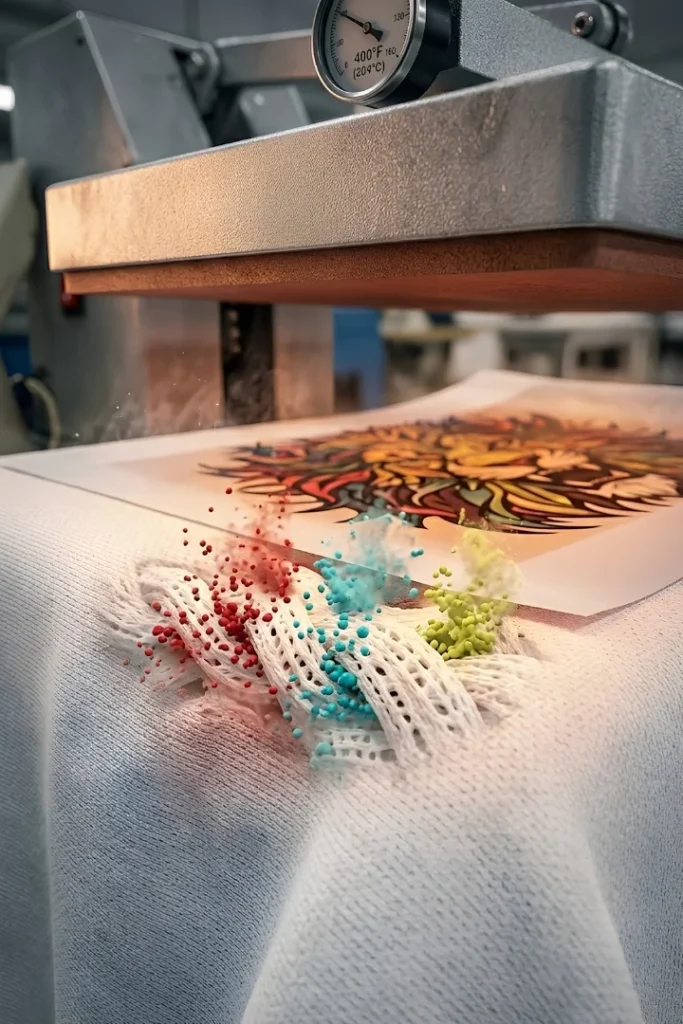
We do not use standard liquid inks for this service. Bulk dye sublimation clothing relies on “Disperse Dyes.” These are highly specialized colorants formulated specifically to bond with synthetic plastics.
In physics, “sublimation” is the process where a solid substance turns directly into a gas, skipping the liquid phase entirely. Here is how our team executes this process:
The color is no longer sitting on the shirt. The color is the shirt. You can run your hand across a massive, full-color chest graphic and feel absolutely nothing but bare fabric.
Because the chemistry of disperse dyes requires a synthetic polymer to bind with, your choice of raw material during the sourcing phase is critical.
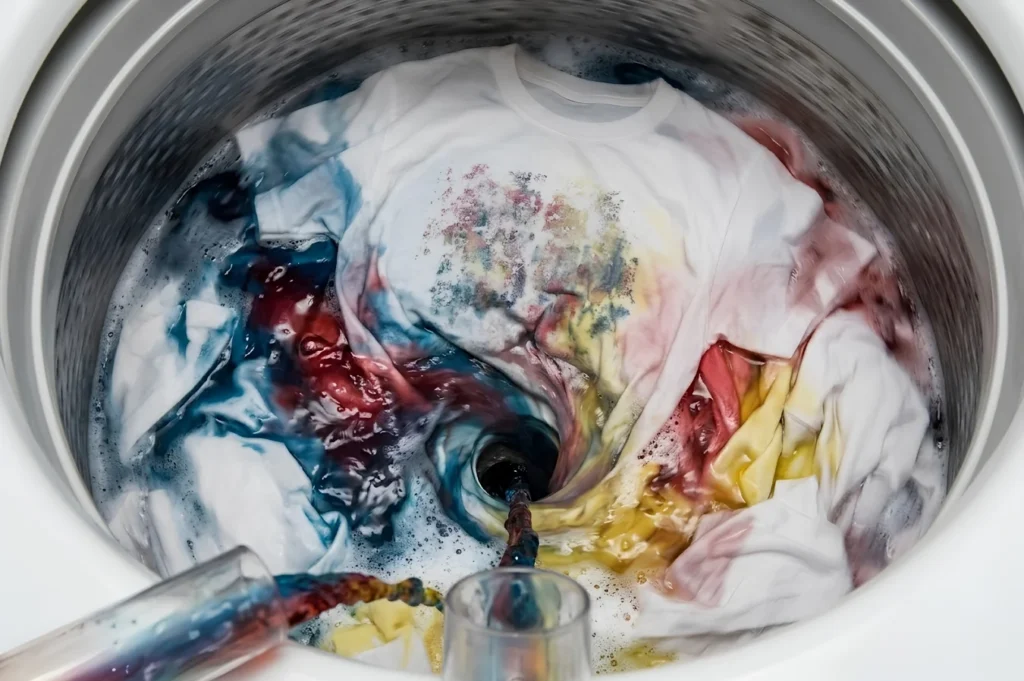
If an amateur print shop tries to sublimate a graphic onto a 100% cotton t-shirt, it will look beautiful when it comes off the press. However, because cotton is a natural fiber, it has no synthetic pores to trap the gas. The very first time your customer puts that shirt into a washing machine, 90% of the image will wash down the drain. We categorically refuse to execute sublimation services on 100% cotton to protect your brand's reputation.
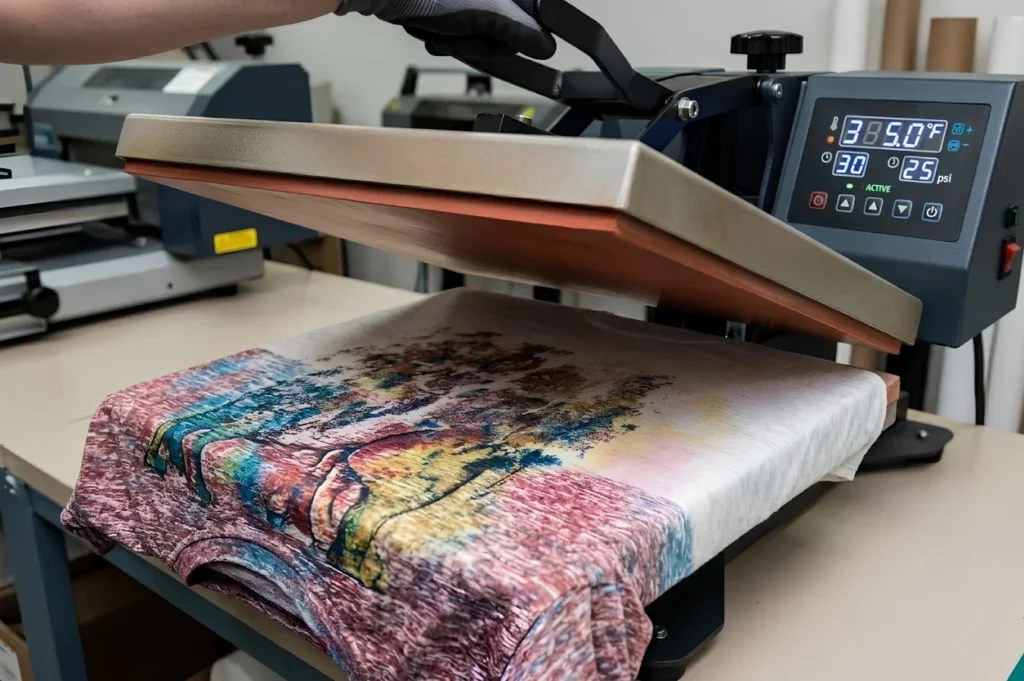
We can execute contract dye sublimation printing on blended fabrics (e.g., a 65% Polyester / 35% Cotton blend), but we ensure our clients understand the visual consequences. During the heat press phase, the dye will permanently bond to the 65% polyester fibers, but it will completely ignore the 35% cotton fibers. When washed, the ink washes out of the cotton, leaving behind a heavily faded or "heathered" look. If your design targets a vintage aesthetic, poly-blends are an incredible tool. But if you demand pitch-black saturation, our sourcing team will mandate 100% polyester or poly-spandex (Lycra) for your run.
The most critical decision you must make when sourcing a sublimation apparel manufacturer is determining when the printing actually happens. Choosing the wrong production method will ruin the look of your garments.
Thousands of print-on-demand drop-shippers operate by buying fully sewn, blank white t-shirts and laying them flat on a heat press. Because the shirt is 3D (with seams and armpits), it is physically impossible to lay it perfectly flat. When the heat press clamps down, the dye gas cannot reach inside the microscopic folds in the fabric. This creates "Ghosting" or the "White Crease Effect",ugly white streaks scattered randomly across the armpits and collar where the ink failed to reach.
At Rijiz, we operate exclusively on a Cut-and-Sew sublimation model. We do not press finished garments. When you contract us as your all over print clothing manufacturer, we print your graphics onto massive, flat rolls of raw white fabric before a single seam is sewn. Because the fabric roll is perfectly flat, the dye saturates 100% of the surface area with absolute perfection. Only after the fabric is fully dyed do we laser-cut the pattern panels and pass them to our sewing floor for assembly. This is the only way to achieve a flawless, edge-to-edge graphic without a single white crease.
To execute flawless cut-and-sew sublimation at scale, a factory requires massive industrial hardware. Here is how we route your specific design to the right machinery on our factory floor.
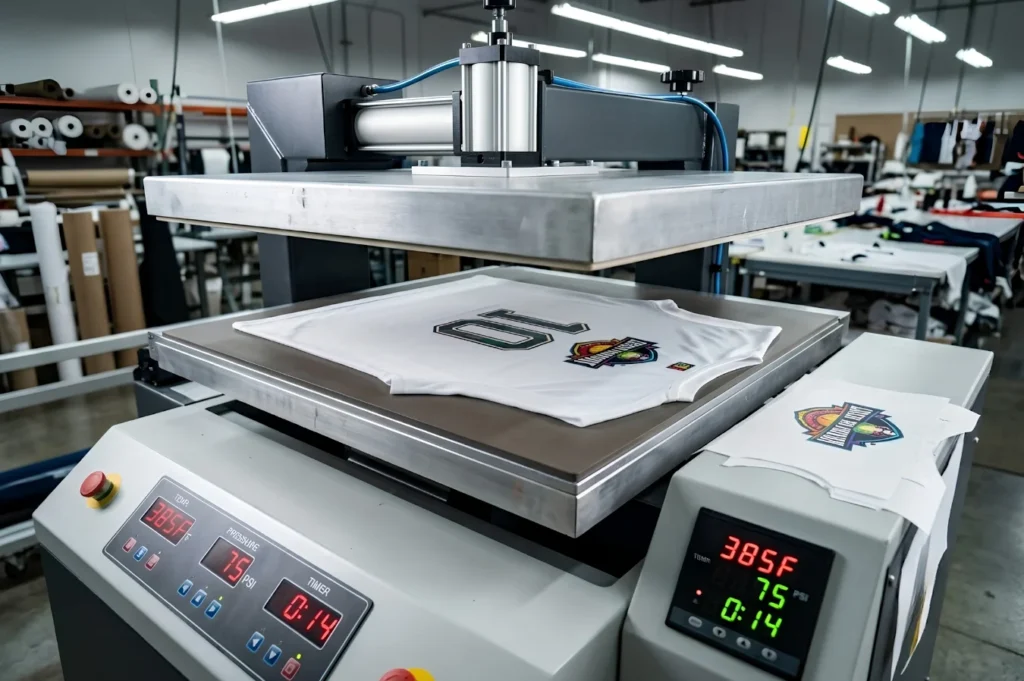
If you are manufacturing white athletic jerseys and only require a vibrant sponsor logo on the chest and a player number on the back, we use industrial pneumatic flatbed presses. We lay the specific cut panel on the lower platen, align the transfer paper, and press it for 45 seconds. This "Spot Sublimation" service is highly economical because it drastically reduces the amount of expensive transfer paper required per unit.
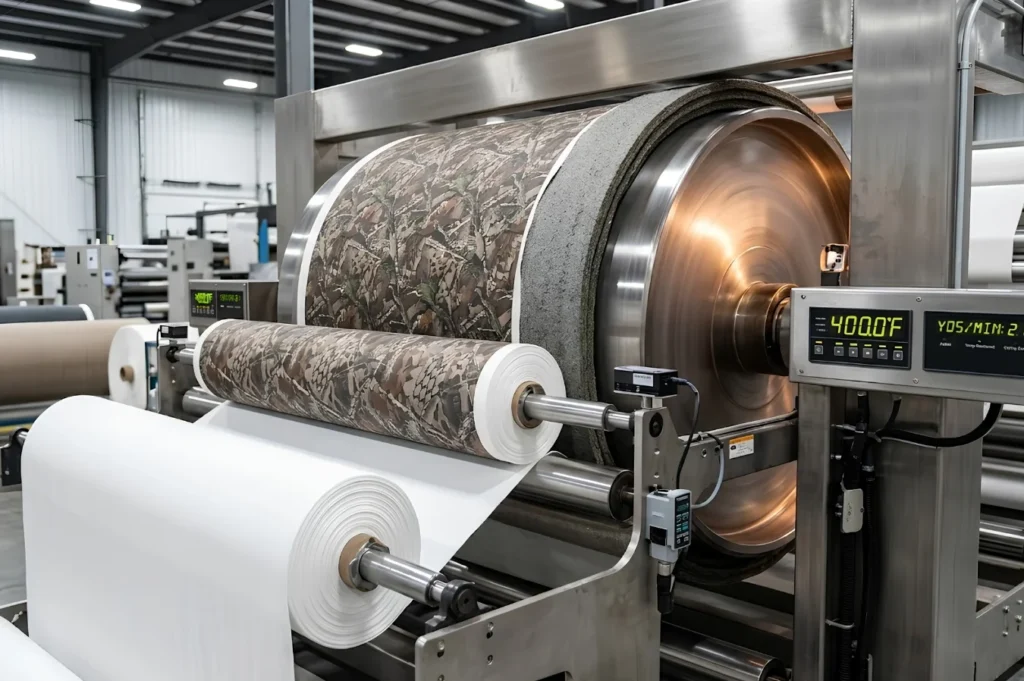
For true edge-to-edge All-Over Print (AOP) garments,like complex camouflage MMA rash guards or galaxy-print hoodies,flatbeds are too small. We deploy massive rotary calendering machines. The raw fabric is fed from a continuous roll into a massive, spinning, oil-heated drum alongside a continuous roll of printed transfer paper. The continuous feed system ensures the fabric is never wrinkled or shifted during the 400°F exposure, allowing us to sublimate thousands of yards of fabric a day with zero color variance.
Because sublimation relies on a radical phase transition (solid to gas to trapped solid), the color you see on the printed transfer paper will look dull, muted, and completely wrong compared to the final baked fabric. Here is how our pre-press team ensures your final product matches your screen.
We do not accept a 5,000-unit bulk order and blindly hope the colors match your expectations. We mandate a strict, physical validation process before bulk manufacturing begins.
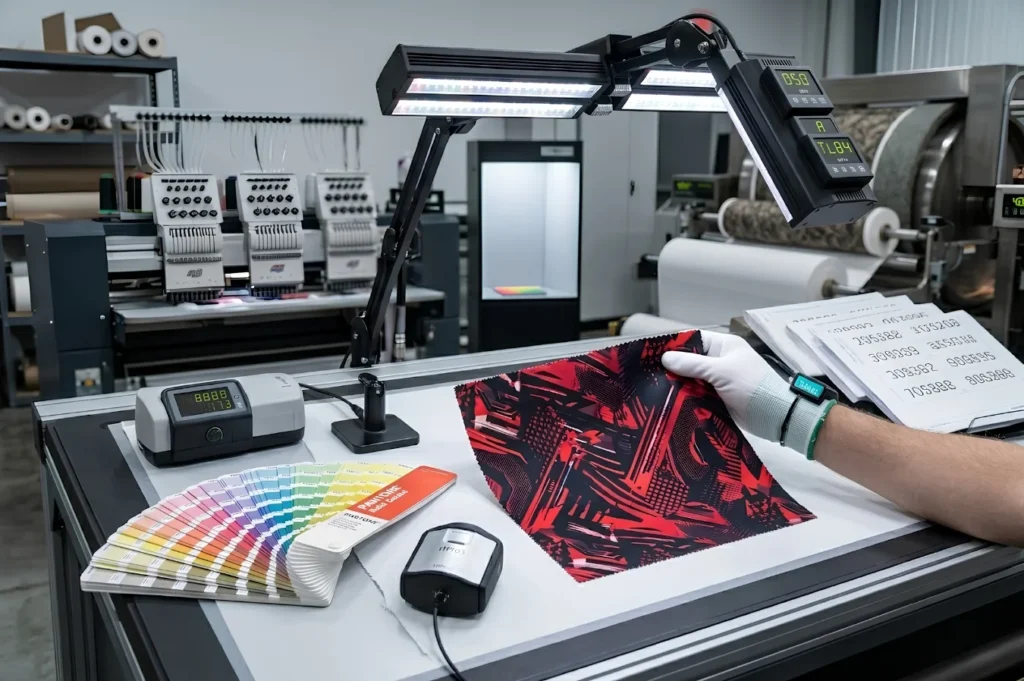
Even the most advanced sublimation factory must maintain intense vigilance. Our Quality Control teams are trained to spot and instantly reject the specific mechanical defects inherent to thermal printing before they reach your warehouse.
Posted on GoogleTrustindex verifies that the original source of the review is Google. We have worked with this supplier on the development and production of high-performance sportswear, and the experience has been very positive. We especially value their clear communication, willingness to make adjustments, and commitment to quality. They were open to technical feedback and worked closely with us to improve fabrics, finishes, and details until meeting our standards. Deadlines were met properly and the final result was professional. We definitely recommend this supplier to brands looking for a serious, long-term partnership.Posted on GoogleTrustindex verifies that the original source of the review is Google. Great productPosted on GoogleTrustindex verifies that the original source of the review is Google. Highly recommend this company for your custom clothing for your brand. One of my favorite things working with them is the constant and clear communication, and the attention to detail. Also they are very quick especially for producing high quality apparel, and provide updates and progress photos throughout the process. A+ across the board, ive recommended them to my peers in the industry and will certainly use them again.Posted on GoogleTrustindex verifies that the original source of the review is Google. Gohar was very helpful and worked with our team every step of the way. He providing useful tips and thorough inspection during the manufacturing process. The clothes were extremely high quality and all designs, embroidery, etc was perfect.Posted on GoogleTrustindex verifies that the original source of the review is Google. Excellent communication, service and products. Material is always as agreed and of top quality. Very much recommended.Posted on GoogleTrustindex verifies that the original source of the review is Google. Amazing Service, Shipping and Very Affordable Prices, Highly Recommended!Posted on GoogleTrustindex verifies that the original source of the review is Google. They are SO fast. Very good to work with and responsive. They are knowledgable about what looks good and giving you exactly what you want.Posted on GoogleTrustindex verifies that the original source of the review is Google. I have build a hand full of entrepreneurial businesses, but recently made my first venture into the sportswear sector, and decided to work with Rijiz as my first clothing manufacturer. They did an incredible job bringing my flat sketches to life, and working with me throughout the iterative design process, making small tweaks and suggestions as we moved towards the final product. Their communication was good via email, and they were supportive throughout the process, even checking in with me periodically to ask how things were going. The only hiccups were a last minute increase in the cost per unit of the product, and a slightly longer than expected lead time, but my order quantity was very small, so these problems make sense. I'm sure larger order with them take priority. Overall, they are a great company that I will continue to work with as this business grows, and I would highly recommend them!Posted on GoogleTrustindex verifies that the original source of the review is Google. Every good communication skills, always delivering and make the customer wholesome. Very very happy for the results💯💯💯Posted on GoogleTrustindex verifies that the original source of the review is Google. Great manufacturer and makes sure every detail is on point, Very satisfied with their work. What i ordered was exactly what was delivered to me, Much respect to them 🫡
Do not trust complex activewear or high-end streetwear to a print-on-demand shop that presses designs onto cheap, pre-sewn blanks. The resulting white creases and ghosting errors will instantly destroy the perceived value of your brand.
Our custom dye sublimation services provide the heavy-duty rotary calendering hardware, the advanced ICC color profiling, and the strict cut-and-sew assembly protocols required to execute flawless, edge-to-edge graphics that never fade.
Rijix Limited - 7 Bell Yard, London, England, WC2A 2JR
Rijiz International - Mohala Chawinda Daburji Arayian Pasrur Road Sialkot, Pakistan.
Phone : +44 7307582940 Phone : +92 336 140 8321