
Cut and Sew Manufacturing: The Engineering of the Assembly Line
In the apparel industry, a beautiful tech pack and expensive raw fabric mean nothing if the cutting and assembly phases are compromised. If a blade shifts by a millimeter during the cutting phase, or if a sewing operator applies too much tension to a 4-way stretch fabric, the entire production run is effectively ruined.
Cut and sew manufacturing is not simply “putting clothes together.” It is a strict mechanical science. It requires balancing fabric yield algorithms, stitch tension matrices, and rigorous quality control (AQL) at every workstation on the factory floor.
At Rijiz, we operate an industrial cut and sew factory built for brands that demand precision over speed. This document breaks down the mechanical realities, the production models, and the exact machinery protocols required to execute a high-volume production run flawlessly.
The Financial Reality of the Cutting Room Floor
Amateur brands spend months obsessing over design but completely ignore the cutting process. In reality, the cutting room is where the profit margins of your entire collection are determined. Fabric is the single highest cost variable in garment production. How that fabric is laid out, tensioned, and sliced dictates your raw material waste.
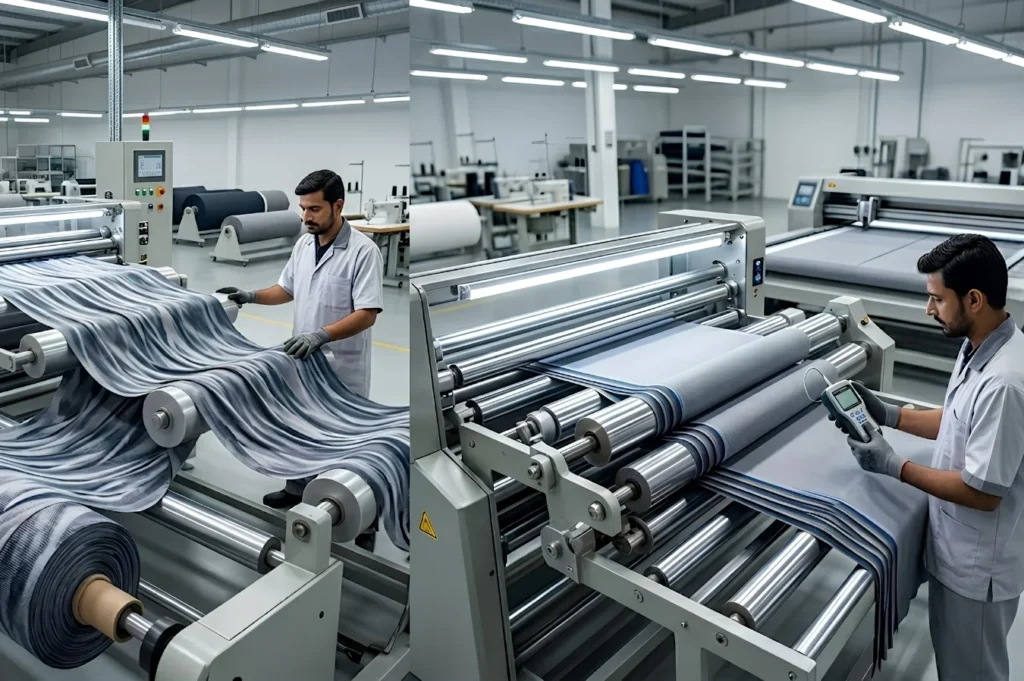
Before a single blade is engaged, massive rolls of fabric are unspooled and layered onto cutting tables in stacks known as "plies." If the fabric is pulled tightly during this spreading process, it retains kinetic tension. Once the fabric is cut, that tension releases, and the cut panels instantly shrink. If a facility does not employ automated, zero-tension spreaders, your final garments will be mathematically smaller than your approved pattern.
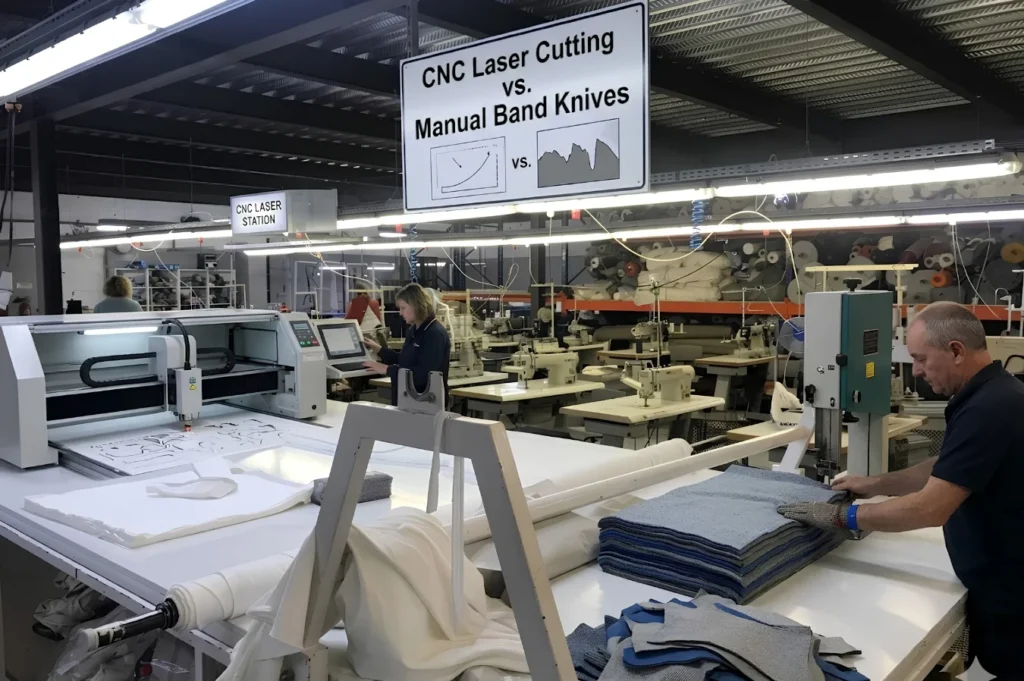
Manual tracing and cutting with hand shears are acceptable for a single prototype, but they are catastrophic for bulk runs. We deploy automated CNC (Computer Numerical Control) cutting machines. Your digital DXF marker files are fed directly into the machine, which cuts through heavy 450 GSM fleece or delicate activewear with micro-millimeter precision. For extreme-density fabrics, our operators utilize industrial band knives to prevent fraying and edge distortion.
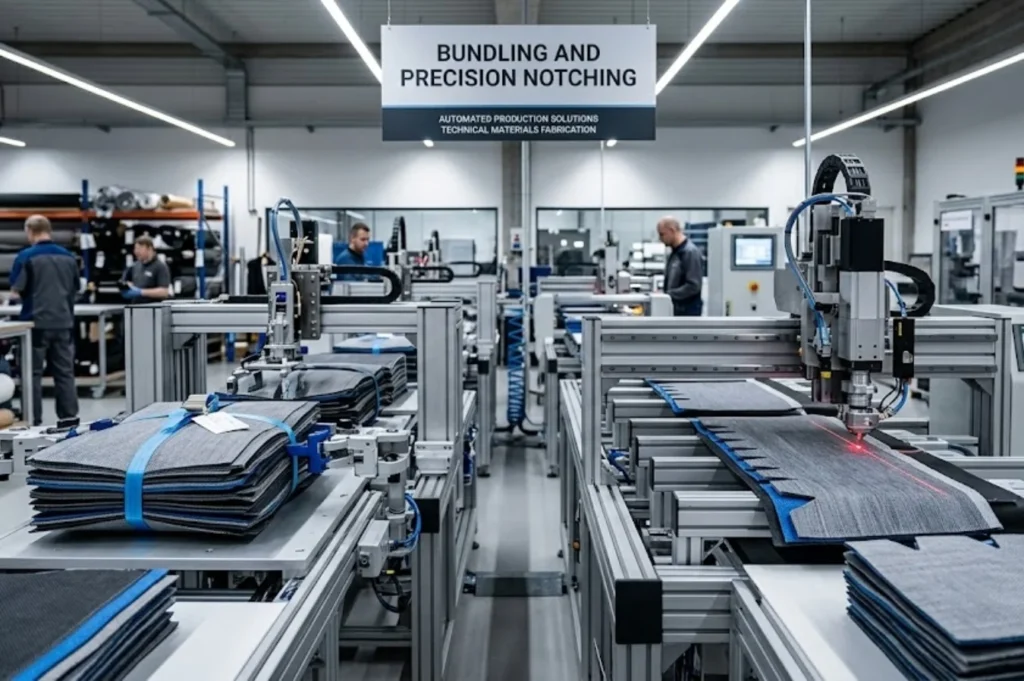
Once the fabric is cut, every piece is bundled and labeled before it hits the sewing floor. During the cutting phase, the CNC machine punches exact drill holes and V-notches into the perimeter of the fabric. These industrial markers tell the sewing operators exactly where to align a pocket, a sleeve cap, or a dart, completely removing guesswork from the assembly line.
Demystifying Production Models: CMT vs. Full Production Package (FPP)
Depending on the scale and structure of your supply chain, we offer two distinct avenues for bulk assembly. Understanding which production model fits your current operational capacity is crucial before initiating a run with any cut and sew apparel manufacturer.
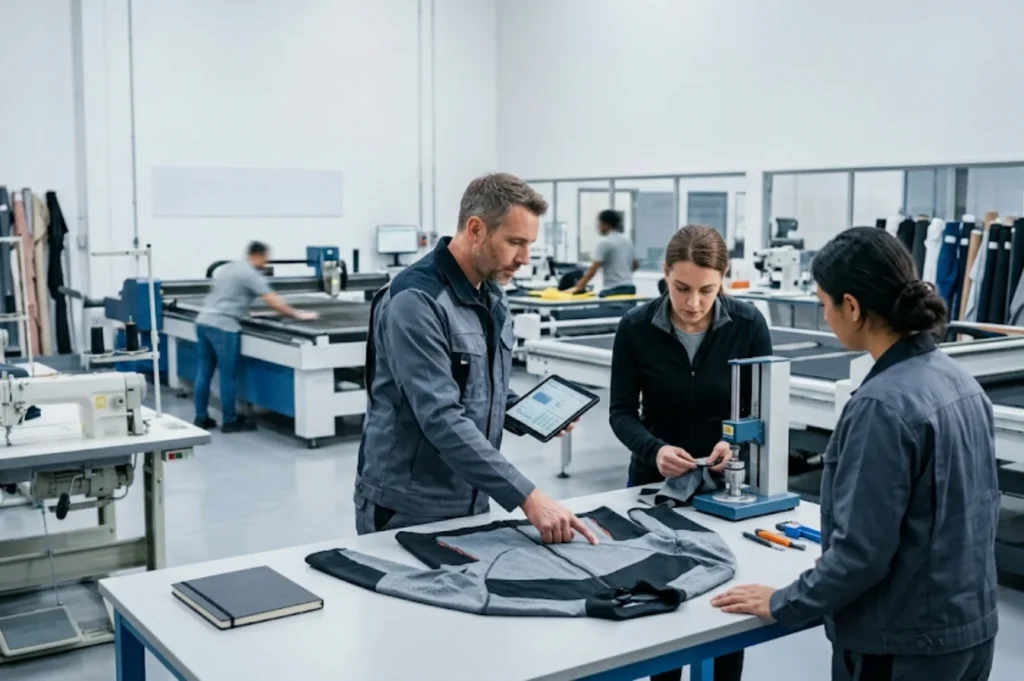
In a CMT manufacturing model, the brand acts as the primary supplier. You purchase the raw fabric, source the custom zippers, buy the woven labels, and ship all the physical raw materials directly to our loading dock. We provide the labor and the machinery: we Cut the fabric based on your marker, Make (sew) the garment, and Trim (finish and package) the final product.
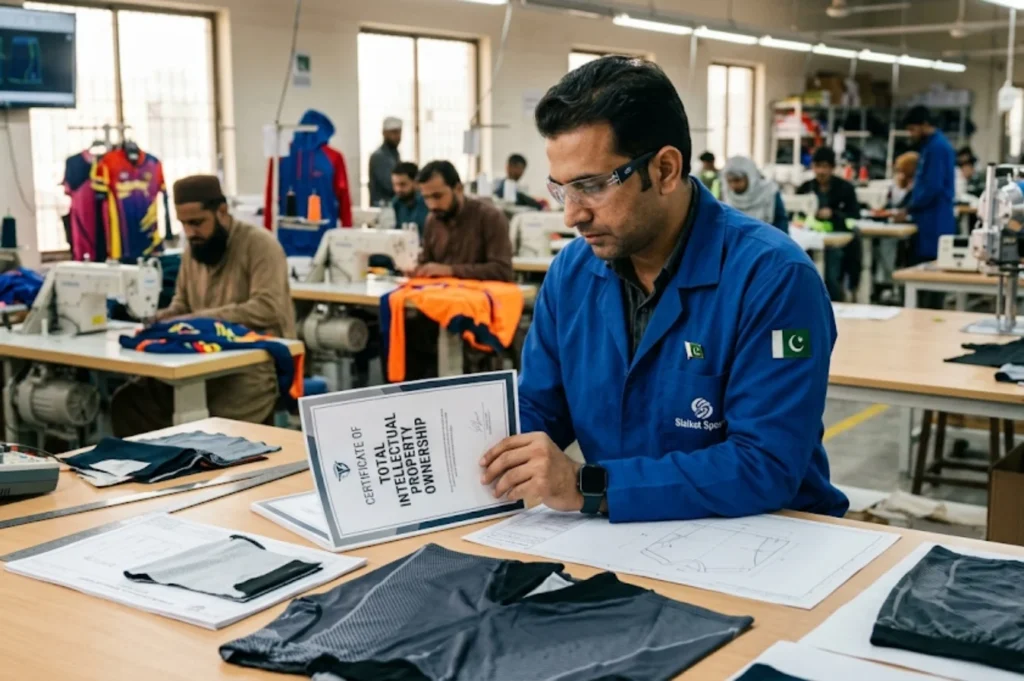
For brands that want a single point of accountability, the Full Production Package (often referred to as OEM) is the industry standard. In this model, you provide the technical blueprint (the Tech Pack), and we handle the entire supply chain. We source the raw greige fabric, manage the Dye-to-Match (DTM) lab dips, engineer the patterns, and execute the final custom cut and sew services. FPP eliminates the logistical nightmare of coordinating between a fabric mill, a dye house, and a sewing floor.
The Mechanics of Industrial Sewing
A standard straight-stitch sewing machine cannot build a complex technical garment. Different fabrics and structural stress points require entirely different mechanical setups. A premium contract sewing services facility must maintain a diverse fleet of specialized machinery to prevent seam failure.
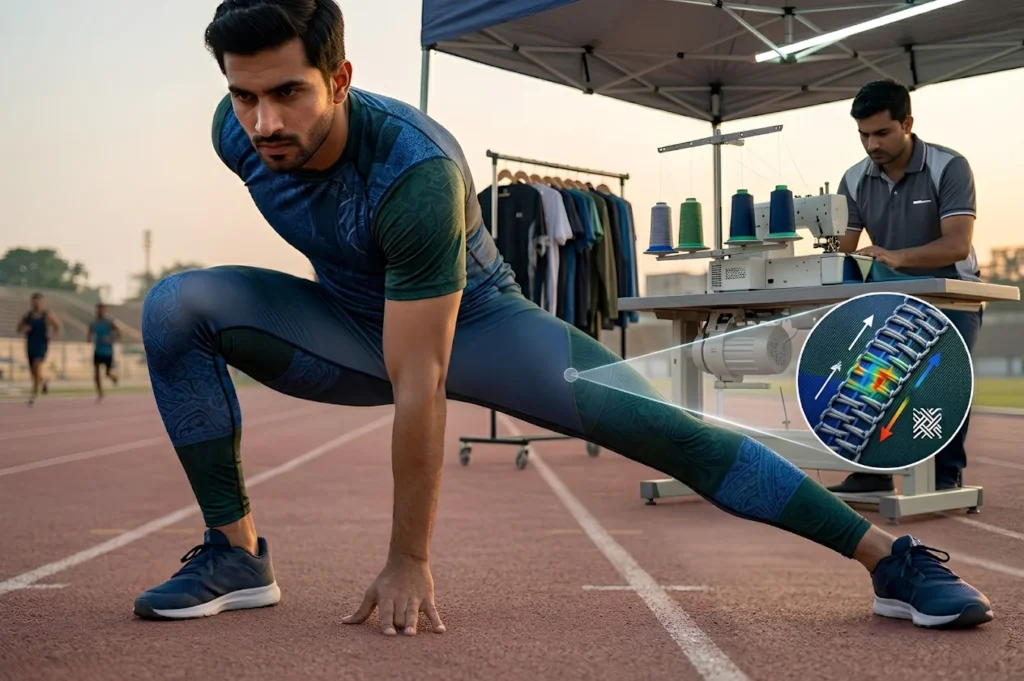
If you sew four-way stretch spandex with a standard rigid lockstitch, the thread will snap the moment the end-user puts the garment on. For activewear, swimwear, and performance gear, we deploy 4-thread overlock and coverstitch machines. These machines loop the thread in a way that allows the seam to stretch simultaneously with the fabric. Furthermore, we utilize flatlock stitching to eliminate interior seam chafing on tight-fitting athletic wear.
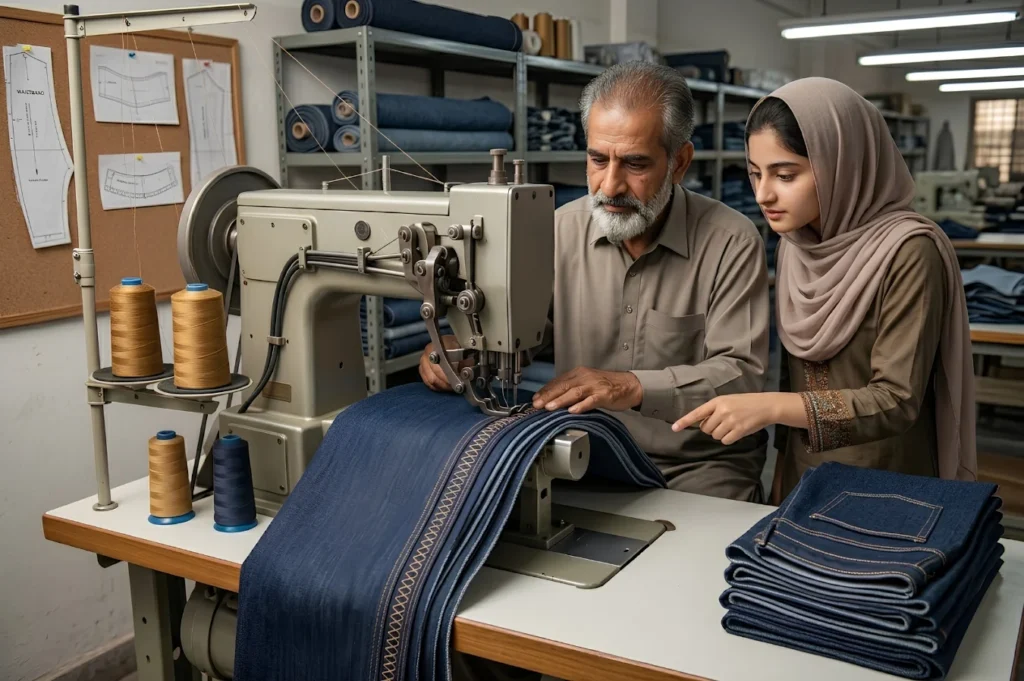
Working with 14oz raw denim or 400+ GSM French Terry requires immense mechanical torque. Standard sewing machines will skip stitches or snap needles when attempting to penetrate multiple layers of heavy fabric. We utilize heavy-duty walking-foot machines that feed the thick layers of fabric evenly through the needle plate, ensuring the top layer does not bunch up or shift out of alignment.
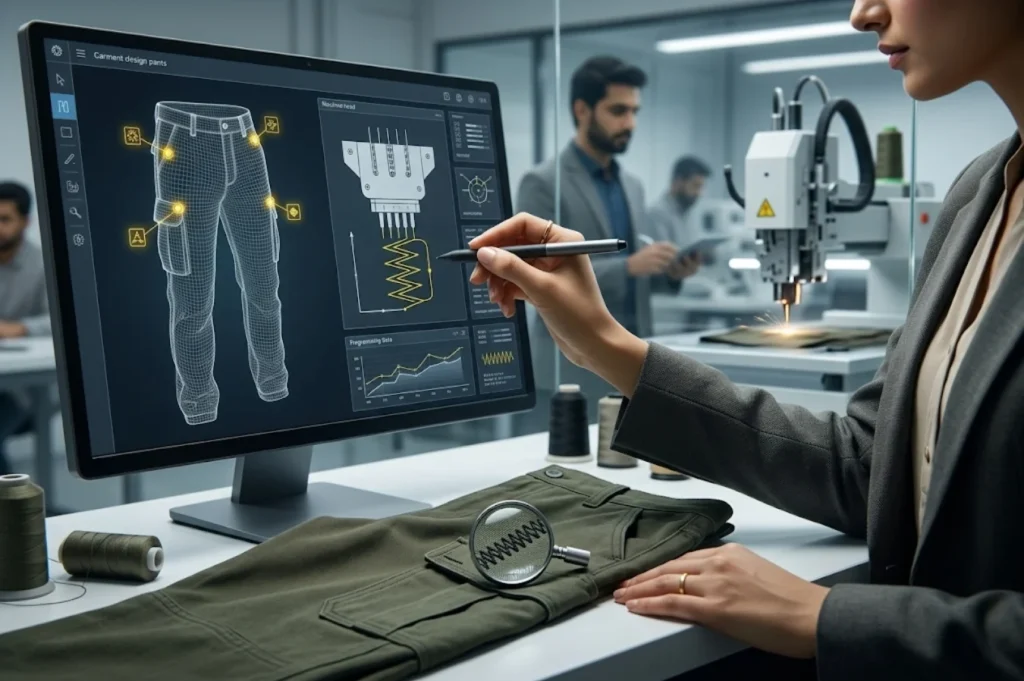
Workwear and premium streetwear must endure heavy physical strain. We program automated bar-tack machines to fire concentrated zig-zag stitches over the specific stress points of the garment—such as the corners of cargo pockets, belt loops, and the base of a zipper fly. This industrial reinforcement ensures the garment does not tear during extreme use.
Managing Seam Allowances (SA) and Edge Finishing
The raw edge of a cut piece of fabric will naturally fray and unravel. How that edge is treated inside the garment is the defining difference between cheap fast fashion and luxury apparel.
Binding and Taped Seams
Clean Finishing and French Seams
The Acceptable Quality Limit (AQL) Inspection Protocol
Fast sewing is financially useless if it results in high defect rates. A professional factory does not wait until a 5,000-unit run is completely finished to start checking for errors. Quality Control must be built directly into the assembly line workflow.
In-Line Stitch Audits
The Golden Sample Benchmark
Trimming, Pressing, and Final Finishing
A garment is not finished just because the sewing is complete. The final presentation of the product dictates how it will be perceived by the end consumer or the wholesale buyer.
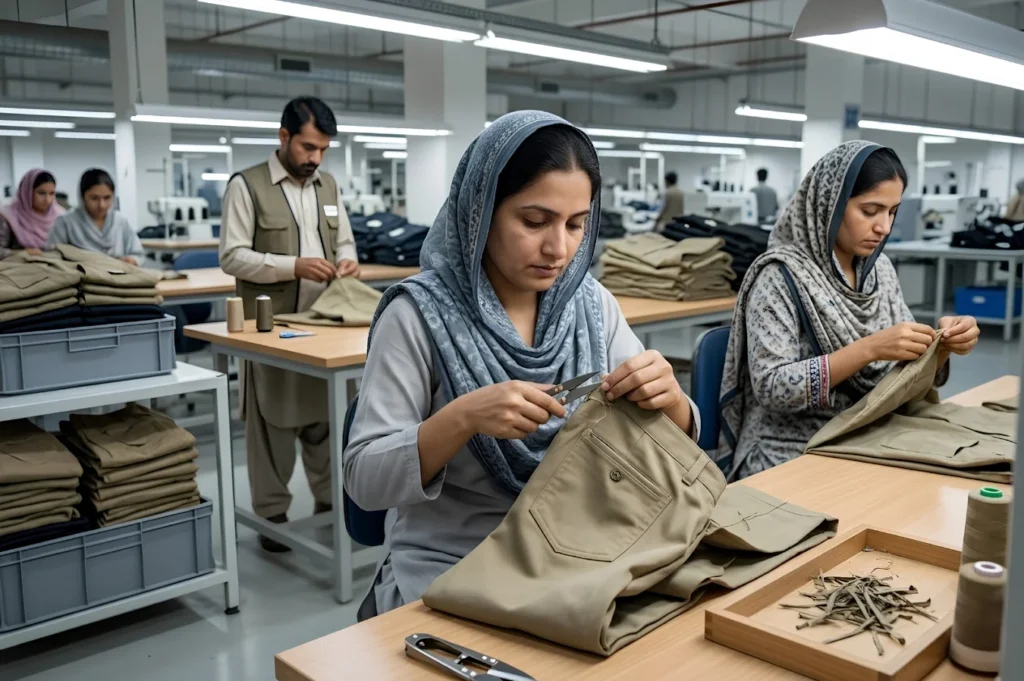
High-speed industrial sewing leaves "thread tails" at the end of every seam. Dedicated trimming operators manually inspect every inch of the garment, snipping away loose threads and verifying that all bar-tacks are securely locked in place.
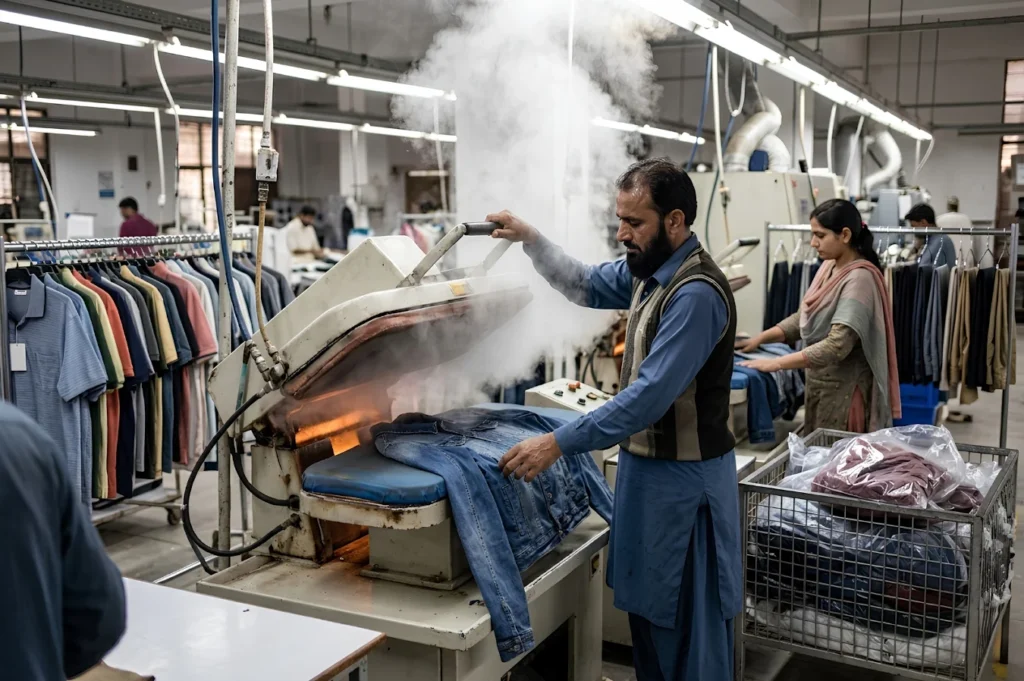
Fabric becomes wrinkled and distorted during the heavy handling of the sewing process. Before packaging, every garment is mounted on industrial ironing bucks and treated with high-pressure steam. This process forces the seams to lay completely flat, shrinks any minor fabric distortions back into place, and gives the garment its final, retail-ready drape.
Required Assets to Initiate a Bulk Run
A factory cannot start a bulk cutting run on an assumption. To ensure precision, we require the following technical assets to be locked, verified, and approved before the fabric is ever loaded onto the spreading tables.
- The Golden Sample: The physical pre-production sample must be signed off. This acts as the legal baseline for all AQL quality checks.
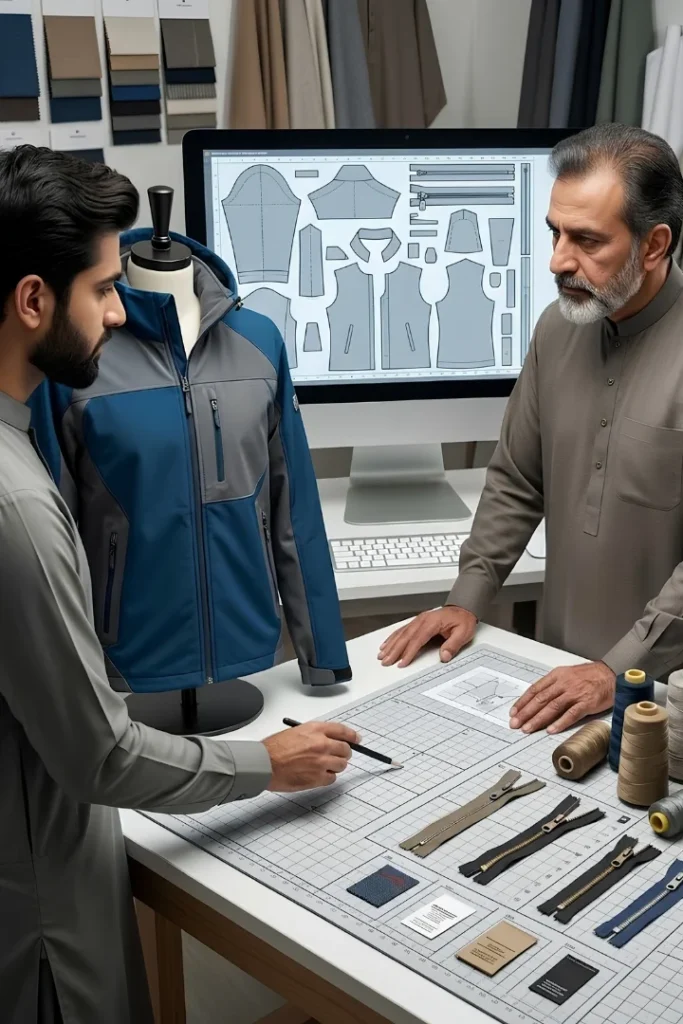
- Production-Ready Markers: The DXF/ASTM pattern files must be finalized and nested into a high-yield “marker” file to ensure that when the CNC machine cuts the fabric, waste is minimized to protect your raw material margins.
- Comprehensive BOM: The sewing operators must know exactly what components to pull from inventory. The Bill of Materials must explicitly list the required thread weight, the exact zipper gauge (e.g., YKK #5 Metal), and the specific placement coordinates for all woven labels.
Understanding MOQs and Production Economics
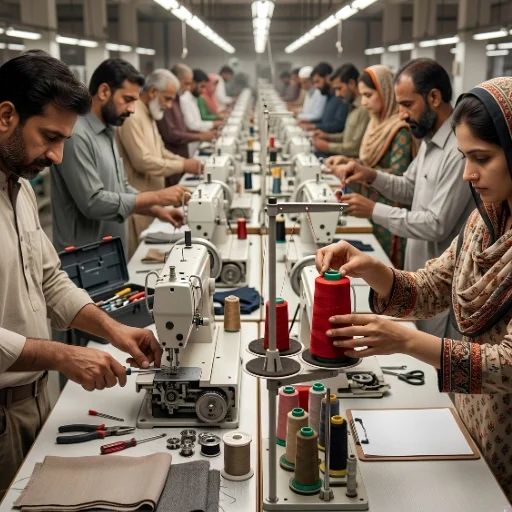
Setting up a factory line is highly labor-intensive. It requires calibrating the CNC lasers, changing the thread cones on 30 different sewing machines, and adjusting the feed-dogs for your specific fabric weight.
Because of this intense setup time, true industrial facilities enforce Minimum Order Quantities (MOQs). Running micro-batches is economically unviable, as the setup costs would drastically inflate the price per unit, making it impossible for your brand to maintain a profitable retail markup.
Essential Resources for Production Planning
The assembly line is only one component of a successful supply chain. To ensure your production run is executed perfectly, we recommend reviewing our related technical guides:
Learn how we establish the Golden Sample before moving to the bulk cutting phase.
Explore how visual branding is applied during the cut and sew process.
Understand the FPP model and how we source, knit, and dye raw greige goods.
Testimonial
Customer Feedback
Posted on GoogleTrustindex verifies that the original source of the review is Google. We have worked with this supplier on the development and production of high-performance sportswear, and the experience has been very positive. We especially value their clear communication, willingness to make adjustments, and commitment to quality. They were open to technical feedback and worked closely with us to improve fabrics, finishes, and details until meeting our standards. Deadlines were met properly and the final result was professional. We definitely recommend this supplier to brands looking for a serious, long-term partnership.Posted on GoogleTrustindex verifies that the original source of the review is Google. Great productPosted on GoogleTrustindex verifies that the original source of the review is Google. Highly recommend this company for your custom clothing for your brand. One of my favorite things working with them is the constant and clear communication, and the attention to detail. Also they are very quick especially for producing high quality apparel, and provide updates and progress photos throughout the process. A+ across the board, ive recommended them to my peers in the industry and will certainly use them again.Posted on GoogleTrustindex verifies that the original source of the review is Google. Gohar was very helpful and worked with our team every step of the way. He providing useful tips and thorough inspection during the manufacturing process. The clothes were extremely high quality and all designs, embroidery, etc was perfect.Posted on GoogleTrustindex verifies that the original source of the review is Google. Excellent communication, service and products. Material is always as agreed and of top quality. Very much recommended.Posted on GoogleTrustindex verifies that the original source of the review is Google. Amazing Service, Shipping and Very Affordable Prices, Highly Recommended!Posted on GoogleTrustindex verifies that the original source of the review is Google. They are SO fast. Very good to work with and responsive. They are knowledgable about what looks good and giving you exactly what you want.Posted on GoogleTrustindex verifies that the original source of the review is Google. I have build a hand full of entrepreneurial businesses, but recently made my first venture into the sportswear sector, and decided to work with Rijiz as my first clothing manufacturer. They did an incredible job bringing my flat sketches to life, and working with me throughout the iterative design process, making small tweaks and suggestions as we moved towards the final product. Their communication was good via email, and they were supportive throughout the process, even checking in with me periodically to ask how things were going. The only hiccups were a last minute increase in the cost per unit of the product, and a slightly longer than expected lead time, but my order quantity was very small, so these problems make sense. I'm sure larger order with them take priority. Overall, they are a great company that I will continue to work with as this business grows, and I would highly recommend them!Posted on GoogleTrustindex verifies that the original source of the review is Google. Every good communication skills, always delivering and make the customer wholesome. Very very happy for the results💯💯💯Posted on GoogleTrustindex verifies that the original source of the review is Google. Great manufacturer and makes sure every detail is on point, Very satisfied with their work. What i ordered was exactly what was delivered to me, Much respect to them 🫡
Technical Production FAQ
Transparency is our core operating principle. During a CMT run, we calculate the exact fabric yield based on the digital marker. We provide a full consumption report detailing exactly how many yards were used to cut the garments and how many yards remain as scrap.
If a heavyweight 100% cotton hoodie is sewn perfectly to size but shrinks by 5% in the customer's washing machine, the product is a failure. We mandate strict wash-testing during prototyping. We calculate the exact shrinkage percentage of the raw fabric and artificially inflate the digital patterns by that exact percentage before the CNC machine cuts them. The garment will look slightly oversized coming off the sewing line but will shrink to the perfect dimensions after its first wash.
Once the Golden Sample is approved and the bulk fabric is secured on the factory floor, a standard cut and sew run typically takes 4 to 6 weeks. This timeline accounts for the CNC cutting, the assembly line sewing, and the rigorous AQL inspection phases.
Yes. As part of our final trimming and finishing phase, we can fold, tag, and poly-bag every garment to your exact retail specifications. We can apply custom barcode stickers and warning labels so the inventory is instantly ready for Amazon FBA or your 3PL warehouse.
Ready to Lock Down Your Bulk Production?
Do not trust your raw materials to a facility that cuts corners. A single misaligned blade or a poorly tensioned sewing machine can ruin thousands of dollars of custom-dyed fabric.
Stop dealing with crooked seams, popped threads, and inconsistent sizing. Our production floors provide the hard industrial discipline needed to execute your tech pack flawlessly at scale.
Fast & secure delivery worldwide.
Hassle-free refunds
Confidence in every purchase.
Dedicated customer assistance.
Get in touch
Rijix Limited - 7 Bell Yard, London, England, WC2A 2JR
Rijiz International - Mohala Chawinda Daburji Arayian Pasrur Road Sialkot, Pakistan.
Phone : +44 7307582940 Phone : +92 336 140 8321